
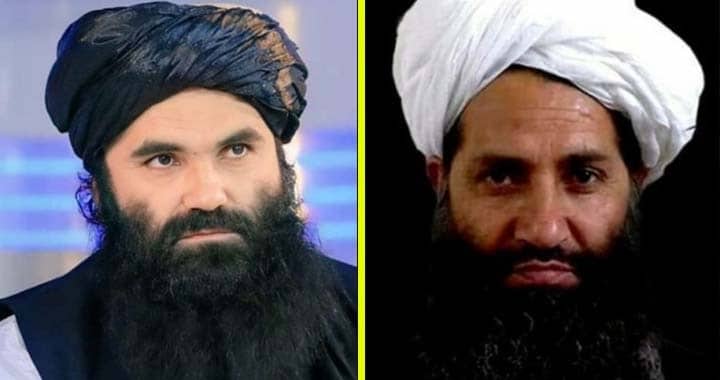
Taliban supreme leader Hibatullah Akhundzada has shifted the center of his decision-making from Kabul to Kandahar amid growing tensions and disagreements with Interior Minister Sirajuddin Haqqani, according to reports.
The reported power struggle has deepened divisions within the Taliban leadership, with disagreements between the two senior figures increasingly affecting the balance of power within the Afghan Taliban government.
According to the reports, Akhundzada had planned to arrest Sirajuddin Haqqani in recent days but abandoned the move amid fears that it could trigger a revolt by the powerful Haqqani faction.
Following the reported decision, Akhundzada distanced himself further from Kabul and established Kandahar as the center of his political and governmental decision-making.
Key governmental and political decisions are now reportedly being taken in Kandahar by a small circle of officials and aides loyal to Akhundzada, rather than through ministries and government institutions operating in Kabul.
The shift has further highlighted the growing concentration of authority around Akhundzada and his inner circle, while also underscoring the widening mistrust between the Taliban leadership’s major power centers.
The reported tensions with Sirajuddin Haqqani are particularly significant given the latter’s influence within the Taliban’s security and political structure. The dispute appears to have contributed to Akhundzada’s decision to operate increasingly from Kandahar, where he can rely on a more closely controlled circle of loyalists.
The development raises questions about the functioning of the Taliban’s governing structure, as major decisions affecting the country’s political and administrative affairs are reportedly being concentrated outside the formal government institutions in Kabul.
The reported transfer of decision-making from Kabul to Kandahar therefore represents more than a change of location. It points to an increasingly centralized power structure around Akhundzada and exposes deepening tensions within the Taliban leadership.



