
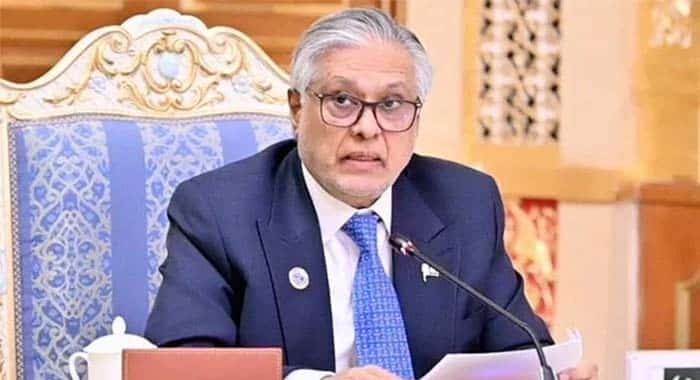
Pakistan’s Deputy Prime Minister and Foreign Minister, Senator Mohammad Ishaq Dar, has underscored the critical importance of peace and stability in Afghanistan, stating that a secure and peaceful Afghanistan is indispensable to safeguarding regional security, strengthening economic cooperation, and advancing shared prosperity across the region.
Addressing the narrow-format session of the Shanghai Cooperation Organisation (SCO) Council of Heads of Government meeting in Dushanbe, Tajikistan, Ishaq Dar reaffirmed Pakistan’s commitment to a peaceful, stable, regionally integrated, and prosperous Afghanistan that maintains constructive relations with its neighbours and contributes positively to regional peace.
The Deputy Prime Minister emphasized that Pakistan has consistently made sincere efforts to support Afghanistan’s development and the well-being of its people. He stressed, however, that these efforts must be accompanied by a clear and fundamental commitment from the Afghan Taliban authorities: Afghan territory must not be used to facilitate terrorism against Pakistan or any other country.
Pakistan’s position, he conveyed, is rooted in the understanding that sustainable regional peace cannot be achieved without addressing security threats that transcend national borders. Preventing terrorist activities, strengthening mutual trust, and ensuring that neighbouring countries are not exposed to cross-border threats are essential prerequisites for meaningful regional cooperation.
Ishaq Dar reiterated that Pakistan remains committed to maintaining a peaceful and stable neighbourhood, recognizing that regional security provides the foundation for economic development, connectivity, investment, and long-term prosperity. He emphasized that Afghanistan’s stability is not merely a matter of bilateral concern but an issue with wider implications for the entire region.
The Deputy Prime Minister also highlighted the importance of strengthening economic integration among SCO member states, noting that closer regional cooperation can unlock significant opportunities for trade, investment, industrial development, and shared economic growth.
“For our region to achieve seamless economic integration, targeted investments in core sectors, most notably in energy and transport, are vital,” he stated.
He emphasized that improved transport infrastructure, reliable energy networks, and efficient cross-border connectivity are essential for facilitating trade, reducing commercial barriers, and linking regional markets. Such investments can help unlock the economic potential of participating countries while creating new opportunities for businesses, industries, and local communities.
The Deputy Prime Minister further stressed the need to expand investment in high-potential sectors, particularly agriculture, mining and minerals, and information technology. These industries, he noted, can contribute to economic diversification, strengthen productive capacity, create employment opportunities, and support the development of a more resilient and interconnected regional economy.
Pakistan’s engagement with the SCO reflects its broader commitment to promoting regional cooperation through economic connectivity, trade facilitation, infrastructure development, and constructive diplomatic engagement. As countries across the region seek sustainable pathways to growth, collaborative investment in strategic sectors can play an important role in addressing shared economic challenges and building stronger commercial partnerships.
The discussion in Dushanbe also highlighted the close relationship between security and economic progress. Without peace, stability, and confidence among neighbouring states, major connectivity initiatives and cross-border investments face significant obstacles. Conversely, stronger economic ties can create opportunities for cooperation and contribute to a more stable regional environment.
Pakistan therefore continues to advocate an approach that combines constructive engagement, regional economic integration, and effective action against terrorism. Its vision is of a region where countries cooperate on shared challenges, respect one another’s security concerns, and work collectively to improve the lives of their people.



