
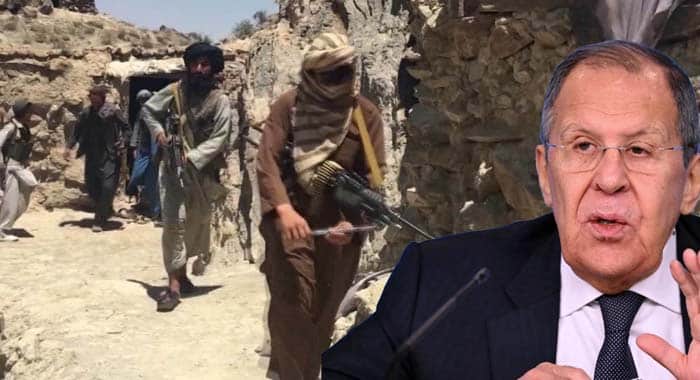
Growing concerns have emerged over the evolving direction of the Moscow Format consultations on Afghanistan, with questions being raised about whether the forum is adequately addressing the full spectrum of security, terrorism and human-rights challenges emanating from Afghan territory.
The latest discussions have drawn particular attention to Russia’s increasingly selective focus on the threat posed by Islamic State Khorasan Province (ISKP), while concerns persist regarding the presence and activities of other militant and terrorist networks operating from Afghanistan.
For neighbouring countries, particularly Pakistan, the security implications of developments inside Afghanistan remain immediate and substantial. Any regional framework intended to contribute to Afghanistan’s stability, therefore, faces the challenge of addressing terrorism comprehensively rather than concentrating on a single organisation.
Russia has previously expressed concerns regarding the presence of terrorist networks in Afghanistan and the potential consequences for regional security.
Moscow has, at various points, raised concerns over the presence of Tehrik-e-Taliban Pakistan (TTP) and other militant groups on Afghan soil. Earlier Russian assessments and statements had highlighted the presence of thousands of TTP fighters in Afghanistan and the potential threat posed by these networks to neighbouring states.
Against this backdrop, the comparatively restrained treatment of the broader terrorist threat in recent Moscow Format discussions has prompted questions about whether geopolitical considerations are increasingly influencing the forum’s approach to Afghanistan.
Russian Foreign Minister Sergey Lavrov, in his remarks concerning Afghanistan, placed emphasis on the Taliban’s actions against ISKP. However, concerns remain that a focus on ISKP alone does not capture the wider security landscape inside Afghanistan.
Regional security cannot be viewed exclusively through the prism of ISKP. A range of militant and terrorist organisations have been reported to maintain a presence, operational infrastructure or support networks in Afghanistan. For neighbouring countries, the critical issue is whether Afghan territory is being prevented from being used to plan, facilitate or launch attacks beyond Afghanistan’s borders.
The continued presence of TTP elements in Afghanistan is of particular concern to Pakistan. Islamabad has repeatedly called for effective action against groups operating from Afghan territory and has maintained that the use of Afghan soil by terrorist organisations represents a direct threat to Pakistan’s national security and to wider regional stability.
A regional dialogue mechanism that does not comprehensively address these concerns risks leaving a significant part of the security equation unresolved.
Questions have also been raised regarding the limited attention given to the Taliban’s human-rights record during discussions surrounding Afghanistan. The restrictions imposed on Afghan women and girls, including limitations on education, employment and participation in public life, remain a major international concern.
Similarly, concerns regarding the treatment of religious and ethnic minorities, freedom of expression, political dissent and the ideological environment within Afghanistan continue to form part of the wider debate surrounding the Taliban’s governance. The absence or limited discussion of these issues from regional diplomatic forums risks creating an incomplete picture of Afghanistan’s current political and security environment.
The question is not merely whether Afghanistan is experiencing relative stability within its borders, but whether the policies and conditions prevailing there are contributing to sustainable peace and security across the region.
For Afghanistan’s neighbours, developments inside the country have consequences that extend far beyond Kabul. The central concern is the potential transformation of Afghan territory into an environment in which terrorist organisations can recruit, train, organise and operate with limited interference.
Pakistan has consistently stressed that sustainable regional peace requires concrete measures against all terrorist organisations operating from Afghan soil, rather than selective action against individual groups. From this perspective, the regional response to Afghanistan must be comprehensive, transparent and focused on measurable security outcomes.
Pakistan has paid a significant price amid continuing terrorism-related violence. According to figures cited by Pakistani authorities, terrorist attacks emanating from Afghan soil during 2026 have resulted in 1,327 Pakistani fatalities and 2,484 injuries, while 1,865 terrorists have been eliminated during counterterrorism operations. Pakistan has also identified 260 Afghan nationals among those killed while allegedly participating in terrorist activities inside Pakistan.
These figures, according to Pakistani authorities, demonstrate the direct human and security costs associated with terrorism linked to the Afghan theatre. Behind every statistic are civilians, security personnel, families and communities affected by violence. For Pakistan, therefore, the issue is not an abstract geopolitical debate. It is a matter of national security and human lives.
The Moscow Format was established as a regional mechanism for consultations on Afghanistan, bringing together Russia and key regional stakeholders to discuss political, security and economic developments concerning the country. Its credibility and relevance depend significantly on whether it addresses the concerns of participating states in a comprehensive manner.
For neighbouring countries confronting cross-border terrorism, the expectation is that the forum should provide a platform for candid discussion of terrorist sanctuaries, militant networks, border security and the obligations of Afghan authorities to prevent their territory from being used against other states. A selective approach risks weakening the forum’s ability to address the underlying causes of regional insecurity.
The changing diplomatic posture towards the Taliban also highlights a broader geopolitical reality.
Russia and other regional powers have strategic interests in Afghanistan, including concerns over political stability, regional connectivity, narcotics trafficking, extremism and competition for influence. Engagement with Afghanistan is therefore understandable from a geopolitical perspective. However, regional security concerns cannot be separated from the policies and actions of the authorities controlling Afghan territory.
If geopolitical engagement increasingly takes precedence over the concerns of neighbouring states, there is a risk that unresolved security threats will become normalised rather than addressed. For Pakistan and other affected countries, the fundamental question remains whether Afghanistan can evolve into a genuinely stable neighbour without permitting terrorist organisations to maintain safe operating space on its territory.
The situation calls for a comprehensive and consistent regional approach. Any meaningful engagement with the Taliban should include clear expectations regarding the prevention of terrorist activity from Afghan soil, action against all terrorist networks without selective treatment, and respect for fundamental human rights.
Regional forums should provide space for affected neighbouring countries to present evidence, security assessments and the human cost associated with cross-border terrorism. The threat posed by ISKP deserves attention, but addressing ISKP alone cannot constitute a complete counterterrorism strategy when other organisations continue to pose security challenges to neighbouring states.
Afghanistan’s future security cannot be assessed solely by the absence of large-scale conflict inside the country. True regional stability requires that Afghan territory not be used as a base for violence against neighbouring countries, that terrorist networks are denied operational space, and that fundamental rights and freedoms are protected.
The Moscow Format has an opportunity to play a constructive role in achieving these objectives. Its effectiveness, however, will ultimately depend on whether it addresses the concerns of all regional stakeholders with consistency and transparency. For Pakistan, the message remains clear: regional security cannot be separated from the threat of terrorism emanating from Afghanistan. A durable peace in the region will require collective recognition of the full security picture, rather than a selective focus on individual terrorist organisations.



