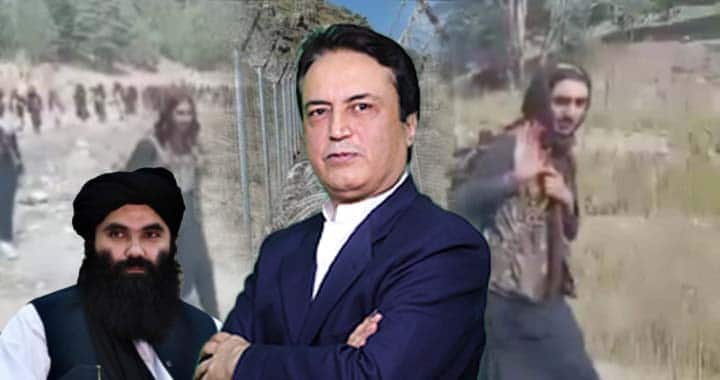
The presence of Pakistani Taliban in Afghanistan, the distinction between displaced Pakistani families and TTP fighters, the links between Afghan Taliban figures and individuals associated with the Pakistani Taliban, and the worsening security situation in Khyber Pakhtunkhwa raise serious questions about regional security and the priorities of Pakistan’s emergency administration.
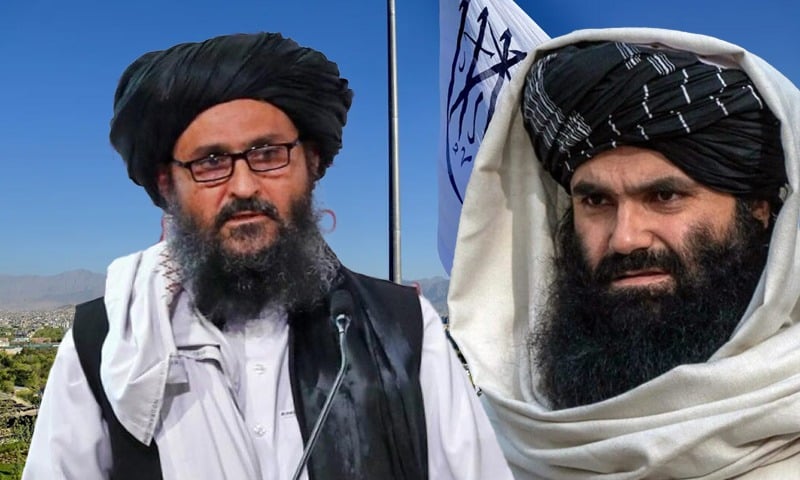
When Sirajuddin Haqqani, Afghanistan’s acting interior minister, spoke about the construction of 2,000 houses for Pakistani families, the statement required careful examination. It would be incorrect to assume that every family living in those houses belongs to the banned Tehreek-e-Taliban Pakistan (TTP). Pakistani tribespeople who crossed into Afghanistan during military operations, including Operation Zarb-e-Azb, also settled there. Some were displaced civilians who preferred to live across the border rather than in camps inside Pakistan.
At the time, estimates of the number of people who moved from North Waziristan to Afghanistan ranged from 14,000 to 25,000. These included ordinary tribespeople as well as individuals associated with the TTP. Therefore, the construction of houses for displaced Pakistani families cannot, by itself, establish that all the beneficiaries were members of the terrorist organization.
However, the distinction between displaced families and TTP fighters does not resolve the larger security question. The presence of TTP fighters in Afghanistan is a separate issue, and it cannot be dismissed simply by describing them collectively as Pakistani immigrants.
Afghan Taliban officials have repeatedly used the term “Pakistani immigrants” when discussing Pakistanis living in Afghanistan. This terminology may encompass different groups, but it does not remove the need to distinguish between ordinary civilians and individuals involved in terrorism. Nor does it answer the question of whether TTP commanders and their families have received shelter, protection or other forms of support.
Sirajuddin Haqqani occupies a responsible position in the Afghan Taliban administration. His statements therefore carry political significance, even when they do not explicitly acknowledge that the houses were built for TTP members. An official admission of providing shelter to the organization would have serious implications for the Afghan Taliban government. That is precisely why the difference between an official position and the realities on the ground deserves attention.
The Video and the Historical Connections
A viral video has also drawn attention to the connections between Afghan Taliban figures and individuals associated with the TTP. In the footage discussed during the program, a man introduces himself to Sirajuddin Haqqani and refers to Hakimullah Mehsud’s convoy and Qari Hussain, a figure associated with the preparation of suicide bombers for terrorist attacks.
The significance of such footage lies not simply in the identity of the individual appearing in it, but in the connections and history it brings into public discussion. A person may be described as a Pakistani immigrant, but if he openly identifies himself through references to the TTP and its figures, that connection cannot be ignored. At the same time, the identity and organizational role of an individual should not be declared conclusively without sufficient verification.
The historical relationship between Afghan Taliban figures and Pakistani Islamist militant networks also needs to be understood in context. Sirajuddin Haqqani and his father, Jalaluddin Haqqani, have longstanding connections with Pakistan’s tribal regions. Sirajuddin Haqqani spent a substantial part of his life in Pakistan, while the Haqqani network maintained links across the wider Paktia region, including areas now associated with Khost, Paktika and Paktia.
These historical connections help explain why relationships between Afghan Taliban figures and Pakistani militant groups cannot be examined as though the two emerged in isolation from one another.
There have also been tensions over the relocation of TTP families from areas in Afghanistan. According to information discussed in the program, the movement of some families prompted a strong reaction from TTP members, who viewed the relocation as an affront. They reportedly invoked the assistance and protection they had provided to Afghan Taliban members and their families when the latter lived as refugees in Pakistan.
The episode illustrates how intertwined these networks and relationships can be. It also raises an important question: if the TTP were merely an unrelated group of foreign residents, why would the relocation of its families provoke such a strong reaction?
The broader history of Afghanistan provides further context. During the decades of conflict preceding the Taliban’s return to power, Afghanistan became a center for international militant networks. Foreign fighters and organizations from several regions operated there, and al-Qaeda leader Osama bin Laden was based in Afghanistan before the US-led invasion in 2001.
The Taliban did not fight alone during that period. Individuals and groups from outside Afghanistan also participated in the wider conflict. The end of the war and the Taliban’s return to power did not mean that every foreign fighter, associated family or affiliated network disappeared.
It is therefore necessary to examine the present-day security situation in light of these longstanding connections. The central question is not whether Afghan territory has a history of hosting militant groups, but whether the Afghan Taliban administration is taking effective action to prevent its territory from being used by organizations that threaten Pakistan.
Governor Rule Must Prioritize Counterterrorism
The security situation in Khyber Pakhtunkhwa is another major concern. The imposition of Governor Rule created expectations that the state would adopt a more effective approach to terrorism and restore security in areas facing persistent threats.
However, the early emphasis on removing encroachments in Peshawar has raised questions about the emergency administration’s priorities. Removing illegal encroachments is a legitimate administrative responsibility, and public spaces cannot be allowed to remain occupied unlawfully. But such action cannot substitute for a comprehensive counterterrorism strategy.
The question is whether the administration is applying the law consistently. Roadside encroachments are visible and relatively easy to target, while large-scale occupation of public land and other forms of encroachment also require attention. Selective enforcement can undermine public confidence, particularly when influential individuals or organizations appear to receive different treatment.
The controversy surrounding Mufti Mahmood Markaz, the Jamiat Ulema-e-Islam-Fazl secretariat on Peshawar’s Ring Road, further highlighted these concerns. The proposed action against the site prompted a strong response from Maulana Fazlur Rehman. According to the account discussed in the program, JUI-F representatives subsequently said the administration had apologized for proceeding without notice and clarified that no demolition had been planned.
The episode raised questions about the consistency of administrative decisions and the ability of political influence to affect their implementation. An emergency administration must demonstrate that its decisions are based on law and transparent procedures rather than political pressure. Otherwise, public debate shifts from governance and security to selective enforcement and political confrontation.
Yet the most serious issue remains the deterioration of the security situation. Terrorist groups continue to pose a threat in Khyber Pakhtunkhwa, and the challenge is no longer confined to one organization or a handful of districts. The presence of multiple groups, including the TTP and factions associated with other networks, complicates the task facing law enforcement agencies.
There are also concerns about the spread of terrorist networks beyond Khyber Pakhtunkhwa into other parts of the country, including southern Punjab. Such expansion would require coordinated intelligence, stronger interprovincial cooperation and sustained action against the networks facilitating recruitment, financing, movement and attacks.
The task cannot be reduced to announcing operations or deploying additional personnel. An effective strategy must identify the structures that allow terrorist organizations to survive, reorganize and continue operating. It must combine intelligence-led operations with police capacity, border management, action against facilitators and measures to prevent terrorist groups from exploiting local grievances.
A Security Strategy Cannot Remain Undefined
Governor Rule should be judged by measurable improvements in security, not by the number of buildings demolished or administrative actions publicized. The emergency administration must explain how it intends to confront the terrorist threat, which institutions will lead the effort and how progress will be assessed.
The army has continued to confront terrorist groups, while police and other law enforcement agencies remain central to maintaining order and investigating attacks. However, the scale and diversity of the threat demand coordination across institutions. No single provincial officeholder or police force can address every dimension of a complex terrorist network without the support of a coherent national strategy.
Large-scale operations may be necessary in areas where terrorist organizations have established a substantial presence. But operations alone cannot deliver lasting security unless they are supported by intelligence, follow-up investigations, the dismantling of facilitation networks and measures to prevent terrorists from returning to cleared areas.
The administration must also distinguish between political disagreements and the security challenge that prompted the emergency. If Governor Rule was imposed in response to concerns about counterterrorism policy, then counterterrorism must remain its central test. Replacing one political administration with another, without demonstrating a more effective security approach, would not address the underlying problem.
Pakistan’s concerns about TTP activity in Afghanistan likewise require sustained attention. The Afghan Taliban administration must be judged by practical steps to prevent its territory from being used for attacks against Pakistan, rather than by terminology that groups all Pakistanis across the border under the broad category of immigrants.
Ordinary displaced families must not be conflated with terrorists. Equally, the presence of civilians among those who crossed the border cannot be used to obscure the activities of TTP members operating in Afghanistan. Both distinctions matter if the objective is an accurate assessment of the threat.
Ultimately, the challenge facing Pakistan has two connected dimensions: preventing terrorist organizations from exploiting Afghan territory and developing an effective domestic strategy to counter terrorism. Progress on either front cannot be measured through statements alone. It must be demonstrated through action, accountability and a sustained reduction in the ability of terrorist groups to threaten the state and its citizens.