
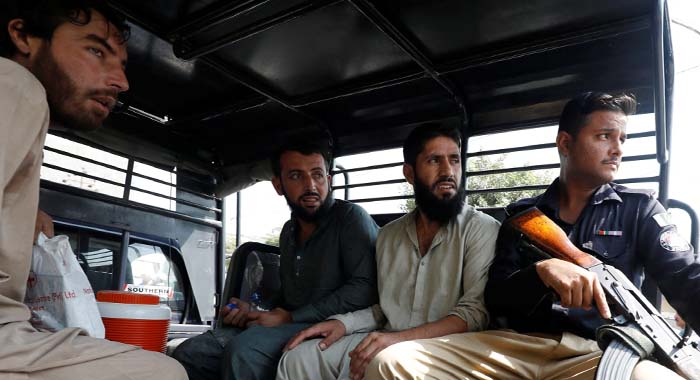
The Government of Pakistan has reaffirmed that the deadline for undocumented Afghan nationals residing in the country will expire on July 10, with authorities set to commence the second phase of the Illegal Foreigners Repatriation Programme (IFRP) immediately thereafter.
The government has made it clear that no extension will be granted, and law enforcement agencies have completed operational preparations to implement the policy in accordance with federal directives.
The decision comes amid heightened security concerns following the June 28 terrorist attack on the Pakistan Rangers headquarters in Karachi, which prompted the state to intensify nationwide counterterrorism efforts. Since the attack, intelligence-led operations have been expanded across Karachi to dismantle terrorist sleeper cells, disrupt militant networks, and eliminate logistical support structures used by extremist organizations.
Officials maintain that the ongoing campaign is directed exclusively against individuals involved in activities that threaten Pakistan’s national security and public safety, and is not aimed at any specific nationality or community.
Residents of Karachi have expressed growing confidence in the government’s strengthened security response. A 34-year-old resident of Gulshan-e-Iqbal who witnessed the aftermath of the June 28 attack, described the incident as one of the most traumatic experiences for local residents.
“The immediate response by security agencies has restored public confidence,” he said. “Comprehensive verification of undocumented individuals and action against suspected hideouts are essential steps toward ensuring lasting peace in Karachi.”
Similarly, a university student who regularly travels through areas with large undocumented migrant populations, said recent biometric verification drives and intelligence-based search operations have noticeably improved the security environment. “The authorities have tightened the net around those facilitating terrorist activities, and citizens now feel considerably safer,” he remarked.
Security analyst and retired law enforcement officer Aslam Saleem said the presence of illegal settlements and terrorist sleeper cells has remained a persistent security challenge in Karachi for decades.
He noted that while successive governments have conducted operations since the 1990s, political considerations and the expansion of informal settlements often enabled militant elements to evade law enforcement.
“The distinguishing feature of the current operation is its reliance on advanced technology, biometric verification, integrated intelligence-sharing, and coordinated law enforcement efforts,” he said.
Social affairs expert Nadia Rehman observed that countries around the world have historically strengthened immigration enforcement and border security following major terrorist incidents. She noted that nations including the United States and the United Kingdom introduced emergency measures after significant terrorist attacks to strengthen national security and accelerate the removal of individuals residing illegally within their territories.
According to Rehman, Pakistan’s current policy reflects internationally recognized principles that prioritize the protection of citizens and national security.
A senior law enforcement official, speaking on condition of anonymity, confirmed that intelligence-based operations are continuing across Karachi’s sensitive areas.
“The objective is not to target any particular community,” the official said. “Our focus remains on dismantling terrorist networks and eliminating facilitators associated with anti-state militant organizations, including those identified by the authorities as Fitna al-Khawarij and Fitna al-Hindustan.”
Authorities say operations are being conducted in accordance with the law and are guided by intelligence assessments aimed at preserving public safety.
Business leaders and members of Karachi’s civil society have also voiced support for the government’s security measures, emphasizing that sustainable peace and economic stability require effective enforcement of immigration laws and decisive action against terrorist networks. Following federal directives, the Government of Khyber Pakhtunkhwa has accelerated preparations for the repatriation of undocumented Afghan nationals residing in the province. A high-level meeting of the Home and Tribal Affairs Department recently reviewed security conditions, implementation progress, and operational readiness ahead of the July 10 deadline.
Provincial authorities have instructed all relevant departments to expedite the repatriation process while continuing to prioritize voluntary returns wherever possible. The meeting also approved a coordinated operational framework involving the police, district administrations, and other law enforcement agencies to ensure effective implementation of the federal policy.
A senior police official in Peshawar confirmed that comprehensive preparations have been completed ahead of the enforcement phase. According to the official, police stations across the province have finalized records identifying undocumented Afghan nationals residing within their respective jurisdictions.
“We are conducting door-to-door awareness campaigns encouraging voluntary return before enforcement begins,” the official said. “Individuals have been informed that formal legal action, including arrests where necessary, will commence from July 10.”
The official emphasized that law enforcement personnel have been instructed to exercise professionalism, avoid unnecessary force, and facilitate voluntary repatriation wherever feasible.
Authorities also confirmed that repatriation through designated border crossings will be supported by fully operational transit facilities in Khyber District, while all relevant departments have been directed to remove administrative and logistical obstacles to ensure a smooth implementation process.
Beginning July 10, coordinated enforcement operations will be carried out across Peshawar and other districts of Khyber Pakhtunkhwa through joint efforts involving police, district administrations, and other security agencies.
The Government of Pakistan maintains that the implementation of immigration laws and the dismantling of terrorist support networks are essential components of its broader strategy to strengthen national security, preserve public order, and protect the lives and property of its citizens.
Authorities have reiterated that all actions will be carried out in accordance with applicable laws and established procedures while ensuring respect for human dignity and due process throughout the repatriation process.



