
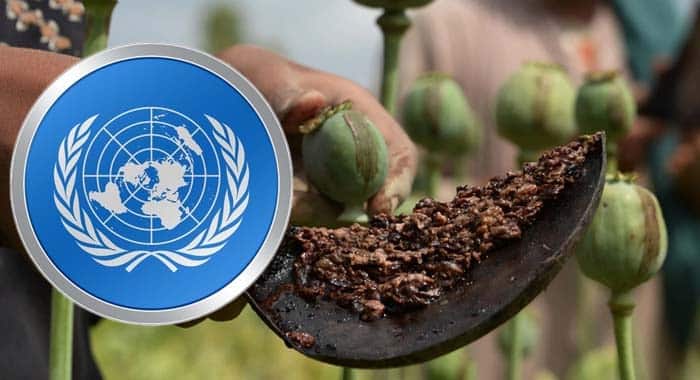
Afghanistan has witnessed a sharp resurgence in opium poppy cultivation in 2026, with the area under cultivation rising to 43,000 hectares from 10,000 hectares in 2025, while opium production has increased fivefold to approximately 1,500 tonnes from 300 tonnes, according to figures attributed to the United Nations Office on Drugs and Crime (UNODC).
The reported increase underscores the persistent economic pressures facing Afghan farming communities and highlights the challenges of sustaining reductions in illicit drug cultivation without adequate financial assistance, viable alternative livelihoods and improved access to markets.
Despite the Taliban authorities’ ban on poppy cultivation introduced in 2022, many farmers are reportedly returning to opium production as poverty, limited employment opportunities and declining economic prospects make it increasingly difficult to meet basic household needs.
According to the report, the northeastern province of Badakhshan has emerged as a major centre of poppy cultivation. Farmers in the province say the income generated from conventional crops is often insufficient to cover essential living expenses.
One farmer, identified as Mohammad, said that without income from opium, providing basic necessities such as food had become increasingly difficult. Other farmers have similarly reported that wheat cultivation does not generate enough revenue to meet their production costs and household expenses.
The economic disparity between legal and illicit crops remains a significant factor influencing farmers’ decisions. UN figures cited in the report indicate that, in 2023, one hectare of wheat cultivation generated slightly more than US$770 in income, compared with approximately US$10,000 from the same area planted with opium poppy. This substantial income gap illustrates why enforcement measures alone may struggle to deliver lasting results unless farmers are provided with economically viable alternatives.
The Taliban authorities have stated that they have destroyed poppy crops covering more than 22,000 hectares. However, UNODC has reportedly highlighted the difficulties of identifying and eliminating cultivation in some areas, where poppy fields are concealed among grain crops or behind walls.
Afghanistan was historically the world’s largest producer of opium poppy. Following the cultivation ban, Myanmar overtook Afghanistan as the leading producer. The latest reported increase in Afghanistan raises renewed concerns about the durability of earlier reductions and the potential implications for regional and international drug markets.
Although opium prices have declined, they remain substantially above pre-ban levels. According to the report, the price fell from US$570 per kilogram to US$500 per kilogram in 2026, compared with less than US$100 per kilogram before the ban. The continued price differential may further strengthen the economic incentive for farmers to cultivate poppy despite the risks associated with prohibition.
UNODC has stressed that effective and lasting reductions in illicit cultivation require a comprehensive approach that addresses the economic circumstances driving farmers towards opium production.
Beyond promoting alternative crops, this approach includes improving access to domestic and international markets, upgrading rural roads, expanding irrigation systems and providing adequate storage facilities. Such investments would help farmers reduce post-harvest losses, improve productivity and secure more reliable returns from legal agricultural activities.
According to Polak Ouk Srirei, UNODC’s representative in Afghanistan, an estimated US$500 million was projected to be required for programmes aimed at establishing sustainable alternative livelihoods for farmers. However, only 10 per cent of the estimated funding has reportedly been secured.
The substantial funding shortfall threatens efforts to develop durable alternatives to opium cultivation at a time when rural households are facing mounting economic pressures.
Since the Taliban returned to power in 2021, Afghanistan has faced a combination of banking isolation, declining external assistance, climate-related disasters and significant population movements. According to the figures cited in the report, approximately 6.6 million Afghans have returned to the country since 2023, adding to pressure on already limited employment opportunities, public services and household resources.
These overlapping challenges have weakened the economic resilience of rural communities and increased the urgency of programmes that can generate dependable income without reliance on illicit crops.
The United Nations has emphasised that preventing a renewed expansion of drug production will require sustained international cooperation, adequate funding and a broader strategy to reduce global demand for illicit drugs. Afghan opium has historically been a major source of heroin entering European Union markets, making developments in Afghanistan relevant to international drug-control efforts.
The reported resurgence in opium cultivation highlights a central challenge for drug-control policy: restrictions and crop eradication are unlikely to produce sustainable results if farmers lack the means to support their families through legal economic activities.
A durable response will require coordinated action by international partners, development agencies and relevant authorities to expand livelihood opportunities, strengthen agricultural value chains and ensure that alternative crops offer farmers a realistic and competitive source of income.
Without sufficient financial resources and sustained investment in rural development, Afghanistan risks losing ground in efforts to reduce illicit opium production, while vulnerable farming communities remain trapped between economic hardship and dependence on a prohibited crop.
The way forward is clear: sustainable drug-control outcomes must be built on viable livelihoods, stronger rural economies and consistent international support—not enforcement alone.



