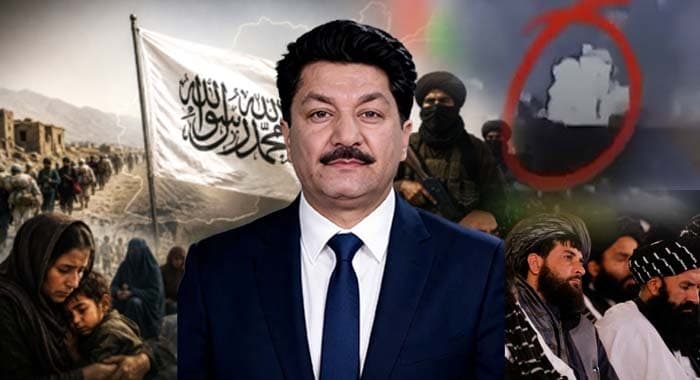
The latest incident in Angoor Adda, South Waziristan, in which one Pakistani citizen was martyred and five members of a family were injured, is a disturbing development in the already strained relationship between Pakistan and Afghanistan. It has once again raised questions about security along the Pakistan-Afghanistan border, the presence of Pakistani terrorist groups on Afghan soil, and the Afghan Taliban’s responsibility for preventing their territory from being used against neighboring countries.
Whenever firing takes place along the border, the people living on both sides are the first to suffer. Tribes are divided by this international boundary, and many families have relatives across it. When such incidents occur, residents begin moving toward safer places because they fear the situation could deteriorate further.
Even if firing lasts only half an hour or a few hours before a ceasefire takes effect, its consequences do not end with the exchange of fire. People remain uncertain about what might happen the following day. Border villages are disrupted, markets close, business activities come to a halt, and children suffer educational losses when schools cannot operate normally. The business community also bears financial losses. Above all, ordinary people are left wondering whether they will be safe in their homes.
Angoor Adda is one of several important crossing points along the Pakistan-Afghanistan border. We often hear about Torkham and Chaman, but other significant points include Kharlachi in Kurram, Ghulam Khan in North Waziristan, and Angoor Adda in South Waziristan. These crossings are important for border communities, trade and movement. They are also locations where security tensions can have immediate consequences for local residents.
We have witnessed serious incidents along this border before. On the night between October 11 and 12, 2025, Afghan Taliban border forces attacked Pakistan. Within a short period, it became clear that they could not sustain the confrontation, and a ceasefire was sought. Since then, the border has remained closed, disrupting trade between the two countries.
During this period, several diplomatic efforts have attempted to ease tensions. Discussions took place in Doha, Istanbul and Riyadh, while China also pursued diplomatic engagement. Its representative visited Kabul and Islamabad in efforts to help revive negotiations. The objective was to resume the incomplete process associated with the Urumqi talks and bring the two sides back to the negotiating table.
However, subsequent terrorist attacks complicated these efforts. Major attacks in the Kohat region, incidents in Kurram, the attack on Kohat Police Lines and an attack targeting a mosque in Kohat added to the security concerns. An attack in Hangu also resulted in the martyrdom of Army personnel. Pakistan subsequently conducted airstrikes on two occasions, targeting locations in Afghan provinces. The second round included Helmand and Kandahar.
At the October 5 Moscow Format meeting, the Pakistani and Afghan representatives presented opposing positions. Afghan Foreign Minister Amir Khan Muttaqi addressed the meeting, as did Pakistan’s representative, Mohammad Sadiq. The two sides accused each other, and the meeting did not produce a joint announcement that could have indicated a common understanding.
Against this backdrop, the incident in Angoor Adda is particularly concerning. A Pakistani citizen, Umar Khan, was martyred, and five members of a family were injured. The incident involved firing that endangered the civilian population. There was also discussion about Pakistan not responding to the firing, but the immediate concern must remain the protection of people who live along the border.
There is another serious dimension to these confrontations. When Pakistani and Afghan forces are engaged in a border standoff, terrorist groups may attempt to exploit the situation. Security personnel are occupied with responding to the confrontation and protecting their positions, creating circumstances in which individuals may attempt to infiltrate Pakistan.
We have seen attempts to cross the border in recent days, including an incident in which two individuals attempting to enter Pakistan were neutralized. Pakistan’s border is under continuous surveillance, and modern technology is being used to strengthen border management. These measures are important because the threat is not limited to conventional confrontations between border forces. Terrorist groups also seek opportunities to cross into Pakistan and carry out attacks.
The Afghan Taliban, however, continue to reject Pakistan’s concerns about the presence of Pakistani terrorist organizations on Afghan soil. This is a central obstacle to improving relations. Pakistan has repeatedly raised the issue, but denials alone cannot resolve a security problem that requires practical action.
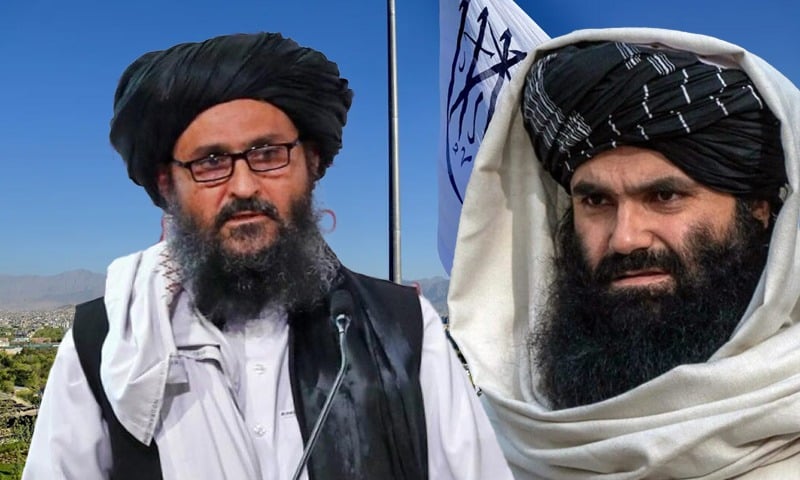
A video involving Sirajuddin Haqqani, the Afghan Taliban’s interior minister, raises further questions. During a visit to Khost, he was meeting people and distributing money when a man approached him and introduced himself as Zabiullah, saying he was a Pakistani citizen from South Waziristan and belonged to the Qari Hussain group associated with the banned Tehreek-e-Taliban Pakistan (TTP).
Qari Hussain was known for his role in training suicide bombers. He and Hakimullah Mehsud, the former TTP leader, were later killed in US drone strikes.
When this individual identified himself as a Pakistani citizen associated with a TTP-linked group, the obvious questions were about his presence and activities in Afghanistan. Why was he in Khost? Where was he living? What was he doing there, and why had he come? These were questions that warranted a clear response.
Instead, the encounter raised questions about whether the presence of Pakistani terrorist operatives in Afghanistan was being properly investigated. If the Afghan Taliban maintain that no Pakistani terrorist groups are operating from their territory, such encounters make it even more important to explain what steps are being taken to identify and deal with these individuals.
The presence of TTP leaders, including Noor Wali Mehsud and Gul Bahadur, has also been a longstanding concern for Pakistan. Various Pakistani terrorist groups are believed to have networks and fighters in Afghanistan’s eastern provinces. Estimates discussed in this context put the number of fighters at approximately 5,000 to 7,000, with their accompanying family members bringing the wider population to around 50,000.
These figures underline the scale of the issue Pakistan has been raising. The concern is not simply that individual Pakistani nationals may be present in Afghanistan. It is that organized terrorist networks, their leadership and their support structures may operate there, including through training facilities and cross-border connections.
The organizations may be Pakistani in origin, but their activities are not necessarily limited to Pakistani nationals. Afghan citizens are also involved in attacks inside Pakistan. This raises concerns that groups such as the TTP and the Gul Bahadur network could expand their operational reach beyond their original membership.
As long as these issues remain unresolved, incidents such as the one in Angoor Adda risk further escalating tensions between the two countries. Russia has expressed interest in facilitating dialogue, and China has also sought a diplomatic solution. Other countries, including Türkiye, Saudi Arabia and Qatar, have an interest in reducing tensions.
But diplomatic initiatives cannot succeed through meetings alone. They require the parties to address the problems that brought them to the negotiating table in the first place. If the Afghan Taliban continue to deny the presence of terrorist groups and fail to take meaningful steps against them, it will be difficult to achieve lasting improvement in relations.
The Afghan Taliban must also recognize that preventing attacks against neighboring countries is in their own interest. Afghanistan needs stable relations with Pakistan, and Pakistan needs a border that does not serve as a route for terrorist infiltration. These objectives are not mutually exclusive. They should form the basis of practical cooperation.
Pakistan has hosted Afghan refugees for decades and has provided refuge to millions of Afghans during successive periods of conflict. More than 1.5 million Afghan nationals remain in Pakistan, and the Pakistani state’s measures concerning their stay and return have brought renewed attention to the issue.
Responsibility for the situation cannot be placed entirely on Pakistan. The Afghan Taliban must also consider why so many Afghans have depended on other countries for safety, employment and basic necessities, and what conditions await those returning home. Their government’s policies and its relationship with neighboring states are part of this wider question.
The Afghan Taliban have also established a commission to encourage Afghans living abroad to return and contribute to rebuilding their country. Those returning from Pakistan include people with professional skills, business experience and expertise in different fields. Women, too, possess skills in handicrafts and other forms of work that could contribute to the economy if they were allowed to participate.
Yet the Afghan Taliban have not demonstrated sufficient concern for the difficulties faced by Afghans returning from Pakistan and other countries. More than 2.7 million people have left Pakistan for Afghanistan over the past two years, while millions have also returned from Iran. These movements place considerable pressure on a country already facing severe economic and humanitarian challenges.
Afghanistan lacks adequate industrial development and employment opportunities, while poverty, hunger and unemployment remain serious concerns. Many families struggle to secure enough food, and children are among those most vulnerable to these conditions.
This raises an important question: if international assistance is intended to improve the lives of ordinary Afghans, where are the benefits reaching the people? The United States has continued providing funds for humanitarian purposes, and questions have been raised about the channels through which money reaches Afghanistan and how it is monitored. These concerns deserve clear answers.
The Afghan Taliban came to power by force rather than through an election. They maintain that they have implemented Shariah, but that assertion does not remove the responsibility to govern effectively or address the needs of the population. Nor does it mean that all Afghans agree with their policies. Many people cannot openly express their views because of restrictions on the media, digital platforms and public expression.
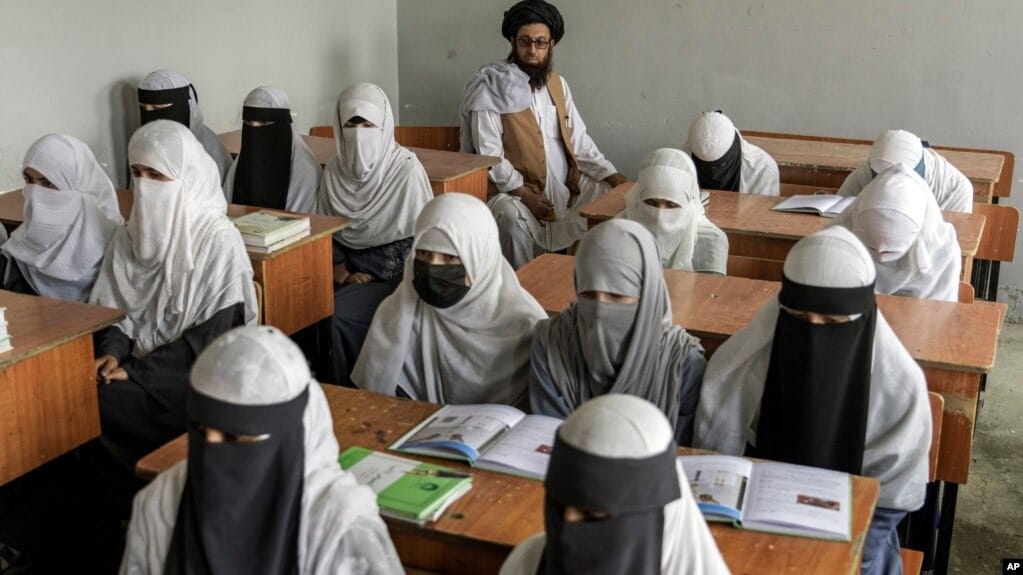
Restrictions on girls’ education and women’s participation in public life have further limited the country’s social and economic potential. These are serious issues that the international community should continue to examine.
Financial accountability is another important concern. If international money is provided in the name of the Afghan people’s welfare, there must be a transparent way to determine whether it is being spent for that purpose.
United Nations agencies, including UNICEF, work on humanitarian and child-welfare issues in Afghanistan. International institutions and organizations can help deliver assistance and support vulnerable communities. Their work is important, particularly where children lack food, healthcare and educational opportunities.
However, questions remain about the transparency and auditing of funds collected or controlled directly by the Afghan Taliban. What mechanisms exist to audit these funds? How can the international community establish whether they are being spent on public services and the welfare of ordinary people? What safeguards ensure that assistance reaches the people for whom it is intended?
These are not minor administrative questions. Financial transparency is essential when a population faces widespread poverty and humanitarian need. The Afghan Taliban should provide clear answers about the management of public resources and international assistance.
Ultimately, Pakistan-Afghanistan relations cannot improve sustainably while security concerns remain unresolved and the Afghan population continues to face severe economic and social restrictions. The Afghan Taliban must address the presence of terrorist groups on Afghan soil, improve relations with neighboring countries and demonstrate accountability in governance.
Pakistan’s concerns about cross-border terrorism require practical action, not repeated denials. Similarly, international assistance intended for ordinary Afghans must be subject to meaningful transparency and oversight.
The incident in Angoor Adda illustrates the human cost of unresolved border tensions. The martyrdom of Umar Khan, the injuries to five members of a family and the disruption faced by border communities should remind both sides that ordinary people bear the greatest burden when security and diplomacy fail.
Dialogue remains necessary, but it must be accompanied by action. Without credible steps to prevent cross-border terrorism, protect civilians and ensure accountable governance, diplomatic meetings alone will not resolve the problems separating Pakistan and Afghanistan.