
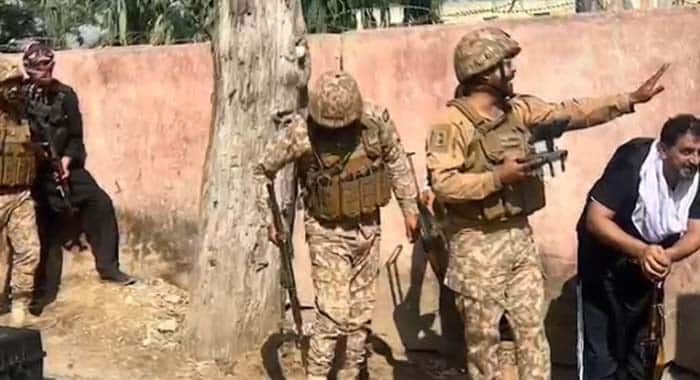
The Counter Terrorism Department’s Additional Inspector General has reached the site of the deadly blast at the Police Lines mosque in Kohat and is directly supervising an ongoing operation against terrorists.
According to the latest update, an exchange of fire is taking place between CTD personnel and the terrorists following the blast, with the Additional IG CTD leading the security personnel and overseeing the operation on the ground.
The security operation is focused on clearing the area and neutralising the terrorists involved in the attack. Security personnel have cordoned off the affected area as the operation continues.
The development comes after a devastating blast struck the mosque at Kohat Police Lines during Friday prayers. At least 16 people, including five police personnel, were martyred and 57 others injured, according to officials.
The attack was followed by an armed assault on the police compound, triggering an exchange of fire between security personnel and the attackers. Security forces subsequently launched a clearance and search operation in the area.
Rescue teams immediately began relief operations after the blast, while security contingents reached the site and secured the area. The injured were shifted for medical treatment, with security sources reporting that a number of victims were taken to Combined Military Hospital Kohat.
The tragic Kohat incident once again highlights the enormous risks faced by Pakistan’s security personnel and civilians during terrorist attacks. The response has also underscored the role of Pakistan Army personnel and other security institutions in crises, not only in counter-terrorism operations but also in rescue, evacuation and emergency medical assistance. In the immediate aftermath of the Kohat blast, security forces moved to secure the site, while military medical facilities were involved in treating the injured.
Across Pakistan, the armed forces have also repeatedly been called upon to support civilian authorities during major emergencies and disasters, providing rescue assistance, medical support and logistical capabilities alongside civilian emergency services.



