
The death of a 32-year-old Afghan woman after alleged torture in Ghor presents a difficult but important question for Afghanistan’s Taliban authorities: what happens when a woman becomes the victim of extreme violence inside a system that claims to enforce law and order?
Sources say the woman, Nooria, was severely beaten and tortured with heated metal rods by her husband and later died from her injuries. Her husband reportedly surrendered to Taliban authorities after the incident.
The immediate issue is criminal accountability for the alleged perpetrator.
But the wider issue is institutional accountability.
That question has become even more significant following the ICC’s decision to unseal four arrest warrants against senior Taliban figures. The court said the suspects are allegedly responsible for persecution on gender and political grounds and linked the alleged crimes to a Taliban governmental policy affecting women, girls and people perceived as opposing those policies.
The Taliban has rejected the ICC’s authority and allegations.
Yet the timing of the Ghor case is difficult to overlook.
The international community has spent years pressing the Taliban to improve the position of Afghan women. The UN has repeatedly raised restrictions on education, employment, movement and participation in public life. Most recently, UN officials have again pressed the Taliban to allow female humanitarian workers to operate freely.
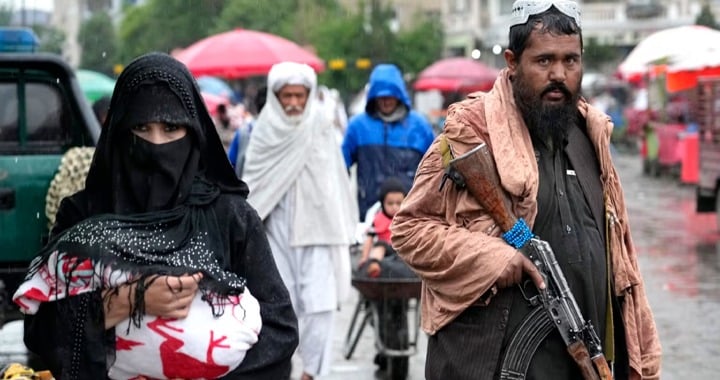
At the same time, women continue to face detention for alleged violations of Taliban dress rules. In September, Taliban officials confirmed the detention of women and girls in Kabul and Herat, describing non-compliance with their interpretation of hijab requirements as a serious offense.
This produces a troubling contrast.
The Taliban’s enforcement machinery has demonstrated its ability to detain women over dress-code violations. But the death of a woman after allegedly being subjected to horrific physical abuse raises the separate question of whether that machinery provides women with adequate protection from violence inside their homes.
The answer will ultimately depend not on statements, but on what happens to the alleged perpetrator in Ghor.
If he is prosecuted transparently and held accountable under a credible legal process, the case could demonstrate that violence against women remains punishable even within Afghanistan’s restrictive environment.
If the case disappears without meaningful accountability, it risks becoming another example of the gap between formal claims of justice and the lived reality of Afghan women.
That is why the Ghor case deserves attention beyond its immediate horror.
The woman is not an ICC case. Her husband is not one of the Taliban leaders named in the warrants. And there is no evidence establishing that Taliban authorities themselves carried out the torture.
But her death has arrived at a moment when the Taliban’s treatment of women is under its most intense international legal scrutiny in years.
The question now is brutally simple: when an Afghan woman is subjected to violence severe enough to kill her, can the system ruling Afghanistan deliver justice for her?



