
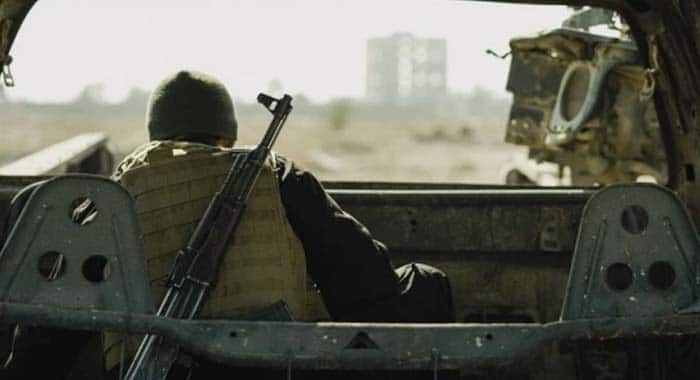
The growing activities and advancing presence of anti-Taliban resistance forces in Afghanistan’s northern province of Badakhshan are emerging as a significant political and military challenge to the Taliban authorities, potentially exposing the limitations of the group’s claims of consolidated and unchallenged control across Afghanistan.
Former Afghan Special Forces Commander General Farid Ahmadi has stated that if resistance elements succeed in establishing control over parts of Badakhshan, the development could have consequences extending far beyond the immediate battlefield. According to General Ahmadi, such a breakthrough could undermine the Taliban’s claim of exclusive political and military authority while potentially creating conditions for the establishment of a broader Afghan political alternative in exile.
General Ahmadi argues that the liberation of Badakhshan from what he describes as Taliban repression could open a pathway toward the formation of an Afghan government in exile. His assessment comes amid reports of continuing clashes involving the Afghan Freedom Front (AFF), National Resistance Front (NRF), local resistance groups and other anti-Taliban elements operating in the province.
The developments in Badakhshan are increasingly being viewed not simply through the lens of armed confrontation but as part of a wider political struggle over Afghanistan’s future. The Taliban’s governance model has excluded political opponents, former security personnel, independent voices and significant sections of Afghan society from meaningful participation in political decision-making. With political authority concentrated within a limited circle, dissent and alternative political positions have faced severe restrictions.
According to the assessment presented by General Ahmadi, this continuing political exclusion has contributed to growing dissatisfaction and created space for anti-Taliban resistance movements to organize, expand and challenge the group’s authority.
Badakhshan is consequently emerging as a critical pressure point for the Taliban regime. Continued resistance activity, recurring clashes and the Taliban’s reported difficulties in restoring uncontested control demonstrate that the province remains a contested political and security environment.
A sustained advance by resistance forces in Badakhshan would carry implications beyond any individual military engagement. Control over territory would provide resistance groups with greater political and organizational leverage while potentially enabling them to improve coordination, establish alternative administrative structures and seek broader public support.
Such a development could directly challenge the Taliban’s claim that it represents the sole legitimate authority across Afghanistan.
The emergence of an area outside effective Taliban control could also provide a physical and political platform for Afghan factions that have been excluded from the country’s current political structure. Over time, this could create conditions conducive to the establishment of a political alternative in exile and provide displaced political forces with a new platform from which to organize.
The continuing confrontation in Badakhshan also highlights the broader consequences of political exclusion under Taliban rule. Former members of Afghanistan’s security institutions, political opponents, independent activists and other dissenting voices have largely been denied meaningful participation in the country’s political system. The absence of an inclusive political framework has deepened divisions and contributed to an environment in which armed resistance groups can present themselves as alternatives to the existing order.
The growing prominence of resistance movements therefore cannot be viewed solely as a military phenomenon. It also reflects a wider contest over political representation, governance and the future direction of Afghanistan.
Badakhshan occupies a strategically important position in northern Afghanistan and has historically been significant because of its geography, mountainous terrain and connections with Afghanistan’s wider northern region. For the Taliban, losing meaningful control over any significant portion of the province would represent both an operational and symbolic setback.
For resistance groups, meanwhile, establishing a sustained presence could provide opportunities to improve coordination, consolidate organizational structures and demonstrate that the Taliban’s authority is not beyond challenge. A prolonged resistance presence could therefore transform Badakhshan from a localized security flashpoint into a broader political center of gravity for opposition to Taliban rule.
The developments also raise a fundamental question about the relationship between territorial control and political legitimacy. The ability to control territory through military force does not necessarily translate into broad political acceptance. Sustained resistance in Badakhshan could reinforce the argument that territorial dominance alone cannot substitute for representative governance, political participation and public legitimacy.
If resistance groups are able to maintain their momentum, their challenge could increasingly shift from simply confronting Taliban forces to presenting an alternative political vision for Afghanistan. Such a transformation would require resistance groups to demonstrate not only military capability but also political cohesion, effective coordination, credible leadership and the ability to articulate a governance model capable of attracting support from diverse Afghan communities.
The trajectory of events in Badakhshan could therefore prove consequential for Afghanistan’s broader political landscape. A sustained advance by resistance forces would potentially weaken the Taliban’s narrative of complete and irreversible control while giving excluded Afghan political actors renewed space to organize and advocate for an alternative political framework.
It could also encourage greater international attention to the question of political inclusivity, human rights, constitutional governance and the representation of Afghanistan’s diverse population. At the same time, developments on the ground remain fluid, and the ability of resistance groups to convert battlefield gains into durable political and administrative control would depend on a range of military, organizational and political factors.
Badakhshan is increasingly more than a conventional security front. It is becoming a potential test of the Taliban’s ability to maintain political authority through a centralized and coercive model of governance. If anti-Taliban forces succeed in establishing a durable presence or securing control over parts of the province, the consequences could extend well beyond Badakhshan. Such a development could challenge the Taliban’s assertion of uncontested authority and provide political space for Afghan factions seeking an alternative national framework.
The evolving situation could ultimately determine whether resistance in Badakhshan remains a series of localized armed confrontations or develops into a broader political and military movement capable of reshaping Afghanistan’s internal balance of power.
The developments in Badakhshan therefore warrant close attention. The province may be emerging not merely as another contested battlefield, but as a potential focal point in the wider struggle over Afghanistan’s political future where territorial control, political legitimacy and the demand for inclusive governance increasingly converge.



