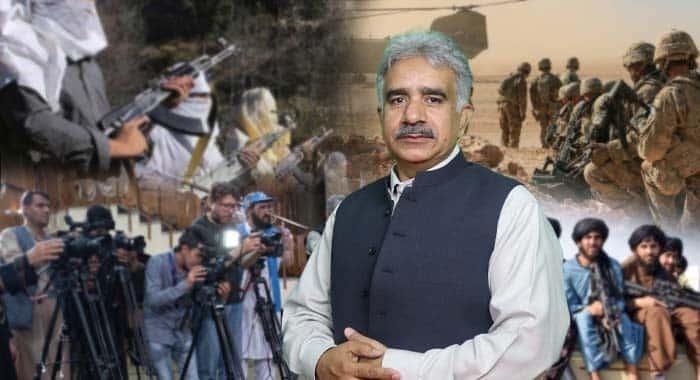
The struggle for stability in South Asia is increasingly being fought on two interconnected fronts: the battle for control over information and the battle against terrorism. Afghanistan under Taliban rule presents a deeply troubling picture of media restrictions, intimidation of journalists, suppression of public expression and the growing use of propaganda as a political instrument. Across the border, Pakistan faces a different but equally consequential challenge: confronting terrorism, restoring public confidence in law enforcement institutions and developing a sustainable counterterrorism strategy.
These developments are not isolated political events. They reflect a broader regional struggle over governance, accountability, ideology, institutional strength and the future of state authority. What is happening in Afghanistan demonstrates how information can become a tool of political control, while Pakistan’s evolving security strategy highlights the importance of institutional reform, intelligence coordination and an effective justice system.
The most alarming development in Afghanistan is the reported intensification of restrictions on independent journalism. Reports indicate that approximately 77 journalists have been arrested and detained, while numerous media professionals, television anchors, analysts and reporters have been forced to leave the country. Those who remain increasingly operate under an environment in which the authorities determine what can be reported, what can be discussed and which narratives are permitted to reach domestic and international audiences.
This is not simply a dispute between a government and the media. It is a fundamental question about whether a society has the right to know what is happening within its own borders.
A country cannot be held accountable when its citizens are denied access to independent information. An independent media is not a luxury, nor is it an instrument reserved for political opponents. It is an essential institution through which citizens understand government decisions, examine the conduct of those in power and bring public grievances into the national conversation.
The reported media restrictions in Afghanistan point towards a systematic effort to narrow the space for independent reporting. If journalists cannot investigate government policies, report on military developments, interview affected communities or question the authorities, the result is an information environment dominated by official messaging. The consequences extend far beyond the media industry.
When journalists are arrested, families are intimidated and independent broadcasters are silenced, the entire population becomes vulnerable to information manipulation. Citizens lose the ability to distinguish between verified facts, political claims and manufactured narratives. International observers, meanwhile, find it increasingly difficult to establish what is happening on the ground.
This is precisely how an information black hole develops: not necessarily through the complete disappearance of communication, but through the systematic disappearance of independent verification.
The reported arrests of around 77 journalists should therefore be treated as a serious warning. Every detained journalist represents not only an individual whose professional freedom has been compromised but also a potential source of information that society has lost.
The departure of experienced anchors, analysts and reporters further weakens Afghanistan’s already fragile media landscape. Those who remain may face an impossible choice between professional responsibility and personal safety. Self-censorship becomes a survival mechanism, and journalism gradually transforms into an exercise in repeating approved narratives.
The consequences are particularly serious during military operations and periods of political tension. When independent reporting becomes impossible, casualty figures, civilian suffering, damage to infrastructure and allegations of human rights violations cannot be properly investigated.
A media environment in which only officially approved accounts circulate cannot provide the transparency required for public accountability.
The issue is not whether a government has the right to communicate its position. Every government has that right. The issue is whether it permits alternative accounts, independent investigations and legitimate criticism to exist alongside its own messaging.
A state confident in its policies should not fear journalists. It should welcome scrutiny because transparency strengthens public trust, while censorship creates suspicion. Equally concerning are reports that approximately 70 million Afghanis have been allocated for propaganda-related activities and the promotion of the Taliban’s political narrative.
The precise financial details and intended expenditure require independent verification. Nevertheless, the broader question deserves serious attention: why would a government facing profound economic and humanitarian challenges prioritize the promotion of its political image while large sections of the population continue to struggle with basic necessities?
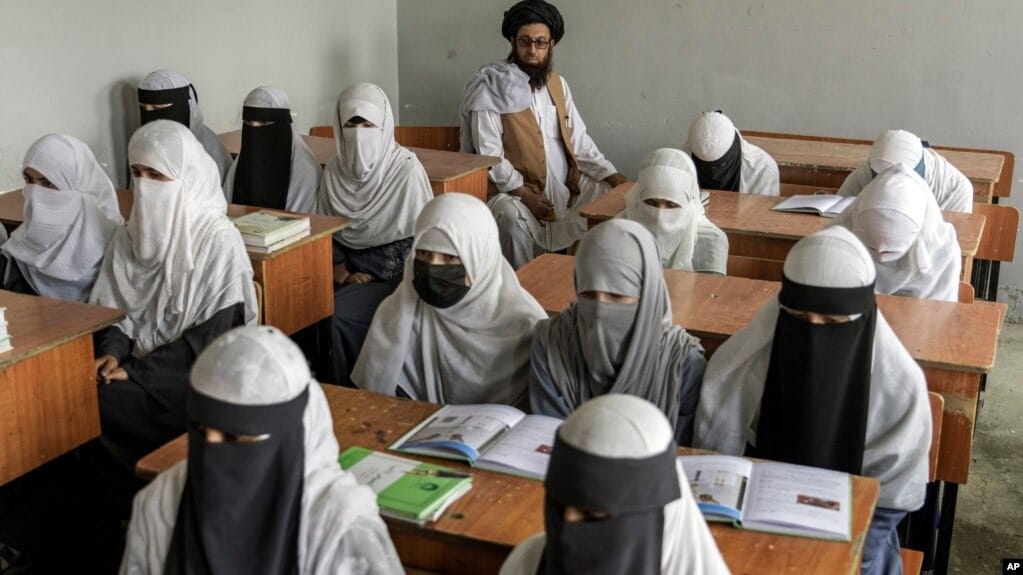
Afghanistan is confronting immense social and economic difficulties. Poverty, unemployment, food insecurity and inadequate access to essential services continue to affect ordinary citizens. Education and healthcare remain critical areas requiring sustained attention, while restrictions on women’s participation in public life have further damaged the country’s social and economic potential.
In such circumstances, the allocation of public resources towards political image-building raises legitimate questions about priorities.
Public money should primarily serve the public. It should improve schools, hospitals, roads, employment opportunities and social protection. Government communication has a legitimate role, but it cannot become a substitute for governance. There is also a significant distinction between public information and propaganda.
Public information explains policies, communicates decisions and allows citizens to understand the actions of their government. Propaganda, by contrast, seeks to shape perceptions, suppress inconvenient realities and establish a politically convenient version of events.
The increasing influence of social media has made this distinction even more important. YouTube channels, online commentators, digital publications and social media accounts can reach millions of people within minutes. When political messaging is coordinated, amplified or financially supported, it can create an impression of widespread public approval even when the underlying social and economic conditions tell a different story.
The danger is that political narratives begin to replace measurable performance. A government should be judged by whether people have food, education, healthcare, employment, security and justice not by how effectively its supporters portray its leadership as extraordinary or infallible. Afghanistan needs investment in its people, not merely investment in its image.
One of the most significant aspects of the internal debate within the Taliban leadership is the criticism voiced by senior Taliban figures themselves.
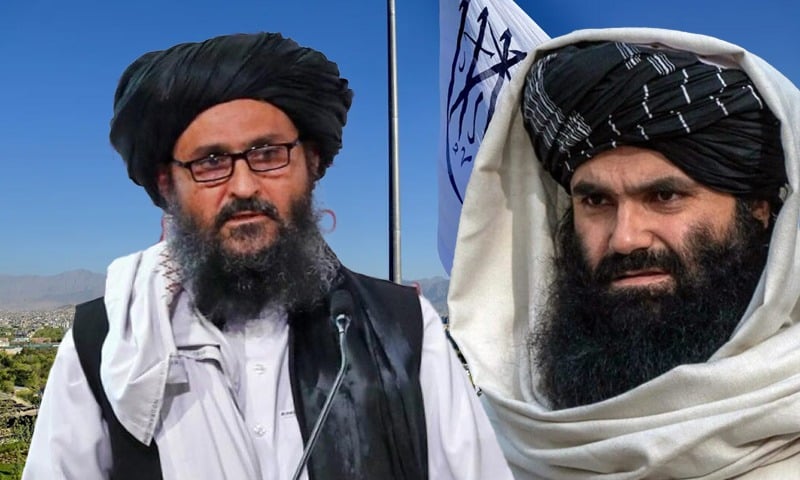
Sirajuddin Haqqani’s reported remarks during a religious seminary gathering in Ghazni deserve particular attention. His criticism of those who preach religious principles but fail to practise them highlights a fundamental contradiction between political rhetoric and governing responsibilities. This is not an ordinary political disagreement. It touches the very foundation upon which the Taliban claim legitimacy.
Any government that presents itself as an Islamic administration assumes a special responsibility to demonstrate justice, honesty, accountability, compassion and public welfare through its conduct.
Religious principles cannot be invoked selectively to demand obedience from ordinary citizens while those exercising authority remain beyond scrutiny.
The provision of education, healthcare, economic opportunities and basic facilities is not separate from responsible governance. These are central obligations of any administration claiming to serve society.
The contradiction becomes particularly visible when religious language is used to justify restrictions on citizens while public resources, administrative privileges and opportunities appear to benefit those connected to positions of power.
Historical examples of Islamic leadership frequently emphasize simplicity, accountability and personal sacrifice. The example of Salahuddin Ayyubi, remembered for his humility despite his military and political achievements, illustrates the difference between claiming religious greatness and demonstrating it through personal conduct.
The fundamental question facing the Taliban leadership is therefore straightforward: if the administration claims to represent Islamic principles, why should its policies not be judged against the ethical standards it invokes?
Religious legitimacy cannot be sustained through slogans alone. It must be earned through justice, public service and the protection of human dignity.
While Afghanistan’s information environment raises questions about transparency and political control, Pakistan faces the immediate challenge of restoring security, particularly in Khyber Pakhtunkhwa.
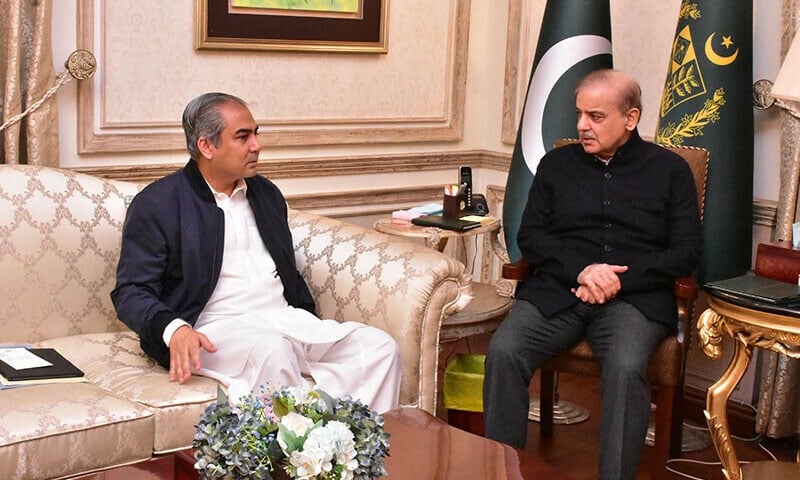
The recent security briefing at the Governor House outlined an important direction for counterterrorism policy. Its significance lies not merely in the financial resources announced or the proposed improvement of law enforcement capabilities, but in the recognition that Pakistan’s counterterrorism framework requires a stronger institutional foundation.
For years, the police and other law enforcement agencies have operated under enormous pressure. Personnel deployed in terrorism-affected districts have faced threats, attacks, inadequate facilities and considerable professional uncertainty. Their frustration has not always been adequately acknowledged by political and administrative leadership.
Counterterrorism cannot succeed if the people responsible for maintaining law and order feel abandoned by the institutions they serve. The proposed allocation of approximately Rs70 billion for security-related improvements, including police capacity-building and institutional strengthening, therefore represents an important opportunity. However, financial allocations must translate into visible improvements on the ground.
Police stations require better infrastructure. Police lines and residential facilities need upgrading. Counterterrorism departments need modern equipment, surveillance capabilities, protective vehicles, communication systems and professional training.
The provision of bulletproof vehicles, armoured transport and other protective resources is essential in areas where law enforcement personnel face persistent security threats.
However, equipment alone cannot deliver lasting results. A modern counterterrorism system requires intelligence-sharing, professional investigation, effective prosecution, coordination between federal and provincial institutions and a justice system capable of delivering credible outcomes.
The most important feature of the proposed reforms is the recognition that the weaknesses of the existing judicial and prosecution framework must be addressed alongside operational shortcomings.
One of the most consequential proposals discussed during the security briefing concerns the establishment of faceless courts for terrorism-related cases. The idea deserves serious examination because Pakistan’s counterterrorism experience has repeatedly demonstrated that arresting suspects is only one stage of the process. Bringing them to justice through legally sound and credible trials is an entirely different challenge.
In the past, law enforcement agencies have apprehended thousands of suspected militants in different operations. Yet the judicial process has frequently encountered difficulties involving prosecution, witness protection, evidence collection, intimidation and judicial security.
In terrorism-affected areas, judges, prosecutors and witnesses can face extraordinary pressure. The fear of retaliation may discourage individuals from participating in legal proceedings, weakening cases and allowing serious offenders to escape accountability.
Faceless courts are being presented as a possible institutional response to some of these challenges. Their proposed purpose is to protect the identities and security of those participating in sensitive proceedings, including judges and other relevant personnel, while allowing terrorism cases to proceed under a structured judicial mechanism.
However, the success of such a system will depend on much more than concealing identities.
There must be credible evidence, competent prosecution, independent judicial oversight, transparent procedures and meaningful opportunities for the accused to defend themselves.
The protection of judges and witnesses must never become an excuse for abandoning due process. Pakistan must avoid repeating the shortcomings that have undermined previous counterterrorism trials. A conviction that cannot withstand judicial scrutiny is not a lasting victory against terrorism.
The objective should be to build a system in which terrorists are punished through credible legal proceedings, not through shortcuts that create further legal and institutional complications.
Another important consideration is the role of the state as a complainant in terrorism cases. Terrorist attacks frequently kill victims who cannot personally pursue legal proceedings. Families may be traumatized, intimidated or displaced, while witnesses may be unwilling to come forward.
The state must therefore have the institutional capacity to investigate and prosecute crimes even when individual victims cannot actively pursue a case. A terrorist attack cannot simply disappear from the legal record because no surviving individual is prepared to file a complaint. The state has a responsibility to protect victims, preserve evidence and ensure that those responsible face justice.
Another important development concerns the misuse of mosques and religious institutions by militant groups. The discussion surrounding this issue highlights a sensitive but essential distinction: protecting religious institutions does not mean allowing them to be exploited for violent activities.
Mosques are places of worship, education, community engagement and spiritual guidance. Their sanctity must be protected. The use of religious premises for storing weapons, ammunition or supporting militant operations undermines the very religious values these institutions represent.
It also places worshippers and surrounding communities at risk. Religious scholars have an important responsibility in this regard. Their public position can help distinguish legitimate religious practice from the exploitation of religion for political or militant purposes.
The condemnation of using mosques for weapons storage and militant activities by religious figures, including Maulana Tayyab Qureshi, is therefore significant.
Religious institutions must not become operational spaces for armed groups. Nor should the sanctity of a mosque be manipulated to discourage legitimate law enforcement investigations into criminal activities. This is a matter of protecting both public security and religious dignity.
The distinction between faith and militancy must remain clear. No organization should be allowed to use religious terminology as a shield against accountability for attacks on civilians, police personnel or other state institutions. Religious scholars, community leaders and educational institutions can play a constructive role in rejecting violence and discouraging the misuse of religious identity. The fight against terrorism cannot be left exclusively to security agencies. It also requires intellectual, religious and social resistance to extremist narratives.
Recent counterterrorism operations in areas including Hassan Khel and Bannu demonstrate the continuing intensity of the security challenge. Operations targeting militant networks have reportedly resulted in significant militant casualties. Such developments indicate that intelligence-led operations remain an important part of Pakistan’s security response.
However, the larger test is whether tactical successes can be converted into lasting improvements in public security. A reduction in terrorist incidents during a particular month may be encouraging, but it should not automatically be interpreted as evidence that the overall threat has disappeared.
Security assessments must examine longer-term trends, geographical patterns, the operational capacity of militant networks, recruitment, financing and the ability of local institutions to maintain control. The importance of coordination between political leadership, provincial administration and security institutions cannot be overstated.
For too long, counterterrorism debates in Pakistan have been complicated by political disagreements over negotiations, military operations and the appropriate response to militant violence.
A coherent national position is essential. The implementation of the National Action Plan must move beyond political statements. Federal and provincial institutions need clear responsibilities, measurable targets and consistent coordination.
The state must also communicate its security policy effectively to local communities, particularly in areas that have suffered years of violence. Residents of Khyber Pakhtunkhwa and the former tribal districts have paid an extraordinary price. Their concerns, grievances and expectations must remain central to the formulation of security policy.
Military and police operations may be necessary, but lasting stability requires functioning civilian administration, economic development, education, healthcare and public confidence. Security is not simply the absence of terrorist attacks. It is the presence of institutions that allow ordinary people to live without fear.
The most important message emerging from the recent security discussions is that Pakistan cannot afford to lose its determination in the fight against terrorism.
A state that allows terrorist organizations to establish parallel systems of authority ultimately weakens its own sovereignty. The consequences extend beyond individual attacks. Terrorism damages investment, disrupts education, discourages economic activity, weakens public confidence and creates instability that can affect generations.
The remarks by the provincial governor that there is no room for defeat in the fight against terrorism reflect the seriousness of the challenge.
However, determination must be accompanied by strategic patience and institutional consistency. No government should expect a miracle overnight. Years of security challenges, administrative weaknesses and institutional gaps cannot be resolved through a single briefing or a few operations.
The state must remain committed to a sustained strategy that combines intelligence-based operations, professional policing, judicial reform, border management, community engagement and economic development.
It must also recognize the sacrifices of police officers, security personnel and civilians who have endured the consequences of terrorism. Their morale is a strategic asset. If law enforcement personnel believe that their sacrifices are ignored, their institutions will gradually weaken. Conversely, when the state provides them with resources, protection, professional opportunities and institutional support, their capacity to defend society improves.
The developments in Afghanistan and Pakistan offer an important regional lesson. Afghanistan demonstrates the dangers of suppressing information, restricting public expression and prioritizing political narratives over public welfare. Pakistan’s counterterrorism challenges demonstrate the consequences of weak institutional coordination, inadequate prosecution and insufficient support for law enforcement agencies.
These may appear to be different problems, but they share a common foundation: the relationship between the state and its citizens. A government that fears independent information cannot build lasting public confidence. A security system that cannot deliver credible justice cannot permanently defeat terrorism. And a political administration that fails to provide basic services cannot sustain legitimacy through ideological claims alone.
The future of the region will depend on whether governments understand these realities.
Afghanistan needs an environment in which journalists can work without intimidation, citizens can express legitimate criticism and public resources are directed towards improving people’s lives. The Taliban leadership must recognize that controlling information does not resolve economic difficulties, improve international credibility or create genuine political stability.
Pakistan, meanwhile, must transform its counterterrorism commitments into measurable institutional reforms. The proposed investment in policing, improved intelligence coordination, stronger prosecution and judicial protection could provide a meaningful foundation, provided these measures are implemented with accountability and respect for constitutional and legal safeguards.
Ultimately, neither propaganda nor force alone can guarantee stability. A sustainable state is built through public trust, justice, responsible governance and the protection of human dignity.
The real victory against terrorism will not be measured solely by the number of militants eliminated. It will be measured by whether children can attend school without fear, businesses can operate without intimidation, police officers can perform their duties safely, courts can deliver justice and citizens can trust the institutions governing them.
Similarly, Afghanistan’s real progress will not be measured by the volume of propaganda circulated in support of its rulers, but by whether its people enjoy education, healthcare, economic opportunity, freedom of expression and equal protection under the law.
The region does not need stronger propaganda machines or governments that demand unquestioning obedience. It needs stronger institutions, accountable leadership and societies in which truth is not treated as a threat. The ultimate test of state power is not how effectively a government controls the narrative, but how effectively it protects its people, delivers justice and earns their trust.