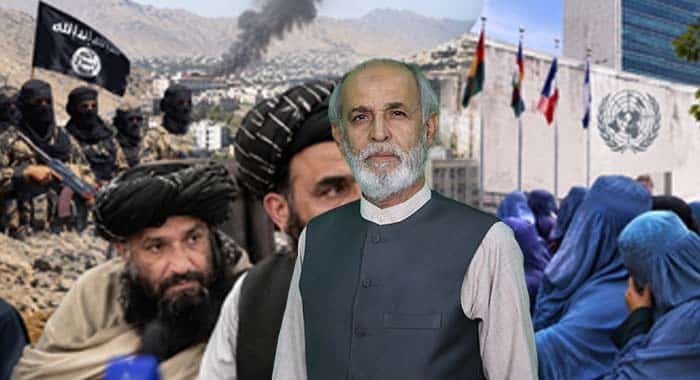
Afghanistan is increasingly facing allegations from different countries that its territory is being used by foreign terrorist organizations and that armed groups are operating from there. India has now made a similar allegation, claiming that a suspect linked to the November 10 bombing in New Delhi is present in Afghanistan. Russia, meanwhile, has warned that the growing presence and activities of Islamic State (ISIS) in Afghanistan pose a serious threat to international security.
These developments raise important questions about the situation inside Afghanistan, the Taliban regime’s ability to control the territory and the consequences of its policies for the region and the wider world.
An Indian intelligence official, Rakesh Agarwal, has expressed concern that one of the suspects linked to the November 10 bombing in New Delhi is currently in Afghanistan. He did not disclose the individual’s identity. However, Indian media reports have named him as Muzaffar Rajar, who is said to belong to Jammu and Kashmir. According to these reports, he was involved in the incident and is now living in Afghanistan with like-minded Taliban or other associates.
Agarwal also indicated that investigations into the bombing were continuing and that the individuals or groups involved had been identified. This is a significant allegation, particularly because India is not the only country to have raised concerns about the presence of terrorist networks in Afghanistan. Over the past five years, hardly any country has refrained from making allegations about the Taliban regime and the use of Afghan territory for terrorist activities.
Russia has also expressed serious concern. Maria Zakharova, spokesperson for the Russian Foreign Ministry, has warned that ISIS activities in Afghanistan are becoming a threat to international peace and security. She has called on the United Nations and the international community to initiate coordinated action against the organization, warning that, if left unchecked, ISIS could emerge as a threat comparable to al-Qaeda in the past.
This concern is not limited to Russia. The activities of terrorist organizations in Afghanistan have implications for several countries, and the international community cannot afford to ignore the possibility that these networks may expand their reach beyond Afghan territory.
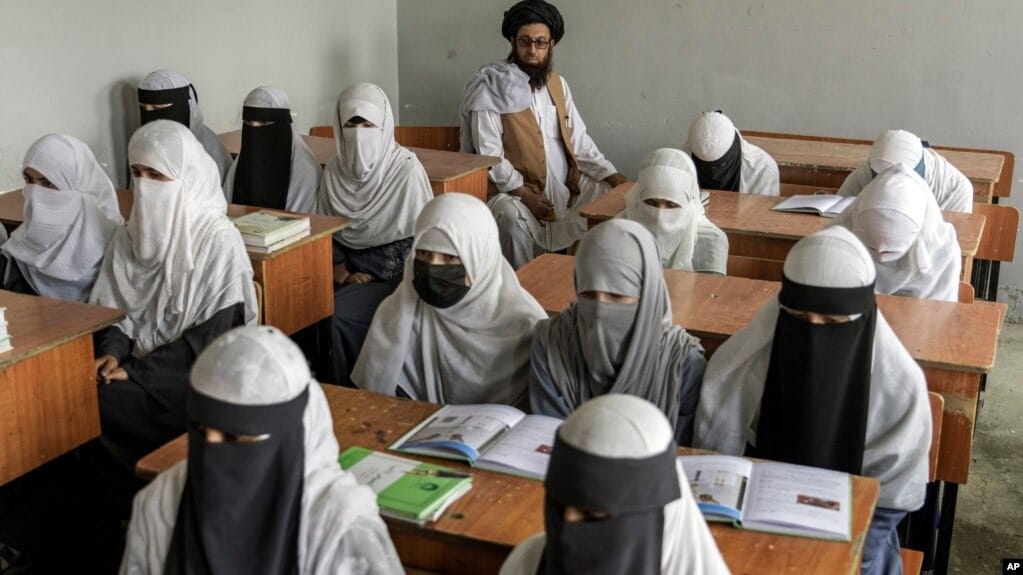
There is another equally serious issue: the restrictions imposed on Afghan women, including their right to education and employment. Afghanistan’s Permanent Representative to the United Nations, Naseer Ahmad Faiq, has called on the United Nations to take immediate notice of the Taliban restrictions preventing Afghan women from working in UN agencies and other international organizations.
These restrictions, imposed in September 2025, have prevented women employees from entering offices and performing their duties. Faiq has urged the United Nations to engage with the Taliban regime and press it to lift the restrictions, pointing out that they have severely affected the functioning of international organizations operating in Afghanistan, including UNESCO, UNHCR and the World Health Organization.
The consequences extend beyond the employment of individual women. When women are prevented from working in humanitarian and other international organizations, the delivery of services to Afghan communities is also affected. Restrictions on women’s education and employment have already created serious difficulties for Afghan society, and the continued exclusion of women from professional and public life is making the situation worse.
The concerns have also been raised in connection with World Children’s Day. Statements from former Afghan officials, human rights activists and organizations working for children’s rights have highlighted how restrictions on women and girls are affecting educational institutions and healthcare services. The United Nations has been urged to play a more active role in addressing these problems.
The question is whether international pressure will persuade the Taliban to change their policies. I believe pressure is increasing, but there are also divisions within the Taliban movement itself. Several Taliban figures have criticized the Ministry of Higher Education over its policies. Mullah Yaqoob has also criticized these decisions, while other members of the movement have called for a review of certain internal policies.
Sheikh Hibatullah Akhundzada recently traveled from Kandahar to Kabul. One of the purposes of this visit was to examine disagreements within the Taliban ranks and the criticism directed at the regime’s policies. However, he has not yet issued a statement explaining the outcome of the visit, what conclusions he reached or how he intends to address these differences.
At the same time, international media organizations and human rights groups continue to criticize restrictions on women, political victimization and other policies of the Taliban regime. These criticisms are not confined to foreign governments; voices of disagreement have also emerged from within the Taliban movement.
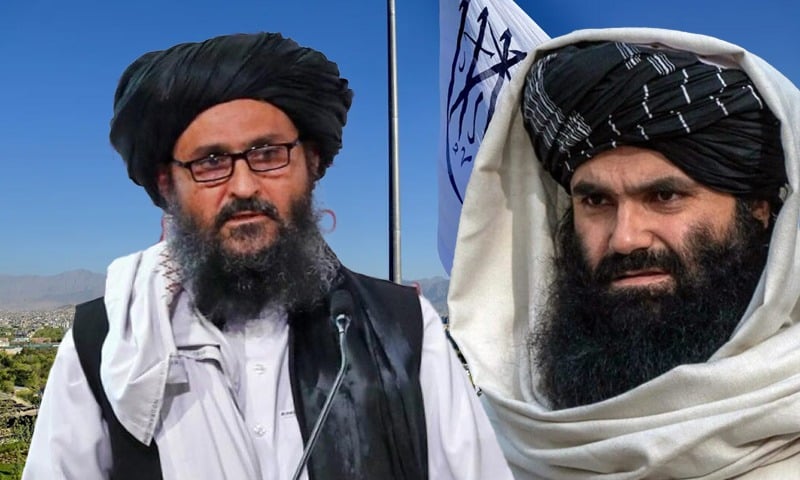
Consider the statement by Anas Haqqani, the brother of Sirajuddin Haqqani. He said that approximately one million Afghans had been killed during two decades of internal conflict. However, he did not clarify how many of these deaths occurred during the Taliban’s current rule.
There are also figures suggesting that around 40,000 people have been killed and 88,000 injured in Afghanistan during the five years since the Taliban returned to power. These figures need to be considered separately from the casualties of the earlier conflict. The Taliban have attributed deaths during the previous period to resistance against US and NATO forces. But what explanation is offered for the deaths occurring under their own rule?
Since the Taliban took power, there has been no comparable armed resistance or opposition across the country to explain such casualties. This raises serious questions about why so many people have lost their lives or suffered injuries. Political and religious revenge, as well as victimization, must be considered when examining these developments.
The international community’s response, however, remains complicated. The United States is making demands of the Taliban and raising allegations against them, but at the same time, funds are also being provided to the regime. Russia is deeply concerned about ISIS activities in Afghanistan and has expressed its displeasure, yet it maintains good relations with the Taliban. Turkey, too, has established links with the regime.
This contradictory approach reflects the uncertainty surrounding international policy toward Afghanistan. Different countries have concerns about the Taliban, but their strategic interests also shape their relations with the regime. Afghanistan occupies an important geopolitical position. If the United States withdraws from the equation, Russia may seek to fill the resulting space. If Russia steps back, the American bloc may attempt to expand its influence. This competition makes it difficult for the international community to adopt a consistent and coordinated approach.
I believe meaningful pressure on the Taliban will increase only when major powers agree on a common position. A forum similar to the recent trilateral conference involving China, the United States and Russia could provide an opportunity to develop a coordinated approach to Afghanistan. Such a platform should establish that the Afghan issue must be addressed through a lasting solution, without external interference, while also making it clear that violations of human rights cannot be ignored.
The international community should collectively raise its voice against restrictions on women, abuses of human rights and political victimization. It should also develop a common position on security threats emanating from Afghan territory. If major powers continue to pursue separate interests and maintain contradictory policies, the Taliban will face less pressure to reconsider their decisions.
However, Afghanistan’s problems cannot be understood solely through the actions of foreign countries or the policies of the Taliban. The country’s own history is marked by internal divisions and a lack of political consensus. At different points in its history, Afghanistan has struggled to achieve internal unity, and external powers have repeatedly taken advantage of these divisions.
Until the Afghan people themselves agree on common principles and a shared direction for their country, these problems will continue. Without internal consensus, Afghanistan will remain trapped in the same cycle of disagreement, instability and backwardness.