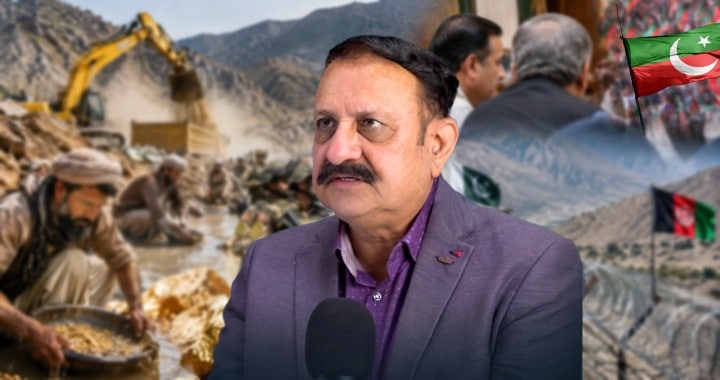
What has recently come to light about illegal gold mining in Nowshera and Kohat is merely the tip of the iceberg. The revelations may represent not even one percent of the wider deterioration that has taken place in Khyber Pakhtunkhwa. The issue is far bigger than the illegal extraction of gold. It concerns the operation of an organized mafia, the networks protecting and profiting from it, and the potentially dangerous connections between this underground economy and the province’s broader security environment.
There is a recurring contradiction in the political conduct of the Pakistan Tehreek-e-Insaf (PTI). The party has repeatedly raised objections to practices that, according to the allegations now emerging, were taking place under its own watch. Consider Murad Saeed’s statements about terrorists being brought back to and resettled in the province. While these concerns were being publicly highlighted, a much more fundamental question remained unanswered: What was actually happening on the ground, and who was facilitating these developments?
Even the areas from which PTI launched its last major political mobilization are significant in this context. These are politically sensitive regions that have long been associated with serious security challenges. The situation now emerging should be treated as a major test case for the federal government, the governor and the new administrative structure being developed in Khyber Pakhtunkhwa.
The central question is how the state intends to dismantle the interconnected networks involving criminal mafias, terrorist organizations, smugglers and narcotics businesses. On one hand, political representatives continue to complain about inadequate financial allocations and subsidies for the province. On the other, allegations of the systematic exploitation of its natural resources are surfacing. Equally important is the question of where the proceeds from illegal extraction are going. Is any of this money being transferred to the Taliban or Afghanistan?
For approximately 13 years, the people of Khyber Pakhtunkhwa were repeatedly told that the province’s mineral resources were at the center of a struggle, that outsiders wanted to seize control of them and that security operations were being conducted for precisely that purpose. The latest revelations, however, raise an entirely different question: Who was actually benefiting from these resources while this political narrative was being promoted?
India has also repeatedly been accused of exploiting terrorism and instability in Khyber Pakhtunkhwa and Balochistan. Pakistan has presented evidence in various cases, including the case involving Kulbhushan Jadhav. Yet whenever these issues are raised, a counter-narrative emerges portraying Pakistan itself as the epicenter of terrorism. This is how the battle of narratives is fought. While competing domestic political and external narratives generate confusion, ordinary citizens, particularly young people, are left struggling to distinguish facts from propaganda.
As soon as the political situation began to change, one of the first narratives circulated was that the country’s establishment and armed forces wanted to seize control of Khyber Pakhtunkhwa’s mineral resources. The revelations about illegal gold extraction must therefore be examined against this political background. What has emerged so far is only a preliminary picture. A serious and comprehensive investigation could expose an operation on a vastly greater scale.
Consider the figures being discussed. If an individual operation is extracting several tolas of gold every day, the cumulative monthly extraction could be enormous. A figure of approximately 700 kilograms per month has been cited in this discussion, potentially several times greater than the quantity officially accounted for by the government. If investigations establish the estimated volume and its actual market value, the annual business could run into billions of dollars. My assessment is that it could be worth approximately $5 billion annually, or even more. There have also been suggestions that as much as 80 percent of the proceeds may have been transferred to Afghanistan, potentially helping sustain its currency and economy.
These estimates must be verified through a comprehensive investigation, but the implications cannot be ignored. If such enormous quantities of gold are being extracted illegally, who is providing protection? Who is facilitating transportation? Who is receiving the money? And, most importantly, are any of these financial networks connected to terrorist organizations operating across the border?
There are compelling reasons to investigate these questions. In my assessment, the protection allegedly extended to criminal networks and the broader political environment in which they operated deserve serious scrutiny. Consider how security forces, the Frontier Corps and other law enforcement agencies were repeatedly placed under pressure. A provincial government is expected to work alongside state institutions responsible for maintaining security. Yet whenever these institutions move against terrorism, political representatives sometimes demand evidence while the province continues to suffer attacks and lose precious lives.
Thousands of personnel from the Frontier Corps, police and other law enforcement agencies have sacrificed their lives. Senior police officers have also been targeted. In these circumstances, questioning the existence of the terrorist threat without seriously examining the available evidence only complicates an already dangerous security environment.
The information war makes the situation even more alarming. India’s pro-government media networks, social media operations associated with Kabul and PTI-aligned online campaigns have, in my assessment, frequently moved along similar lines. Why is this happening? Why is there no unequivocal condemnation when narratives hostile to Pakistan’s security interests are circulated? These are legitimate questions that demand answers. I believe cooperation existed in different forms, and investigations into the networks operating in the province may reveal just how deeply the system had deteriorated.
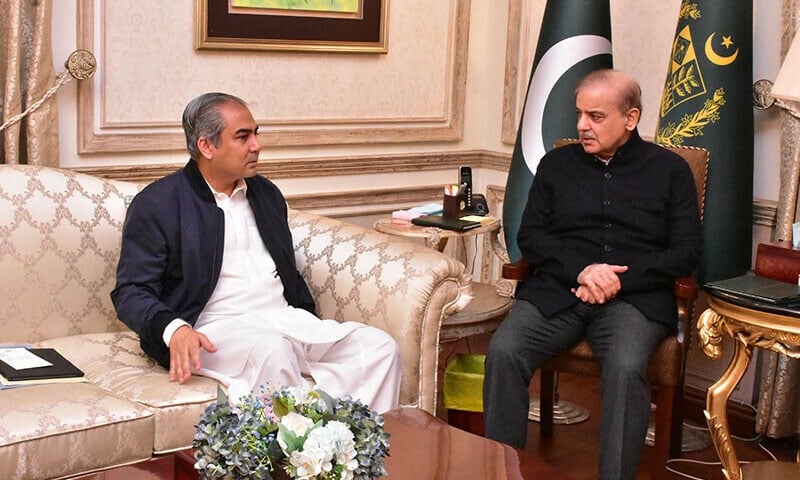
The governor has also made allegations concerning the involvement of political figures, including the provincial chief minister’s brother, former provincial law minister Aftab Alam and other influential personalities. These allegations must be thoroughly investigated. Anyone found involved should face the full consequences of the law. Political influence or official position must not become a shield against accountability.
The economic implications are equally staggering. Pakistan has repeatedly had to negotiate substantial financial assistance packages with the International Monetary Fund (IMF), with annual financing requirements running into billions of dollars. If the illegal gold business alone is worth an estimated $5 billion annually, consider what Khyber Pakhtunkhwa could generate through the transparent, regulated and responsible exploitation of its natural resources.
Gold is only one component of the province’s enormous economic potential. Khyber Pakhtunkhwa possesses forests, other minerals, precious metals, gemstones, rubies, oil and gas. There are also considerable opportunities in healthcare, environmental management and numerous other sectors. How much of this potential has actually been harnessed for public benefit, and how much has disappeared through corruption, illegal extraction and organized criminal networks?
Examining these sectors collectively would reveal a much clearer picture of the scale of the problem. PTI governed Khyber Pakhtunkhwa for approximately 13 years across successive terms. During much of this period, its political narrative revolved around the claim that the province’s mineral resources were under threat, that military operations were being deliberately conducted and that the armed forces wanted to take control of the region.
Now that details of alleged illegal economic activities are emerging, the public deserves a complete account of what happened. Khyber Pakhtunkhwa has a politically conscious population. Its people have historically refused to give successive governments unlimited opportunities. Whether it was the Pakistan Peoples Party, the Awami National Party or the Muttahida Majlis-e-Amal, voters repeatedly changed their political preferences. PTI, however, succeeded in building an exceptionally powerful narrative among the younger generation, convincing many that it alone represented their rights and interests.
The allegations now emerging demand a comprehensive audit of the province’s governance, mineral resources and financial affairs. Only then can we understand how deeply these networks penetrated the system. What was presented as governance may, in several areas, have concealed large-scale corruption. If there was also cooperation with terrorist organizations or their facilitators, it would represent an even more serious betrayal of public trust and a direct threat to national security.
The Youth, Terrorist Recruitment and the Battle for Minds
Another major challenge is the exploitation of young people by terrorist organizations. We are witnessing how armed groups approach young men, particularly in the southern districts, offer them money and weapons and gradually draw them into their networks. Some begin to believe that carrying a weapon gives them power, influence and social status. In certain communities, people even greet or salute these individuals, either out of fear or under social pressure.
This is an enormous challenge, comparable in certain respects to the situation in Balochistan. We need a comprehensive strategy to engage young people, particularly across the 12 districts of the former tribal areas and adjoining regions, including the newly merged districts and the neighboring areas of Dera Ismail Khan.
Political slogans alone cannot address this challenge. One of the most effective interventions is skill development. This does not mean that formal education or university degrees are unnecessary. They are indispensable. However, vocational and technical training can provide young people with a more direct route to employment, financial independence and a productive role in society. We must bring them into these programs and create opportunities that give them a genuine stake in the future of their communities.
The armed forces and the Frontier Corps have already undertaken initiatives in this direction. The establishment of cadet colleges, particularly in forward areas, has expanded educational opportunities. Communication infrastructure has improved, roads have been constructed and healthcare facilities have been extended to regions that were previously neglected.
The former FATA areas remained largely disconnected from the mainstream economy. What meaningful employment opportunities existed there? Much of the local economy revolved around smuggling, the trade in dry fruits and a handful of other limited economic activities. Young people had very few opportunities to develop professional skills, pursue careers or establish sustainable businesses.
That situation must change. We cannot expect lasting peace if successive generations continue to depend on the same limited economic activities. There is an important lesson here from other regions, including the coastal communities of Balochistan. If a fishing community is provided with a new port and five-star hotels are constructed around it, but the children of local fishermen have no opportunities beyond becoming fishermen themselves, sustainable development and peace will remain elusive.
The same principle applies to Khyber Pakhtunkhwa’s mineral resources. If gold is being extracted from a particular area, why should local people not receive training in gold processing, refining and jewelry manufacturing? Why should value addition take place elsewhere when it can be developed locally? The recent minerals conference in Islamabad also highlighted the importance of developing Pakistan’s mineral sector.
Instead of allowing young people to become involved in illegal extraction or drawing them towards armed groups, we should equip them with marketable skills. Mineral extraction must take place through legal, transparent and organized mechanisms. Companies should operate under government supervision, whether at the provincial or federal level. Local communities must have a direct stake in these businesses, and people from the areas concerned should receive training and employment opportunities.
This is how natural resources can become a source of prosperity rather than conflict. When local communities see tangible economic benefits, they have a greater incentive to protect those resources and resist the influence of criminal networks.
There is another critical dimension: religious extremism and countering violent extremism. We have previously worked on different initiatives in this area, but the present circumstances demand renewed, focused and sustained attention.
Young people must be taught the true principles of Islam and shown how extremist organizations manipulate religious teachings to advance political and violent agendas. One particularly important issue is women’s education.
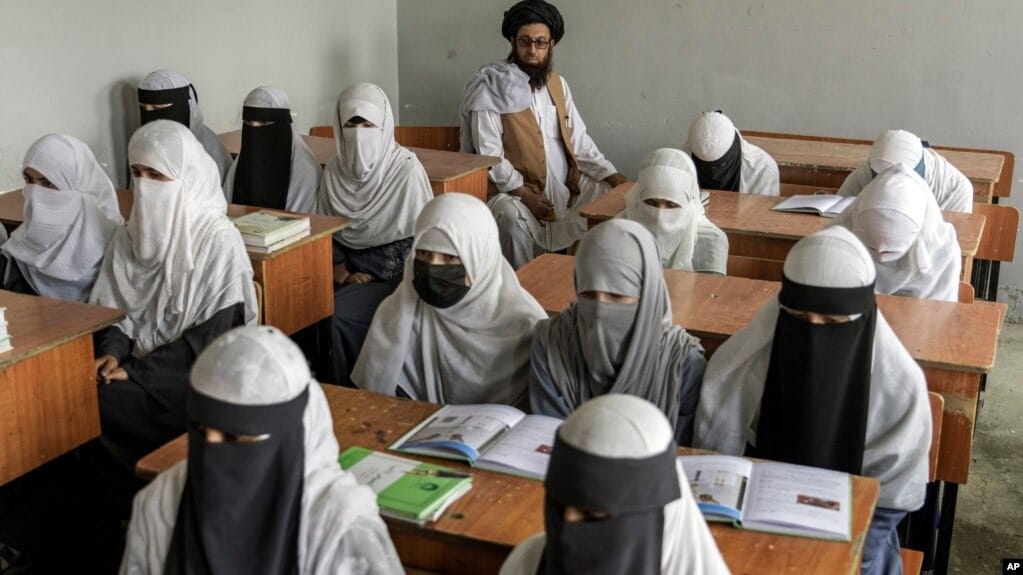
Does Islam prohibit women from receiving an education? The Taliban’s policies in Afghanistan provide a glaring example of how extremist interpretations can deprive women of fundamental opportunities. Their restrictions have extended to girls’ education and women’s participation in medical and professional training. If women are denied access to medical education today, consider what the situation could look like ten years from now. Afghanistan may not have sufficient female doctors and nurses to provide healthcare to women.
This is not the Islam we know. Islam places immense importance on knowledge and education. The Prophet Muhammad (peace be upon him) encouraged the pursuit of knowledge without restricting that responsibility to men. The famous Islamic principle of seeking knowledge even as far as China does not impose any gender-based restriction.
We must also remember the historic contribution of Muslim women to education. Fatima al-Fihri established Al-Qarawiyyin in Fez, Morocco, an institution widely recognized as one of the world’s oldest continuously operating universities. This is an important part of Islamic history and a powerful reminder of the role women have played in advancing knowledge and learning.
These realities must be explained to young people. We cannot allow extremist organizations to monopolize religious discourse and present their distorted interpretations as the only legitimate understanding of Islam.
The people of Khyber Pakhtunkhwa are intelligent, enterprising and commercially capable. Their contribution to business and commerce can be seen throughout Pakistan. What they need is a clear direction, meaningful opportunities and genuine participation in decisions that affect their future.
Young people must become stakeholders at every level, from universities to local development institutions. Their participation must not be reduced to occasional consultations, political gatherings or symbolic representation. They must have a substantive role in setting development priorities, identifying local needs and implementing projects.
The state must pursue these initiatives simultaneously rather than waiting for one problem to be resolved before addressing another. Counterterrorism operations are essential, but education, employment, skills development and community engagement must advance alongside them.
Closing the Strategic Space Available to Terrorist Networks
One of the most important questions in counterterrorism is who controls the strategic space: the state or terrorist organizations? Unfortunately, in my assessment, the governance arrangements in Khyber Pakhtunkhwa allowed considerable strategic space to remain available to terrorist networks.
Consider how a vehicle-borne improvised explosive device (VBIED) is prepared. A vehicle is modified in a garage, moved to a safe house and then transported towards a selected target. Financial facilitators arrange the money, logistical networks provide support and different individuals coordinate the final operation. This entire chain requires movement, communication, accommodation, financing and transactions.
If such activities are taking place within a province, the obvious question is how these networks can operate without being detected and disrupted. There have been cases in which substantial sums of money were allegedly offered to young people to recruit them into terrorist activities. This is not simply a matter of an individual carrying out an attack. It is an organized system involving recruitment, financing, preparation, transportation and logistics.
When the state closes this strategic space, the impact on terrorist organizations can be substantial. Intelligence-based operations must continue, and the ability of these networks to prepare and execute attacks must be systematically dismantled. However, the security response must go hand in hand with the positive engagement of young people.
The federal and provincial authorities must make this an immediate priority. Young people need to become stakeholders in the state and its institutions. They must have confidence that they can improve their country through education, professional careers, entrepreneurship and lawful participation, rather than through violence and association with armed groups.
There is also the formidable challenge of reversing narratives that have been cultivated over many years. Political messaging has significantly influenced the perceptions of a section of the younger generation, particularly regarding the state and its institutions. This cannot be corrected through official statements and press conferences alone.
Social Media and the Sophisticated Information War
Social media has fundamentally transformed the information war. Those operating these networks do not necessarily need to be physically present in Khyber Pakhtunkhwa or even inside Pakistan.
There are overseas networks involving individuals operating from the United States, the United Kingdom, India, Kabul and the Middle East. Some communicate in local languages and understand the political, social and cultural sensitivities of particular communities.
We have witnessed similar patterns in Balochistan, where content is produced using Balochi songs, language and cultural references to make particular narratives more appealing to local audiences. Such material does not necessarily originate within the province. It can be produced elsewhere and strategically circulated among the intended population.
India has developed considerable expertise in language-based information operations. Similar questions arise about sophisticated online campaigns associated with PTI and overseas networks connected to the wider political ecosystem and financial interests abroad.
The most concerning aspect is micro-targeting. These networks can develop detailed profiles of individuals based on their online activities, social media groups and personal interests. They then design content to reach specific people through WhatsApp, Facebook and other platforms. This is not simply the circulation of general political messages. It is a targeted effort to shape opinions at the individual level.
The younger generation has been exposed to an enormous volume of such messaging. In some cases, repeated exposure to one-sided narratives has shaped their perceptions of the state, security institutions and national interests.
We must now reverse this process. The answer lies in open debate, meaningful discourse, education and sustained engagement. Young people must be encouraged to question competing narratives and understand the realities behind them. They need to see that putting down a weapon and becoming part of the state can provide a meaningful way to improve their communities and their country.
The potential in professional education and skills development is enormous. Young people with the necessary qualifications can join the civil service and other state institutions. Others can pursue careers in medicine, engineering, business, technical trades and a wide range of specialized professions. Opportunities must be created for all of them, not just a privileged few.
Afghanistan: Distinguishing the Taliban Regime from the Afghan People
Another fundamental issue is the relationship between terrorism in Pakistan and developments in Afghanistan. Whenever terrorist attacks occur in Pakistan, investigations frequently point towards Afghan involvement. Terrorists are arrested or eliminated, and their identities and backgrounds sometimes reveal connections to Afghanistan.
However, one distinction must remain absolutely clear: the Taliban regime and the Afghan people are not the same. We must never treat them as a single entity.
Afghanistan has a diverse population. Women account for approximately half its population, while large communities of Tajiks, Uzbeks, Hazaras and other ethnic groups have their own political, cultural and social perspectives. Many of these communities have little identification with the Taliban’s policies.
There are also people in northern Afghanistan who have expressed support for Pakistan. Their attitudes towards the Taliban regime and its policies cannot simply be assumed to mirror those of the ruling authorities in Kabul.
Even within the Pashtun belt, circumstances have been changing. Trade restrictions, border closures and the repatriation process have affected livelihoods. Many people depended on cross-border commerce, whether legal or illegal, employment opportunities and economic integration. When these activities are disrupted, ordinary Afghans bear the consequences.
As a result, pressure on the Taliban authorities is growing among sections of Afghan society. People who previously depended on cross-border economic activity are increasingly questioning the policies that have contributed to their economic difficulties.
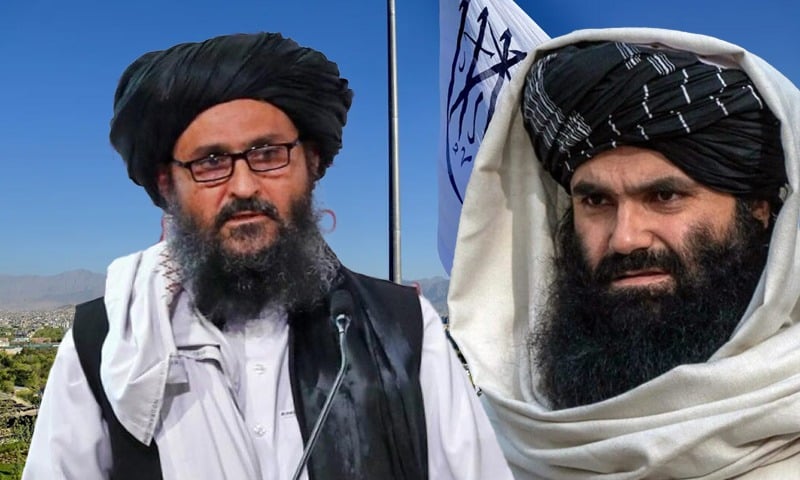
We must also examine the regional dynamics behind the Taliban regime’s relationship with terrorist organizations. In my assessment, there is a broader triangle involving financial support, the Kabul regime and armed proxies operating against Pakistan, including the banned Tehreek-e-Taliban Pakistan (TTP) and Balochistan Liberation Army (BLA).
I have serious concerns about the financial dimension of this arrangement, including India’s possible role and the movement of funds through different channels. The international assistance provided to Afghanistan also requires scrutiny. The United States continues to provide substantial humanitarian assistance, with figures ranging from $40 million to $80 million a week having been discussed. Such assistance is officially justified on humanitarian grounds. However, the international community must ensure that this money reaches ordinary Afghans and does not indirectly strengthen networks involved in terrorism.
There are also claims about the financial resources available to the Taliban and the strength of the Afghan currency. These developments deserve closer examination, particularly when terrorist organizations continue to operate from Afghan territory.
When the Kabul authorities provide space to armed groups such as the TTP and BLA, the resulting security relationship becomes increasingly evident. We are not dealing with isolated individuals merely crossing a border. We are dealing with networks involving recruitment, training, financing, logistical support and operational preparation.
There have also been reports of training facilities in Afghanistan, including locations where suicide bombers are allegedly prepared. These allegations must be examined alongside evidence emerging from investigations, arrests and intelligence assessments.
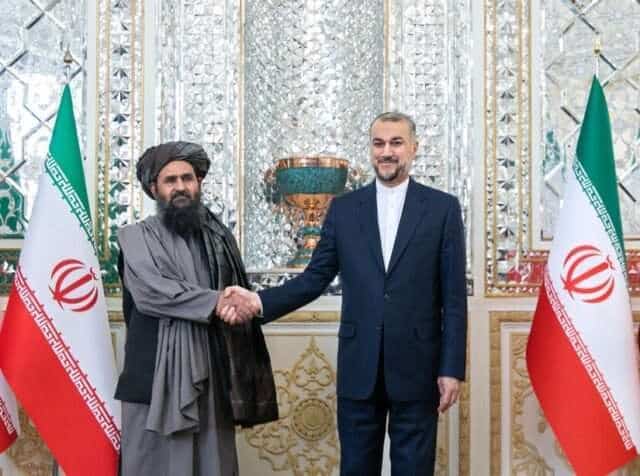
Pakistan has repeatedly raised these concerns. For years, diplomatic channels, intelligence exchanges and government-level communications were used to convey information about terrorist sanctuaries and the activities of armed organizations. The Afghan Taliban authorities repeatedly denied having any connection with these groups.
The situation has now entered a different phase. Pakistan has made it clear that this arrangement cannot continue indefinitely. Where substantial intelligence is available, the state has demonstrated its willingness to act against terrorist infrastructure.
The arrests of individuals such as Hikmatullah and Hamza are significant in this regard. During questioning, one of the arrested individuals reportedly disclosed his involvement in preparing suicide bombers and indicated that another attacker was being prepared for dispatch. Such disclosures underscore the need to investigate the networks, facilities and individuals operating across the border.
There have also been cases involving Afghan military and police personnel arrested in Pakistan. The reported arrest and subsequent death of a relative of an Afghan provincial governor in connection with security-related incidents is another development that deserves attention. These cases demonstrate why the Afghan authorities cannot simply dismiss Pakistan’s concerns as political rhetoric.
Is the Taliban Regime Facing an Existential Challenge?
The possibility of the Taliban regime approaching its end has been discussed in several forums. Such assessments can be dismissed as political rhetoric or portrayed as part of Pakistan’s narrative. However, developments within Afghanistan deserve serious attention and cannot be brushed aside.
I remain in contact with members of the Afghan diaspora and have opportunities to meet people in the Middle East and Türkiye. These interactions provide valuable insights into developments within Afghan society and among Afghan communities living abroad.
There are also reports of Taliban regime figures acquiring substantial properties and making investments abroad, including in Türkiye. These developments raise important questions about the confidence of individuals associated with the ruling establishment in Afghanistan’s long-term political future.
Türkiye’s position is also significant. Its leadership has maintained relations with different regional actors, but the security implications of the Taliban regime’s policies have become an increasingly important consideration in regional diplomacy.
We must also examine the growing armed resistance against the Taliban. Initially, there were several major resistance groups, including formations associated with former Afghan Republic military officers such as General Yasin Zia, the forces of Ahmad Massoud, groups operating in Herat and the Green Trend associated with Amrullah Saleh.
The number of resistance groups has since expanded. Recent assessments discussed in this regard have referred to approximately 12 groups operating against the Taliban. Their activities are not always easy to monitor because the Taliban authorities exercise considerable control over conventional media inside Afghanistan. Nevertheless, information continues to emerge through diaspora networks and digital platforms.
There is also an increasingly important political dimension to this resistance. When the Taliban returned to power, several influential Afghan political figures initially gave them an opportunity to govern, hoping that Afghanistan might finally experience peace and stability. Many of these figures have since become openly critical of the regime.
They include former political and military leaders such as Abdul Rasul Sayyaf, Abdul Rashid Dostum, Amrullah Saleh and other prominent figures associated with the former Afghan Republic. Former president Ashraf Ghani has also begun speaking more openly about Afghanistan’s political future. Hamid Karzai has likewise made statements about the country’s future, while other political figures, including members of the Rabbani family, remain active in political discussions and online forums.
Many of these leaders are living in exile, but they continue to participate in political discussions, webinars and efforts to formulate a vision for a post-Taliban Afghanistan.
This is significant because resistance to the Taliban is no longer confined to armed formations. An expanding political conversation is taking shape over what Afghanistan should look like after the present regime.
My assessment is that Afghanistan is entering a new phase of instability and political contestation. If the Taliban leadership refuses to reconsider its policies, particularly its approach towards neighboring countries and the Afghan population, pressure on the regime will continue to intensify.
The year 2027 could prove particularly difficult for the Taliban. We may witness a gradual transformation of Afghanistan’s political order, and by the end of that year, the country could have a different leadership emerging from among its own people.
Ultimately, Afghanistan’s future must be decided by Afghans themselves. The Taliban cannot claim to represent an entire population while denying large sections of that population their fundamental rights, opportunities and political voice. Nor can any regime expect lasting stability while allowing its territory to be used by organizations that threaten neighboring countries.
For Pakistan, the priorities are unmistakable: close the strategic space available to terrorist organizations, dismantle their financial and logistical networks, safeguard national security and engage the younger generation through education, employment and meaningful participation. At the same time, Pakistan must distinguish the Afghan people from the policies of the Taliban authorities.
The future of the region cannot be built on terrorism, economic exploitation, ideological coercion or political manipulation. Khyber Pakhtunkhwa’s resources must serve its people, its youth must be given a stake in the country’s future, and terrorist networks must be denied the space to recruit, finance, organize and operate. A peaceful, stable and representative Afghanistan is not merely desirable for Pakistan. It is in the fundamental interest of the entire region.