
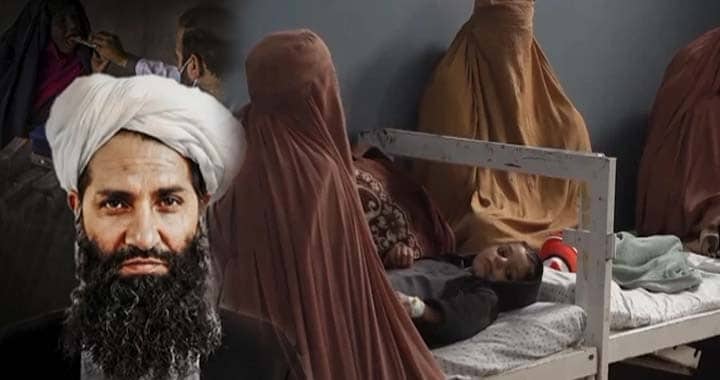
Afghan women are increasingly being denied even the most basic medical care under the Taliban regime, as sweeping restrictions on male doctors treating female patients, threats of imprisonment and an alarming shortage of qualified female healthcare professionals leave millions vulnerable to untreated illnesses and medical emergencies.
A joint investigation by The Guardian and Afghan women’s media outlet Zan Times has exposed the extent of these restrictions, revealing how Taliban-imposed directives have turned seeking medical treatment into a dangerous ordeal for Afghan women. Even when suffering from severe pain or requiring urgent medical attention, women are being turned away because male doctors fear punishment for examining them.
The investigation, based on interviews with patients and medical professionals across six provinces and four regional zones, found that male doctors in most provinces had received directives prohibiting them from directly examining or treating female patients, except under narrowly defined conditions, including the presence of a male guardian (mahram).
The restrictions have reportedly been enforced through raids by Taliban security personnel and threats of imprisonment against doctors found treating female patients. The implications are particularly alarming in emergencies, when delays in examination and treatment can put patients’ lives at risk.
One particularly disturbing case involved a 37-year-old woman in Herat who had returned from Iran and was undergoing dental treatment. After completing two sessions and paying for her treatment, she was abruptly told during her third visit that the clinic could no longer proceed with the procedure because of an order from the Taliban’s Ministry for the Propagation of Virtue and the Prevention of Vice. Three months later, her treatment remained unfinished.
A surgeon with 15 years of experience at a public hospital in northern Afghanistan told investigators that doctors were prohibited from directly examining female patients, regardless of how simple the procedure was or how critical their medical condition might be.
The regime’s restrictions have reached an extraordinary level of intrusion into women’s personal identities. In Balkh province, hospitals, private practices and clinics were reportedly instructed in May to stop calling female patients by their actual names and use the term “Bibi” instead, even on medical prescriptions.
The situation becomes even more alarming when viewed alongside the systematic restrictions on women’s participation in the healthcare sector itself. Since December 2024, Afghan women have been barred from studying at medical institutes, further shrinking the already limited pool of qualified female doctors, nurses and other healthcare professionals. Doctors interviewed by the investigators also reported restrictions on hiring female staff at hospitals.
Consequently, women are left with increasingly desperate choices: risk themselves and their doctors by seeking treatment, rely on female healthcare workers who may lack the necessary qualifications, or endure their illnesses without medical assistance.
The investigation also exposes a glaring contradiction in the Taliban regime’s own declarations. In February, Taliban communications minister Hamdullah Nomani claimed that male doctors would be considered mahram when treating female patients. However, testimonies from doctors and patients across Afghanistan indicate that restrictions continue to be enforced, contradicting those assurances.
This is what governance under ideological coercion looks like on the ground. While the Taliban regime projects its own version of religious legitimacy and claims authority over Afghanistan, women are being deprived of access to healthcare, education and the professional opportunities needed to sustain the country’s medical system.
The consequences extend far beyond individual patients. Preventing women from becoming doctors while simultaneously restricting their access to male medical professionals creates a healthcare crisis that Afghanistan cannot resolve through slogans, decrees or religious pronouncements.
A government has a fundamental responsibility to protect human life and ensure access to essential services. No ideological interpretation, administrative directive or exercise of authority can justify leaving women without treatment when qualified medical professionals are available.
Afghanistan belongs to its millions of people, not to a regime that treats control over their everyday lives as an entitlement. The future of an entire nation, its healthcare system and the lives of its women cannot be determined by the ideological preferences of an unelected ruling group.
The testimonies gathered by The Guardian and Zan Times offer a glimpse into the suffering that official declarations cannot conceal. Behind every restriction is a patient who needs treatment, a doctor afraid to provide it and a healthcare system being pushed further towards collapse.



