
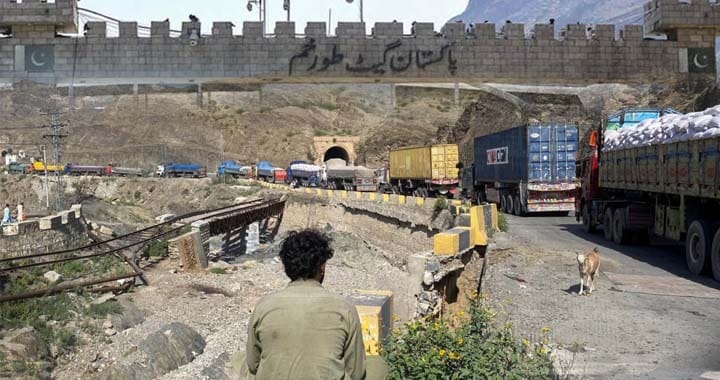
An Afghan trader has delivered a devastating reality check to the Taliban regime, warning that the continued closure of the Pakistan-Afghanistan border could push the Afghan population toward starvation, as the livelihoods of nearly 80 percent of Afghans’ businesses are tied to cross-border trade with Pakistan.
In a video message, the trader appealed directly to the Taliban government to stop sacrificing ordinary Afghans’ livelihoods and recognize Pakistan’s legitimate demands to restore cross-border trade. His message lays bare the economic vulnerability of Afghanistan and challenges the narrative often propagated by Taliban-controlled media about Pakistan suffering the greater consequences of the border closure.
The trader said that although the Taliban government was free to sign trade agreements with other countries, including Russia, it should not ignore the plight of poor Afghan traders whose businesses depend overwhelmingly on Pakistan. He urged the regime to show some mercy to traders struggling to keep their businesses afloat.
Explaining his own predicament, the trader said he owned vineyards and conducted all his business with Pakistan. Other potential markets were too far away to offer a practical alternative, while Afghanistan’s lack of cold storage facilities made it even more difficult to preserve agricultural produce and transport it to distant markets.
He stressed that Pakistan remained the most viable trading destination for Afghan businesses and called on the Taliban authorities to acknowledge Pakistan’s legitimate concerns and take concrete steps toward reopening the border.
Warning of the consequences of continued closure, the trader said 80 percent of Afghans would face starvation if cross-border trade did not resume.
His appeal exposes the human and economic cost of the Taliban regime’s refusal to address the border dispute. While Taliban-aligned narratives frequently portray Pakistan as the principal loser of the closure, the trader’s account presents a starkly different picture: Afghan businesses, particularly those dependent on perishable agricultural produce, have few viable alternatives to Pakistan.
The message also highlights a fundamental contradiction in the Taliban government’s approach. While its officials pursue trade agreements with distant countries and project an image of expanding economic partnerships, traders on the ground are pleading for access to their nearest and most practical market.
For ordinary Afghans, diplomatic announcements and trade agreements mean little when their produce cannot reach buyers, their businesses cannot operate, and their livelihoods remain hostage to a closed border.
The trader’s warning deserves to be heard beyond Afghanistan’s borders. It is not Pakistan’s media narrative or a political statement from Islamabad. It is the voice of an Afghan businessman describing the economic reality confronting his own people.
The Taliban regime may attempt to control the narrative, but it cannot make the suffering of Afghan traders disappear.



