
The Taliban’s much-publicized campaign against Afghanistan’s narcotics industry is facing renewed scrutiny following the dramatic resurgence of opium cultivation, the release of convicted heroin trafficker Haji Bashir Noorzai from US custody and his subsequent return to influential business circles under Taliban rule.
A closer examination of these developments raises serious questions about the relationship between the Taliban leadership, influential figures in Afghanistan’s historic drug trade and the economic networks operating under the current administration.
The central contradiction is striking: while the Taliban publicly presented its April 2022 narcotics ban as a historic effort to eliminate the opium economy, one of the most prominent individuals convicted of financing the movement through heroin trafficking was subsequently released from an American prison and welcomed back in Kabul.
The connection between the Taliban leadership and Haji Bashir Noorzai is not a new subject. According to the US Department of Justice, Noorzai maintained close connections with the Taliban’s founding leadership, including Mullah Omar, and provided financial and other support to the movement.
In its 2009 sentencing announcement, the US Department of Justice documented how Noorzai and his associates benefited from advance knowledge of the Taliban’s 2000 opium ban. The court proceedings established that the network accumulated large opium stockpiles before the ban took effect and subsequently sold them at substantial profits after the restrictions triggered a dramatic increase in market prices.
Noorzai was convicted of conspiring to import heroin into the United States and sentenced to life imprisonment. The case exposed a striking contradiction between the Taliban’s public anti-narcotics declarations and the financial benefits enjoyed by influential individuals connected to its leadership.
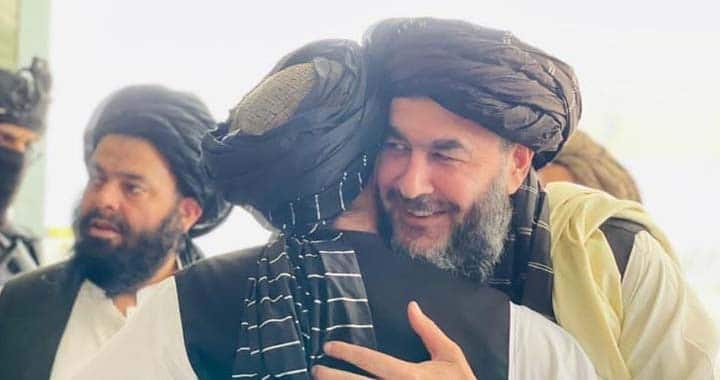
On September 19, 2022, Haji Bashir Noorzai was released from US federal custody after President Joe Biden commuted his life sentence. His release formed part of a prisoner exchange in which American citizen Mark Frerichs, held captive by the Taliban since 2020, was freed in return.
Upon his arrival in Kabul, Noorzai received a public welcome attended by senior Taliban officials, including Deputy Prime Minister Mullah Abdul Ghani Baradar and Defense Minister Mullah Yaqoob. His return to Afghanistan attracted international attention because of his criminal conviction, historic Taliban connections and prominent position in the country’s narcotics networks.
Noorzai’s activities after his release raised further questions about the intersection of political influence, business interests and Afghanistan’s natural resources. An investigative report published by Foreign Policy in February 2024 described Noorzai’s emerging business connections with Chinese interests and his involvement in efforts to secure gold-mining and oil and gas exploration contracts in northern Afghanistan.
The investigation highlighted how a figure previously associated with the country’s heroin trade had entered influential economic networks under Taliban rule. These developments raise important questions about the transparency of mining concessions, the role of politically connected individuals and the potential transformation of historic trafficking networks into legitimate-looking commercial structures.
The latest figures from the United Nations Office on Drugs and Crime (UNODC) have further intensified scrutiny of the Taliban’s anti-narcotics campaign. According to the UNODC Afghanistan Opium Survey 2026, opium poppy cultivation increased by approximately 325% in 2026, rising from around 10,200 hectares in 2025 to approximately 43,300 hectares. Estimated opium production also increased nearly fivefold, from approximately 296 tonnes in 2025 to 1,466 tonnes in 2026.
The geographical concentration is particularly significant:
- Badakhshan: Approximately 29,482 hectares under poppy cultivation, representing around 68% of the national total.
- Takhar: Approximately 3,401 hectares under cultivation.
- Northeastern Afghanistan: Accounts for approximately 76% of the country’s total cultivated area.
The findings indicate a substantial reversal after three years of sharply reduced cultivation following the Taliban’s 2022 narcotics ban. Although cultivation remains significantly below pre-ban levels, the dramatic increase raises questions about the sustainability, consistency and effectiveness of the Taliban’s counter-narcotics policy.
The resurgence of opium cultivation, combined with the historic relationship between the Taliban and influential narcotics figures, demands closer examination of the economic structures surrounding the drug trade.
The central questions include:
- Who finances the renewed expansion of poppy cultivation?
- Who controls the purchase, transportation and processing of opium?
- Are politically connected individuals benefiting from the revival of the narcotics economy?
- What oversight exists over individuals with historic connections to major trafficking networks?
- Are anti-narcotics operations being implemented consistently across all regions and influential networks?
The UNODC has identified poverty, high opium prices, inadequate alternative livelihoods and informal financing arrangements as important factors behind the 2026 resurgence. These factors must also be considered when examining the broader political economy of Afghanistan’s drug trade.
The Taliban’s anti-narcotics campaign initially produced a dramatic reduction in poppy cultivation, particularly in traditional southern growing regions. However, the latest UN findings demonstrate that the restrictions have not prevented a substantial resurgence.
The contrast between the treatment of ordinary farming communities, the return of influential figures associated with the historic drug trade and the expansion of commercially connected networks raises serious questions about equality, accountability and the actual beneficiaries of Afghanistan’s narcotics economy.
The Noorzai case is particularly important because US federal court proceedings established his historic financial relationship with the Taliban and his network’s exploitation of advance knowledge of the 2000 opium ban.



