
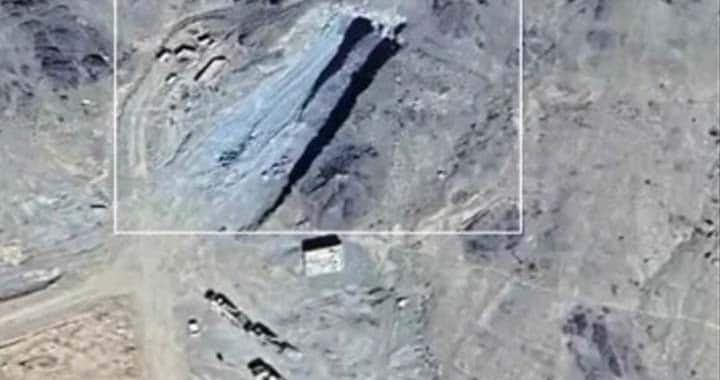
The Afghan Taliban have reportedly accelerated the construction of underground tunnel networks across several provinces of Afghanistan, with unemployed local workers being recruited to undertake construction activities at multiple locations. The developments have drawn attention to the expanding underground infrastructure being established under Taliban rule, particularly in strategically sensitive areas.
Information emerging from Afghanistan suggests that construction activities are being carried out under strict restrictions, with ordinary civilians and local police personnel reportedly barred from approaching certain sites. The secrecy surrounding these projects has raised questions about their intended purpose, the authorities overseeing their development and the potential use of these facilities.
Satellite imagery presented alongside the information reportedly shows an underground tunnel construction site in Kandahar, close to the Pakistan-Afghanistan border. The location is particularly noteworthy because a residence associated with Taliban supreme leader Hibatullah Akhundzada is situated in the same general area.
The imagery has brought renewed attention to the Taliban’s underground construction activities and the development of facilities in strategically sensitive locations.
According to information received, similar projects are underway in several Afghan provinces, with unemployed workers being recruited to accelerate construction.
One of the most concerning aspects of these developments is the reported level of secrecy surrounding the construction sites.
According to local information, ordinary civilians and local police personnel are not permitted to approach certain locations. The restricted access raises questions about the nature of these facilities, the authorities supervising their construction and their eventual use.
The recruitment of unemployed labourers to complete the projects also highlights the scale of the construction activities reportedly being undertaken across the country.
The expansion of underground infrastructure in Afghanistan warrants closer scrutiny, particularly given the continuing presence of extremist organizations and militant networks operating within the country.
Questions remain over whether these facilities are intended exclusively for the Taliban’s security and administrative requirements or whether they could potentially provide shelter or logistical support to other armed groups.
The development of such infrastructure in sensitive border regions is particularly significant for neighbouring countries, including Pakistan, which has repeatedly raised concerns over terrorist organizations operating from Afghan territory.
The international community and regional stakeholders should closely monitor these developments and seek greater transparency regarding the construction, ownership and intended use of the underground facilities.
The Taliban authorities must clarify the purpose of these projects and ensure that Afghan territory and infrastructure are not used to facilitate terrorist activities or provide safe havens to extremist organizations.
The expansion of secretive underground infrastructure across Afghanistan raises important questions about the Taliban’s security priorities, the transparency of its construction activities and the potential implications for regional stability. These developments demand serious attention and independent scrutiny.



