
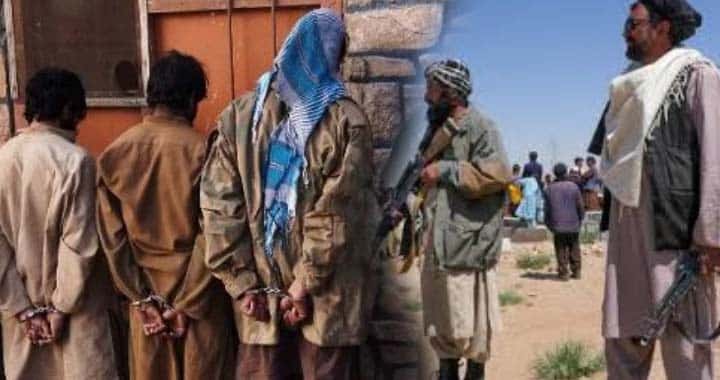
An alarming humanitarian and security crisis continues to confront thousands of former Afghan security personnel who have been forced to flee their homeland following the Taliban’s return to power in August 2021. According to reports, approximately 20,000 former members of Afghanistan’s security forces are currently seeking refuge in Iran, where they continue to face serious threats to their safety, freedom, and fundamental rights.
Since the Taliban takeover, hundreds of former Afghan military and security personnel have reportedly been killed, detained, tortured, or subjected to enforced disappearances. Many others remain in hiding inside Afghanistan, living under constant fear of reprisals because of their previous service in the Afghan Republic’s security institutions.
The persecution of former Afghan security personnel represents a deeply concerning humanitarian and human rights issue. Individuals who once served in the country’s national army, police, intelligence, and other security institutions continue to face uncertainty over their lives and the safety of their families. The persistent threats have forced many to abandon their homes, livelihoods, and communities in search of protection beyond Afghanistan’s borders.
However, fleeing to neighbouring Iran has not necessarily brought them security. Former Afghan security personnel residing in Iran reportedly face the continuing risk of detention, deportation, and forced repatriation. Their vulnerability is further compounded by concerns over surveillance, restrictions on fundamental rights, and the absence of adequate legal and humanitarian protections. Reports of monitoring by Iran’s Islamic Revolutionary Guard Corps (IRGC) have also raised concerns among members of this displaced community.
The international community must not allow thousands of vulnerable Afghans to remain trapped between persecution in Afghanistan and uncertainty in countries of refuge. Their protection requires urgent diplomatic engagement, international monitoring, legal safeguards, and meaningful humanitarian assistance.
A sustainable solution must go beyond temporary refuge. It requires the establishment of credible protection mechanisms that guarantee the safety, dignity, and fundamental rights of former security personnel and other vulnerable Afghan communities. Any future political and security arrangements must prioritize civilian protection, inclusive governance, and internationally recognized human rights standards.
Meanwhile, the Afghanistan Freedom Front (AFF) has reportedly undertaken initiatives to reorganize former Afghan National Army personnel, including experienced commandos and other security professionals, with the stated objective of rebuilding professional national security institutions. The organization has also reported resistance activities in Badakhshan and other northern areas.
The broader question of Afghanistan’s future security institutions remains critical. Any sustainable framework for restoring national security structures must be based on professionalism, accountability, inclusivity, civilian oversight, and respect for international humanitarian law. Former Afghan security personnel possess valuable institutional experience that could contribute to the country’s eventual reconstruction and the establishment of accountable national institutions.
Afghanistan’s future cannot be built upon fear, exclusion, and the persecution of its own citizens. Protecting vulnerable former security personnel, ensuring the safe return of displaced families under appropriate conditions, and supporting an inclusive political and institutional future must remain central priorities.



