
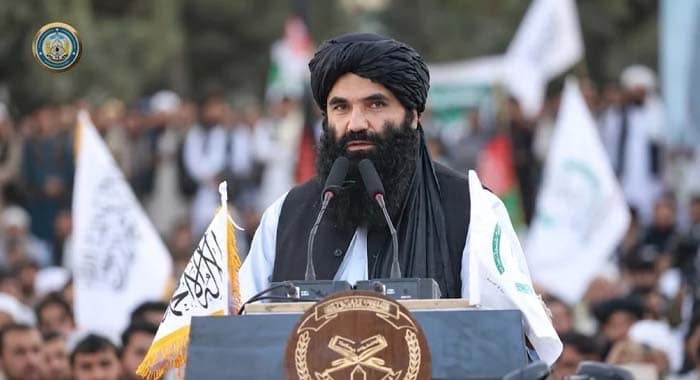
In a significant and unusually candid statement, Taliban Interior Minister Sirajuddin Haqqani has publicly questioned his own administration’s commitment to Islamic principles, acknowledging that the Taliban leadership itself is not fully practising the Sharia, teachings of Prophet Muhammad (PBUH), and the traditions of its predecessors.
According to Afghanistan International, Haqqani made these remarks while addressing a graduation and turban-awarding ceremony at Noor-ul-Madaris religious seminary in Andar district of Ghazni province. The Taliban Ministry of Interior also confirmed his participation in the event held on Friday, November 6.
In an address that carries considerable significance given his position within the Taliban leadership, Haqqani stressed that those governing society must first examine their own conduct before demanding moral correction and accountability from others. He argued that the fundamental problem lies in the failure of authorities to bring their actions and behaviour into conformity with Islamic teachings and the principles they publicly claim to uphold.
Haqqani emphasized that meaningful reform begins with individual accountability, spiritual purification, and sincere adherence to religious obligations. He urged graduating students to correct their own conduct and practices before attempting to reform others, stressing that religious principles must be reflected in actions rather than confined to speeches and public declarations.
More significantly, he directly addressed those in positions of authority, stating that rulers cannot effectively reform society unless they first reform themselves. According to his remarks, those who demand accountability from the public must be prepared to hold themselves to the same standards.
He also criticized the practice of shifting responsibility for administrative shortcomings onto others, arguing that authorities should acknowledge their own failures and prioritize public welfare and improvements in governance.
Political and Governance Implications
Haqqani’s remarks are particularly noteworthy because they come from one of the most influential figures in the Taliban administration. His public acknowledgment of shortcomings within the ruling establishment raises important questions about internal accountability, governance, and the gap between the Taliban’s declared religious principles and their actual conduct in power.
His message also places the responsibility for reform directly on the ruling authorities, rather than exclusively on ordinary citizens or religious institutions. This distinction is significant in a political system where the administration has repeatedly emphasized religious compliance and moral regulation as central pillars of governance.
Ultimately, Haqqani’s speech presents a fundamental challenge to the Taliban leadership: principles, religious authority, and demands for public accountability must begin with those who exercise power.



