
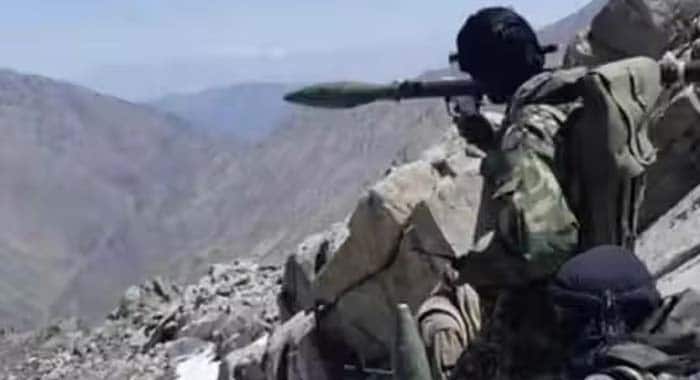
The Taliban seized power in Afghanistan in August 2021 with a promise that the country would finally emerge from decades of war, instability and insecurity. Its leaders presented their takeover as the beginning of a new era in which armed conflict would end, order would prevail and the authorities would exercise control across the country.
Five years later, a growing wave of attacks by armed opposition groups is testing that promise in a particularly uncomfortable way: the very authorities pledging security to the Afghan population are struggling to protect their own fighters, commanders, officials and military installations.
From Faizabad to Bagram, the geography of the attacks tells a story the Taliban would rather not have to explain. The Afghanistan Freedom Front (AFF), National Resistance Front (NRF), Afghanistan United Front and other opposition groups have claimed operations against Taliban personnel and security infrastructure in multiple provinces. Their targets have included checkpoints, intelligence personnel, military vehicles, commanders and installations.
The AFF’s claimed rocket strike on Taliban military facilities and training centers at Bagram Airfield on October 22 has added a particularly significant episode to this pattern. The group said the attack killed or wounded more than 10 Taliban personnel and damaged military facilities. The Taliban authorities have not publicly confirmed the claimed casualties.
Bagram is no ordinary target. The airfield was once the principal hub of American military operations in Afghanistan and remains a strategically important installation. An attack there, if the AFF’s account is confirmed, would expose vulnerabilities at a site carrying enormous military and symbolic significance.
More than 35 Fighters Killed, Dozens Wounded
The scale of the opposition groups’ claims adds another dimension to the Taliban’s security dilemma. Anti-Taliban organizations have claimed that more than 35 Taliban fighters were killed and dozens more wounded during a series of recent operations. The figures have not been independently verified, and they should be treated as claims by the groups involved rather than an established casualty count.
Even with that qualification, the pattern deserves attention. The operations are not confined to a single confrontation or a remote corner of Afghanistan. Opposition groups have announced attacks in different regions, striking the personnel and infrastructure on which the Taliban depends to maintain control.
The implications extend beyond battlefield casualties. Every attack on a checkpoint, patrol or intelligence unit forces the authorities to consider whether other positions are adequately protected. Every targeted killing of an official raises concerns among those responsible for administering territory on the Taliban’s behalf. Repeated attacks can consume security resources, disrupt local governance and weaken the image of an administration that presents itself as firmly in control.
The Taliban may retain the country’s central institutions and the advantages of being the de facto government. But holding power and guaranteeing security are not the same thing.
A Promise that is Increasingly Difficult to Defend
The Taliban’s security narrative rests heavily on the claim that its victory ended the conflict that had devastated Afghanistan for decades. Yet the continued activity of armed opposition groups exposes the limitations of presenting the absence of a conventional nationwide war as proof of comprehensive security.
Security is not measured only by who occupies government offices or controls major cities. It is also measured by whether officials can travel without being targeted, whether military facilities can be protected, whether checkpoints remain secure and whether communities can live without the fear of renewed violence.
The killing of Taliban-appointed Faizabad mayor Abdul Rahman Mansour in an attack claimed by the NRF in August illustrated the vulnerability of officials associated with the administration. Subsequent attacks on personnel and installations have reinforced the challenge.
The Taliban’s difficulty is that each successful opposition operation, if verified, undermines its claim to have established an uncontested security environment. The administration must defend not only its physical positions but also its political assertion that its rule has brought stability.
That does not mean the opposition has demonstrated the ability to overthrow the Taliban. The resistance groups remain fragmented, their casualty figures often cannot be independently confirmed, and the number of attacks alone does not establish territorial control or broad popular support. A serious assessment must distinguish between the ability to inflict losses and the capacity to sustain a nationwide political or military challenge.
Nevertheless, the Taliban cannot dismiss the security implications simply because its opponents have not demonstrated the ability to replace it.
The Difference Between Controlling a Country and Securing It
The deeper question is whether the Taliban’s security model can deliver lasting stability. An administration may deploy personnel across the country and suppress visible opposition in major centers, yet still face persistent vulnerabilities in districts, on transport routes and around military installations.
The spread of attacks claimed by the AFF, NRF and other groups suggests that the Taliban must continue devoting resources to protecting its own network. The Bagram strike claim is especially consequential because it places a strategically important installation at the center of the debate over the regime’s security capabilities.
For ordinary Afghans, the consequences are more serious than an argument over political messaging. Renewed violence threatens civilians, disrupts daily life and risks deepening an already prolonged national crisis. The Taliban’s responsibility is therefore not simply to defend its reputation, but to protect the population from further violence.
The international community should also distinguish between the Taliban’s claim to have restored order and evidence of security on the ground. Independent verification of attacks, casualties, territorial control and civilian harm is essential to understanding the actual situation.
The Taliban promised Afghans security. Its opponents’ latest operations do not, on their own, prove that its rule is nearing collapse. They do, however, expose a contradiction at the heart of its promise: an administration that presents itself as the guarantor of national stability must explain why its own personnel, officials and military installations continue to face attacks.
Those who promise to secure an entire nation must first demonstrate that they can protect the people and institutions under their own command.



