
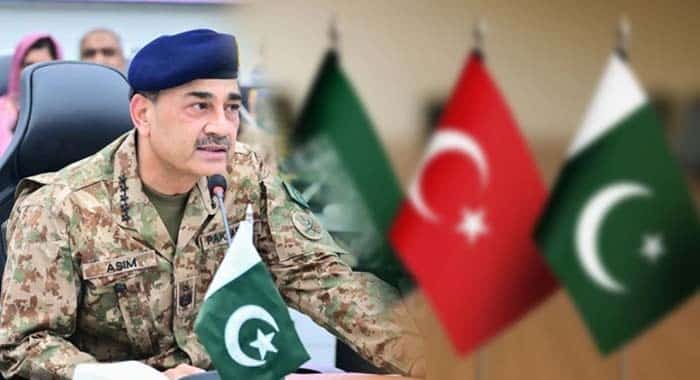
Field Marshal Syed Asim Munir, Chief of Army Staff and Chief of Defence Forces, will represent Pakistan at a high-level four-nation meeting in Tehran, the capital of the Islamic Republic of Iran, bringing together senior representatives from Pakistan, Saudi Arabia, and Türkiye with their Iranian counterparts to discuss regional security, cooperation, and ongoing diplomatic efforts to ease tensions in the region.
According to reports attributed to the Inter-Services Public Relations (ISPR), Field Marshal Syed Asim Munir is visiting Iran as part of Pakistan’s continued engagement with regional partners. The proposed meeting is expected to provide an important platform for consultations on the evolving regional situation, shared security concerns, and opportunities to strengthen cooperation among the participating countries.
The meeting comes at a critical juncture for the region, as heightened tensions and ongoing conflicts have underscored the need for sustained diplomatic engagement, mutual understanding, and coordinated efforts to prevent further escalation. The participation of senior officials from Pakistan, Saudi Arabia, and Türkiye in discussions with Iranian leadership reflects the importance of regional dialogue in addressing common challenges and promoting peace and stability.
According to reports by the British news agency Reuters, senior representatives from Saudi Arabia, Türkiye, and Pakistan are scheduled to meet Iranian officials in Tehran. The consultations are expected to focus on regional cooperation, the prevailing security environment, and efforts to reduce tensions through dialogue and diplomacy.
Iranian Foreign Ministry spokesperson Esmaeil Baghaei has confirmed that Tehran is hosting senior officials from Pakistan, Türkiye, and Saudi Arabia. He indicated that discussions would cover developments in Palestine, Lebanon, and the wider region, emphasizing the importance of building confidence and strengthening cooperation among regional countries.
Baghaei also stated that the possibility of holding the four-nation meeting had been discussed during Field Marshal Syed Asim Munir’s visit to Iran. According to the Iranian spokesperson, the proposal for the meeting was put forward by the Pakistani military chief and subsequently accepted by Iran.
The proposed consultations represent an important diplomatic engagement among the participating countries at a time when regional security concerns and competing strategic interests have increased the urgency of dialogue. The meeting is expected to provide an opportunity for the countries concerned to exchange views on pressing regional issues and explore avenues for constructive engagement.
Pakistan’s participation in the Tehran meeting underscores its continued engagement with regional partners on matters of peace, security, and stability. Islamabad maintains longstanding relations with Iran, Saudi Arabia, and Türkiye, and has a shared interest with these countries in preventing further regional escalation and promoting peaceful solutions to outstanding disputes.
Pakistan has consistently emphasized the importance of dialogue, diplomatic engagement, respect for sovereignty, and regional cooperation in addressing complex security challenges. Its engagement with neighbouring and regional countries reflects the importance of maintaining open channels of communication, particularly during periods of heightened tension.
Field Marshal Syed Asim Munir’s participation provides an opportunity for Pakistan to contribute to discussions on regional security and encourage constructive engagement among key regional stakeholders. The proposed meeting also highlights the potential role of regional consultations in building confidence, addressing mutual concerns, and identifying areas of common interest.
Saudi Arabia is also expected to participate at a senior level. According to a statement attributed to the Saudi Ministry of Foreign Affairs, Defence Minister Prince Khalid bin Salman will lead the Saudi delegation at the meeting in Tehran.
The consultations are expected to bring together representatives of the countries associated with the proposed joint defence framework, alongside Iranian officials, to discuss the regional situation and opportunities for reducing tensions.
Reports have also identified Türkiye’s participation through senior officials, including National Intelligence Organization chief Ibrahim Kalın. The involvement of senior representatives from the four countries reflects the significance attached to consultations on regional security and the need for sustained communication among key regional actors.
Iranian officials have also indicated that President Masoud Pezeshkian and senior figures associated with the country’s national security establishment are expected to be involved in the consultations. The precise scope and outcomes of the meeting will depend on the discussions among the participating delegations.
The meeting is taking place amid continuing instability across parts of the Middle East, including developments involving Iran, the Gulf region, Palestine, and Lebanon. Security concerns have been compounded by the risk of further escalation and the potential implications for regional stability.
Reports have also highlighted concerns over attacks attributed to Yemen’s Iran-aligned Houthi movement and their implications for Saudi Arabia and wider regional security. These developments have reinforced the importance of diplomatic channels through which regional countries can communicate their concerns and explore measures to prevent further deterioration of the security environment.
Iranian officials have reiterated their country’s position on national security and the right to defend its sovereignty. At the same time, Tehran has emphasized the importance of confidence-building among regional countries and continued engagement on matters of shared concern.
Against this backdrop, the four-nation consultations could provide an opportunity to exchange perspectives on the current crisis, explore avenues for de-escalation, and reinforce the principle that regional disputes should be addressed through dialogue and diplomatic engagement.
The Tehran meeting is taking place alongside wider diplomatic activity aimed at addressing regional tensions. Reports indicate that a Qatari mediation delegation has also arrived in Tehran to engage with Iranian officials regarding ongoing diplomatic efforts involving the United States.
According to regional media reports, the Qatari delegation is expected to convey messages concerning US demands, while Iran has been pressing for the restoration of access to its frozen assets and the lifting of maritime restrictions affecting the country.
These parallel diplomatic initiatives reflect the broader efforts under way to maintain communication, address competing demands, and explore possible avenues for reducing tensions. Their progress will depend on the positions adopted by the parties concerned and the extent to which diplomatic engagement can produce mutually acceptable understandings.
Pakistan recognizes that lasting peace and stability in the region require sustained dialogue, mutual respect, and a willingness among regional stakeholders to address differences through peaceful means. The country has consistently supported diplomatic efforts aimed at reducing tensions, preventing conflict, and promoting cooperation on matters of shared interest.
The high-level meeting in Tehran offers an opportunity for Pakistan, Saudi Arabia, Türkiye, and Iran to exchange views on the regional security landscape and explore areas where greater coordination may contribute to stability. While the meeting’s outcomes remain to be seen, the engagement itself underscores the continuing importance of dialogue among regional powers.
Pakistan’s participation reflects its interest in a peaceful, stable, and secure region in which disputes are resolved through diplomacy and countries work together to address common challenges.
The Tehran consultations underscore the importance of regional dialogue at a critical moment, with Pakistan continuing to engage key partners in support of peace, stability, and constructive diplomatic solutions.



