
For communities along Pakistan’s western frontier, terrorism is not an abstract question of regional diplomacy. It is a direct threat to lives, livelihoods, mobility and the stability of everyday life.
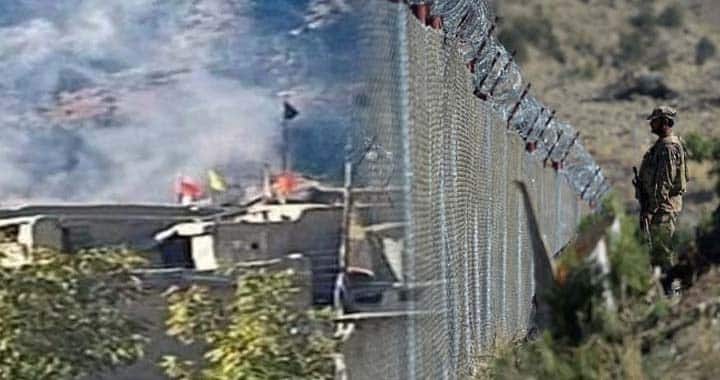
Recent exchanges of fire in Kurram district have again highlighted the security pressures facing Pakistan’s border areas. Reporting on the October 17 confrontation described Pakistani forces and Afghan Taliban personnel exchanging fire after an attempted infiltration near the frontier.
The incident reflects a wider challenge for Pakistan: securing a long and difficult border while preventing terrorist organizations from exploiting cross-border networks to launch attacks inside the country.
A Security Problem that Crosses Borders
Pakistan has repeatedly urged the Taliban authorities in Afghanistan to prevent terrorist groups, particularly the banned TTP, from using Afghan territory to plan or facilitate attacks against Pakistan.
Islamabad’s position is that domestic counterterrorism operations cannot permanently neutralize the threat if networks retain the ability to regroup, obtain resources and organize cross-border movements.
The Afghan Taliban have denied accusations that they provide safe havens to groups targeting Pakistan. Nevertheless, the security dispute remains unresolved, and repeated clashes demonstrate the urgent need for arrangements that prevent infiltration and reduce the risk of escalation.
The issue is not simply the management of a boundary. It concerns the ability of a state to prevent armed organizations from using territory beyond its control to threaten its citizens.
The Cost Borne by Border Communities
The human and economic consequences of insecurity extend well beyond the immediate location of an attack.
When roads become unsafe, transport slows, markets lose customers and families face uncertainty over travel. Traders and farmers may struggle to move goods, while schools, health services and other public institutions can face interruptions when the security situation deteriorates.
Security operations can also disrupt normal life, particularly when terrorists operate near populated areas or use civilian surroundings to conceal their movements.
These pressures make civilian protection an essential part of border security policy. Local populations need reliable information, functioning emergency services, effective complaint mechanisms and assistance when violence disrupts livelihoods.
Communities should also be able to cooperate with law enforcement without being left exposed to intimidation or retaliation by terrorist groups.
Border Security Needs Intelligence and Diplomacy
Physical barriers and surveillance remain important tools, but border management cannot rely on infrastructure alone.
Effective security requires timely intelligence, trained personnel, coordination between agencies and the ability to investigate facilitators who support terrorist movements. It also requires channels for communication with neighboring authorities to prevent local incidents from escalating into broader confrontations.
Pakistan’s diplomatic engagement should therefore remain closely tied to verifiable security outcomes. Commitments to prevent terrorism need to be reflected in practical action against networks planning attacks, not merely in statements about regional stability.
At the same time, sustained communication is necessary to reduce risks to civilians and keep channels open for addressing border incidents.
Security and Economic Recovery Must Move Together
Pakistan’s border communities should not be defined permanently by conflict. Their economic recovery depends on predictable security, functioning transport links and the confidence to invest, trade and conduct ordinary business.
That requires a two-track approach: firm action against terrorist organizations and sustained efforts to protect the communities living closest to the threat.
The security of Pakistan’s western frontier is ultimately measured not only by the prevention of infiltration but also by whether people can live and work without fear.
For Pakistan, lasting border security means denying terrorist networks room to operate while ensuring that the communities on the front line are not left carrying the cost of an unresolved regional threat.



