
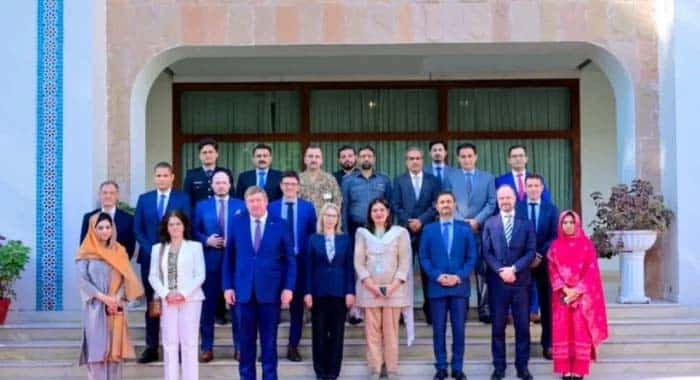
Pakistan and the European Union (EU) have reaffirmed their shared commitment to combating terrorism and agreed to further strengthen counterterrorism cooperation at multilateral forums, including the United Nations, with particular emphasis on preventing and countering violent extremism, combating terrorist financing, and addressing the misuse of cyberspace by terrorist elements.
The understanding was reached during the 10th Round of the Pakistan–EU Bilateral Counterterrorism Dialogue, held in Islamabad. The dialogue provided an important platform for both sides to exchange perspectives on the evolving global security environment, discuss emerging terrorist threats, and explore avenues for enhanced cooperation in addressing the multifaceted challenges posed by terrorism.
According to a statement issued by Pakistan’s Ministry of Foreign Affairs, the Pakistani delegation was led by Dr. Fareha Bugti, Director General (Counter Terrorism), while the EU delegation was headed by Anna Strazska, Special Envoy for Counter Terrorism at the European External Action Service (EEAS).
During the dialogue, both sides held comprehensive discussions on recent regional and global developments affecting the terrorism threat landscape. They unequivocally condemned terrorism in all its forms and manifestations and reaffirmed their commitment to working together to counter this persistent threat through enhanced international cooperation, effective multilateral engagement, and the exchange of relevant expertise and best practices.
The European Union condemned recent terrorist attacks in Pakistan, expressed solidarity with the civilians affected by such violence, and acknowledged the importance of Pakistan’s efforts to combat terrorism. This expression of solidarity underscored the significance of international cooperation and mutual understanding in confronting security challenges that extend beyond national borders.
Both sides also acknowledged their respective contributions to the ongoing global fight against terrorism and expressed concern over the security implications of the evolving situation in Afghanistan. The discussions highlighted the importance of continued engagement, regional awareness, and coordinated international efforts to address security concerns and prevent terrorist elements from exploiting prevailing regional challenges.
A key focus of the dialogue was the growing complexity of terrorist threats and the evolving methods through which extremist and terrorist networks pursue their objectives. Participants discussed the exploitation of cyberspace and information resources, as well as the potential misuse of energy resources, to advance terrorist agendas. The discussions reflected the importance of adapting counterterrorism strategies to emerging technological and operational challenges.
Pakistan and the EU exchanged experiences and best practices on preventing and countering violent extremism, addressing terrorism financing, and tackling radicalisation in all its forms. Particular attention was given to the misuse of cyberspace by terrorist elements, highlighting the need for effective approaches to identify and address the digital dimensions of contemporary security threats.
The dialogue also reaffirmed the importance of effective multilateralism in building a sustained international consensus against terrorism. Both sides recognised that close cooperation through international platforms, including the United Nations, remains essential to strengthening collective responses, promoting coordinated action, and advancing shared objectives in the fight against terrorism.
The 10th round of the Pakistan–EU Bilateral Counterterrorism Dialogue reflects the continued engagement between Pakistan and the European Union on matters of mutual security concern. By maintaining dialogue, exchanging expertise, and exploring opportunities for practical cooperation, both sides reaffirmed the importance of a coordinated and comprehensive approach to counterterrorism.



