
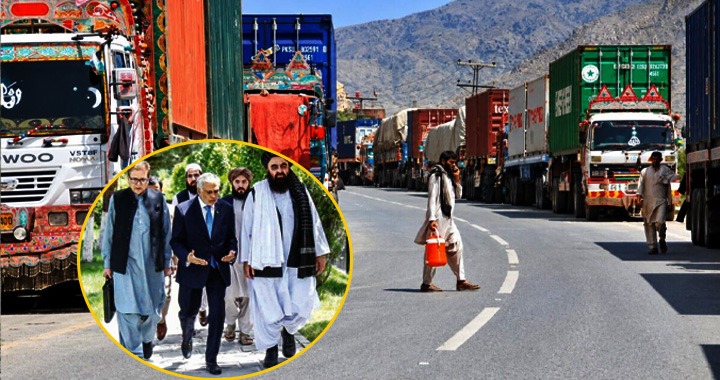
Pakistan and the Afghan Taliban share a border, deep social connections and a history of political and security cooperation. Yet their relationship has become increasingly strained over a fundamental question: can the Taliban authorities prevent armed groups operating from Afghan territory from attacking Pakistan, and are they willing to take the verifiable steps Islamabad demands?
The dispute has consequences far beyond diplomatic statements. It affects border security, trade, the movement of people, regional stability and the prospects for cooperation between neighboring countries. If the two sides cannot establish a workable security arrangement, a relationship once expected by many to produce greater stability risks becoming a continuing source of confrontation.
Pakistan’s central concern is the banned Tehreek-e-Taliban Pakistan (TTP), whose attacks have inflicted heavy losses on Pakistani security personnel and civilians. Islamabad has repeatedly alleged that the group benefits from operating space inside Afghanistan. The Afghan Taliban have disputed Pakistani accusations, leaving a deep gap between the two sides’ accounts of the security situation.
A Relationship Built on Expectations that did not Hold
When the Taliban returned to power in Afghanistan in August 2021, Pakistan faced a strategic environment that appeared to offer opportunities for closer engagement. The departure of US-led forces and the establishment of a Taliban government raised expectations that Kabul would be more responsive to Pakistani security concerns.
Those expectations have collided with the continuing problem of armed groups operating across the border.
For Islamabad, the issue is not simply whether the Afghan Taliban maintain friendly relations with Pakistan. It is whether the authorities in Kabul can prevent Afghan territory from being used to organize attacks against a neighboring state.
The distinction matters. Diplomatic engagement, public assurances and historical ties cannot substitute for measurable security outcomes. Pakistan wants the threat reduced in practice, not merely addressed in statements.
For the Afghan Taliban, accepting Pakistan’s demands could create internal political and organizational complications, particularly where relationships with armed groups overlap with the movement’s history and regional networks. That possibility helps explain the difficulty of the dispute, but it does not resolve Pakistan’s security concerns.
The TTP Question is at the Center
The TTP’s relationship with Afghanistan has become one of the most consequential issues in bilateral relations. Pakistan has accused the Afghan Taliban authorities of failing to prevent the group from using Afghan territory for recruitment, planning and operations. Kabul has rejected or challenged aspects of Islamabad’s allegations.
The way forward requires evidence that can be assessed rather than an endless exchange of accusations. Pakistan needs credible mechanisms for reporting cross-border incidents, sharing relevant information, investigating alleged sanctuaries and verifying action against individuals and facilities implicated in attacks.
A sustainable arrangement would also require a clear understanding of what constitutes compliance. If one side claims to have taken action while the other continues to experience attacks linked to the same networks, the disagreement will persist unless the parties can assess the evidence together.
Diplomacy cannot guarantee that every attack will be prevented. It can, however, establish procedures for investigating incidents, reducing misunderstandings and determining whether commitments are being implemented.
Border Closures Carry Costs on Both Sides
Security tensions also affect trade and cross-border movement. When crossings are closed or movement is restricted, traders, transporters, workers and families bear immediate costs. Delays disrupt supply chains, increase uncertainty and place additional pressure on communities that depend on cross-border commerce.
These consequences can generate further resentment without necessarily resolving the security dispute. Reopening crossings without addressing the underlying threat, however, may simply restore the conditions in which the next confrontation occurs.
The challenge is to prevent border management from becoming a permanent cycle of closure and reopening. Predictable procedures, effective screening, coordinated security arrangements and reliable communication between authorities would reduce disruption while allowing legitimate trade to continue when security conditions permit.
Neither country benefits indefinitely from a border relationship dominated by uncertainty.
Pressure Without a Diplomatic Exit is Incomplete
Pakistan has several instruments available: diplomatic engagement, border controls, intelligence cooperation, economic measures and security operations. Each can serve a purpose, but their effectiveness depends on a clear objective.
If the objective is to reduce cross-border terrorism, measures should be assessed by whether they produce that outcome. Escalation that inflicts costs without changing the behavior of the networks responsible for attacks risks turning a security dispute into a prolonged bilateral crisis.
At the same time, dialogue should not become an excuse to postpone action. Pakistan’s demand that Afghan territory not be used for attacks is a core security concern. Engagement is most useful when it establishes specific obligations, credible verification and consequences for continued noncompliance.
A durable agreement would need to address the TTP threat, establish channels for investigating incidents, improve border coordination and provide a way to resolve disputes before they trigger further escalation.
The Strategic Choice Ahead
The Afghan Taliban authorities face a difficult question about the kind of relationship they want with Pakistan. A neighbor that repeatedly suffers attacks it attributes to networks operating from Afghanistan cannot be expected to treat the matter as a routine diplomatic disagreement.
Pakistan, in turn, must determine how to combine pressure with a realistic route toward verifiable de-escalation. The objective should be a security arrangement that protects Pakistani citizens while reducing the risk of a wider conflict.
The two sides do not need to agree on every political issue to establish minimum rules for preventing cross-border attacks. They do need to accept that continued insecurity has costs that neither diplomacy nor trade can indefinitely absorb.
The decisive question is no longer whether Pakistan and the Afghan Taliban can maintain contact. It is whether that contact can produce verifiable security outcomes. Without those outcomes, dialogue risks becoming a holding pattern while the underlying conflict continues.



