
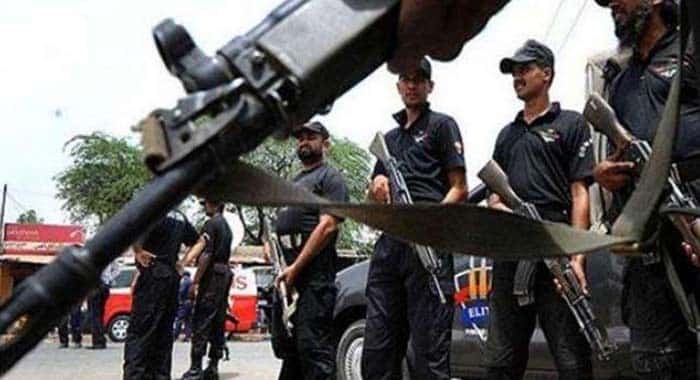
Pakistan’s counterterrorism campaign is being fought on several fronts at once. Security forces confront armed groups in the mountains and border districts, police officers face attacks in towns and cities, intelligence agencies pursue networks operating across provincial boundaries, and the state contends with the consequences of instability in neighboring Afghanistan. Each operation matters, but the larger question is whether these efforts are steadily dismantling the systems that enable terrorism to survive.
The distinction between tactical success and strategic victory is central to understanding Pakistan’s security challenge. Killing a terrorist commander can disrupt an organization’s operations. Destroying a hideout can deny it a temporary base. Arresting facilitators can expose communication and logistics networks. Yet none of these achievements guarantees that another commander will not emerge, another hideout will not be established or another group will not exploit the same vulnerabilities.
The war must therefore be measured not only by what security forces destroy, but also by what terrorist organizations permanently lose the ability to do.
A Threat Spread Across Multiple Fronts
Khyber Pakhtunkhwa and Balochistan remain central to Pakistan’s current counterterrorism challenge, but the nature of the violence differs across the two provinces.
In KP, the banned Tehreek-e-Taliban Pakistan (TTP) and affiliated factions pose a persistent threat through attacks on police, security personnel and civilians. The border with Afghanistan complicates the response, particularly where Pakistani authorities believe armed groups can access sanctuaries or logistical support across the frontier.
In Balochistan, separatist armed organizations, including the Balochistan Liberation Army (BLA), present a different set of challenges. Attacks on security personnel, civilians, transport links and infrastructure can disrupt economic activity while forcing the state to protect an enormous territory.
These threats cannot be addressed through an identical operational template. Intelligence, terrain, organizational structure, recruitment patterns and local circumstances differ. A national strategy must provide common objectives and coordination while allowing each region’s security institutions to respond to the specific threats they face.
The common requirement is sustained pressure on the networks behind violence, not simply on the individuals encountered during operations.
Intelligence is the Decisive Link
Counterterrorism becomes more effective when intelligence allows security agencies to act before an attack takes place. Information about a planned assault, a weapons cache, a facilitator or a suspected movement of armed personnel can help prevent casualties and direct resources toward the most immediate threats.
But intelligence-led operations require more than isolated tips. They depend on reliable local sources, technical capabilities, analytical expertise, interagency cooperation and the ability to turn fragmented information into an accurate operational picture.
Police and the Counter Terrorism Department are particularly important in this process. Military operations may disrupt armed groups in difficult terrain, but police investigations can identify accomplices, establish criminal links, trace financial support and build cases that survive judicial scrutiny.
If a terrorist is killed but the network that supplied weapons, transport, money and information remains intact, the organization may recover faster than the state expects.
The objective must be to make each successful operation contribute to the dismantling of a wider network.
The State must Protect its own Institutions
Pakistan’s security personnel continue to face the risk of ambushes, targeted attacks and assaults on police facilities. Every attack creates immediate human costs while also placing pressure on the institutions responsible for public safety.
Strengthening those institutions is therefore a strategic requirement. Police stations need effective protection, personnel need adequate equipment and training, and CTD investigators need the resources to pursue complex cases. Prosecutors and courts must be able to process evidence effectively, while local administrations must remain capable of delivering services in areas affected by violence.
A counterterrorism strategy that relies indefinitely on exceptional deployments without strengthening civilian law enforcement risks creating a cycle in which the state can enter an area forcefully but struggles to maintain normal security afterward.
The long-term objective should be a security architecture in which local institutions can detect threats, protect residents, investigate crimes and prevent terrorist networks from returning.
Afghanistan cannot be Ignored
Pakistan’s western border remains a major factor in the national security equation. Islamabad has repeatedly called on the Afghan Taliban authorities to prevent armed groups, particularly the TTP, from using Afghan territory to plan or launch attacks inside Pakistan. The Taliban authorities have disputed Pakistan’s accusations.
This dispute creates a problem that domestic operations alone cannot resolve. If an organization can relocate personnel, rebuild networks or plan attacks from outside Pakistan’s jurisdiction, the state faces a threat that can regenerate despite repeated tactical setbacks.
Pakistan therefore needs a combination of border security, intelligence cooperation, diplomatic engagement and verifiable action against cross-border networks. At the same time, it must continue improving domestic intelligence and policing rather than treating Afghanistan as the sole explanation for every security failure.
The two approaches are complementary. External pressure cannot replace domestic reform, and domestic operations cannot fully resolve a threat that benefits from cross-border access.
The Civilian Dimension of the War
Terrorism is not only a contest between terrorist organizations and security forces. It is also a struggle over whether civilians can live without coercion, whether businesses can operate without fear and whether communities believe the state can protect them.
Displacement, damaged infrastructure, interrupted education and the loss of family members leave consequences that persist long after a particular operation has ended. Communities that experience repeated insecurity need more than assurances that the threat is being addressed. They need visible protection, functioning services and confidence that complaints will be heard.
This does not mean counterterrorism should be softened in the face of armed violence. It means that force must be accompanied by lawful conduct, civilian protection and credible governance. Terrorist groups benefit when fear isolates communities from state institutions; a responsive state makes that isolation harder to sustain.
How will Pakistan Know it is winning?
The most meaningful indicators are not difficult to identify, even if measuring them accurately requires consistent data.
Pakistan needs to examine whether attacks are declining over sustained periods, whether civilian and security-force casualties are falling, whether terrorist financing and facilitation networks are being dismantled, whether arrests lead to successful prosecutions and whether communities regain the ability to conduct ordinary life safely.
The state must also distinguish between a temporary decline in violence and a durable reduction in terrorist capacity. A group that suspends operations while rebuilding its organization has not necessarily been defeated.
The same principle applies to territory. Clearing an area of armed personnel is important, but maintaining security, protecting residents and preventing the return of intimidation are what turn an operation into a lasting gain.
Pakistan’s counterterrorism effort demands endurance, institutional coordination and political consistency. No single operation, province-wide intervention or diplomatic initiative can deliver victory on its own.
Winning the war means reaching a point where terrorist networks can no longer regenerate faster than the state can dismantle them. That is a far more demanding objective than counting those killed, but it is the standard against which Pakistan’s long campaign must ultimately be judged.



