
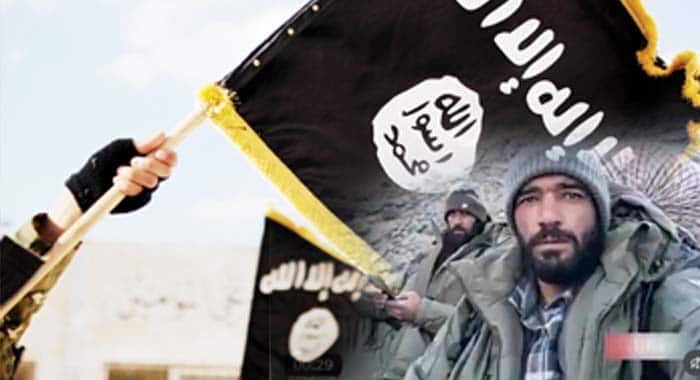
Intelligence assessments point to a growing security threat facing Afghan Resistance forces, with ISIS preparing to intensify suicide attacks against resistance personnel and senior commanders. The assessments also indicate cooperation between ISIS members and Taliban fighters in weapons and mine-warfare training, alongside the provision of weapons to target Resistance forces.
These developments raise serious concerns about the evolving security situation in Afghanistan and the potential consequences for forces opposing Taliban rule. The reported activities point to a dangerous security environment in which resistance commanders face increasing risks, while questions surrounding cooperation between militant groups warrant urgent scrutiny.
According to the intelligence information provided, senior commanders of the Afghan Resistance are among ISIS’s principal targets. The assessments further indicate that ISIS members are receiving specialised training alongside Taliban fighters under Taliban instructions, while weapons are being supplied to support operations against Resistance forces.
The involvement of ISIS in the killing of National Resistance Front (NRF) commander Mirwais Khan in Panjshir’s Parian district further underscores the dangers facing resistance personnel. The incident highlights the growing threat posed by targeted violence and the potential for further instability across Afghanistan.
ISIS’s preparations to intensify suicide attacks against Afghan Resistance forces represent a serious security concern, particularly as senior commanders are identified among its priority targets. An escalation in such attacks could increase casualties, disrupt resistance structures, and deepen instability in areas where opposition to Taliban rule remains active.
Targeted attacks against military and political figures can have consequences far beyond individual losses. They can weaken organisational coordination, create uncertainty among personnel, and expose surrounding communities to heightened insecurity. The prospect of an intensified campaign therefore raises urgent questions about the protection of resistance personnel and the wider security implications for Afghanistan.
The intelligence assessments indicate that the threat extends beyond isolated attacks, pointing to a broader pattern of preparations and military cooperation that could increase ISIS’s operational capabilities. The scale and timing of any escalation remain uncertain, but the seriousness of the identified threat demands close attention.
A central concern is the cooperation between ISIS members and Taliban fighters in weapons handling and mine warfare. According to the intelligence information, the training is taking place under Taliban instructions, while weapons are being supplied to facilitate attacks against Resistance forces.
Such cooperation would carry significant implications for Afghanistan’s security landscape. Access to training, weapons, and other forms of military support could strengthen ISIS’s capacity to conduct attacks and increase the risks facing resistance personnel and nearby civilian communities.
The reported training arrangements also raise questions about the relationship between elements of the Taliban and ISIS, two organisations that have historically been adversaries. The nature of this cooperation, the individuals directing it, and the extent of any institutional involvement require further examination.
If the intelligence assessments are substantiated, the situation would demand serious scrutiny of the conduct of those facilitating the training and weapons transfers, as well as the wider implications for counterterrorism efforts in Afghanistan.
The killing of Mirwais Khan, a commander of the National Resistance Front, in Parian district of Panjshir has further intensified concerns about the security of resistance figures. ISIS involvement in the incident highlights the dangers confronting commanders associated with opposition movements.
Panjshir occupies a significant place in Afghanistan’s recent political and military history because of its association with resistance to Taliban control. Violence targeting resistance personnel in the region therefore carries implications beyond individual casualties, potentially affecting local security, public confidence, and the wider dynamics of the conflict.
The killing also underscores the vulnerability of individuals who hold leadership positions within resistance movements. Continued attacks against such figures could deepen insecurity, intensify political tensions, and increase the risk of further confrontation.
The incident reinforces the need for credible investigations, accountability for those responsible, and effective measures to prevent additional violence against resistance personnel and civilians. The intelligence assessments point to a significant contradiction in Afghanistan’s security environment. The Taliban authorities have presented themselves as a force capable of maintaining order and preventing rival militant organisations from operating freely. At the same time, the intelligence information indicates cooperation between Taliban fighters and ISIS members in activities directed against Afghan Resistance forces.
The reported cooperation raises serious questions about the conduct of individuals within the Taliban’s security structures and the extent to which such activities are authorised or facilitated by senior officials.
The Taliban and ISIS have historically fought each other, making any cooperation between their members particularly significant. Establishing the precise nature of the relationship is essential to understanding whether the activities reflect coordination among particular individuals or a broader arrangement.
Regardless of the underlying motivations, any transfer of weapons, provision of military training, or assistance that strengthens the capacity of armed groups to carry out attacks would have serious consequences for security and stability. The potential escalation of suicide attacks and other forms of militant violence threatens not only resistance personnel but also the wider civilian population. Communities living in areas affected by armed conflict may face increased insecurity, disruption to daily life, and heightened risks to their livelihoods.
Afghanistan continues to face substantial economic and humanitarian challenges. A further deterioration in security could complicate recovery efforts, undermine public confidence, and make it more difficult for communities to rebuild their lives. Violence targeting resistance commanders can also contribute to cycles of retaliation and deepen divisions within society. Where armed groups expand their activities, civilians often bear a disproportionate share of the consequences.
Preventing further attacks therefore requires a focus on civilian protection, accountability, and measures that reduce the ability of armed organisations to expand their operational reach.



