
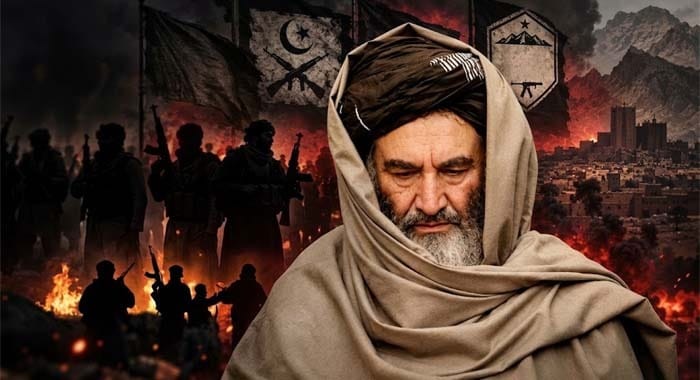
For years, the Taliban authorities have maintained that Afghan territory would not be allowed to serve as a base for attacks against other countries. That assurance has remained central to their public statements and diplomatic engagement with neighbouring states. However, allegations concerning a secret meeting in Kandahar on 26 August 2026 have raised serious questions about the credibility of those commitments and the Taliban’s approach to regional security.
According to the allegations, the meeting was hosted by Mullah Mohammad Shirin Akhund, the Taliban-appointed governor of Kandahar, and involved individuals associated with the Balochistan Liberation Army (BLA), Al-Qaeda, Tehreek-e-Taliban Pakistan (TTP), and the Hafiz Gul Bahadur network. The reported gathering allegedly involved discussions about militant cooperation, the movement of fighters, weapons supplies, training facilities, and financial assistance.
If substantiated, these allegations would raise serious concerns about possible links between Taliban officials and armed groups accused of carrying out attacks across the region. They would also place renewed scrutiny on the Taliban’s repeated assurances that Afghan soil would not be used to threaten neighbouring countries.
The allegations were reportedly brought into wider public discussion on 1 October 2026. The Taliban authorities have dismissed the claims as baseless propaganda. The competing assertions require independent verification, particularly given the potential implications for regional stability and civilian security.
Kandahar is a significant centre of Taliban political and religious authority and the base associated with Supreme Leader Haibatullah Akhundzada. Mullah Mohammad Shirin Akhund, identified in the allegations as the host of the reported meeting, is a senior Taliban official with longstanding connections to the movement’s leadership.
The reported involvement of such a figure has raised questions about whether the alleged gathering was merely an informal contact or part of a broader effort to facilitate cooperation among militant organisations. However, the identity of the alleged host alone does not establish that the Taliban’s supreme leadership authorised or approved any proposed activities.
The central issue is whether credible evidence can establish that the meeting took place as described, who participated, what was discussed, and whether any commitments were subsequently implemented.
If the allegations are confirmed, the implications would extend beyond individual participants. They would raise questions about the relationship between the Taliban’s public counterterrorism assurances and the conduct of officials within its governing structure.
The claims identify four militant organisations or networks as having been represented or discussed in connection with the reported gathering: the Balochistan Liberation Army, Al-Qaeda, the Tehreek-e-Taliban Pakistan, and the Hafiz Gul Bahadur network.
The BLA is an armed separatist organisation responsible for attacks in Pakistan. The TTP has carried out numerous attacks against Pakistani security personnel and civilians. Al-Qaeda is an internationally designated terrorist organisation, while the Hafiz Gul Bahadur network has also been associated with militant violence in Pakistan.
According to the allegations, the meeting concerned possible cooperation between these groups, including the movement of personnel and the provision of resources. The precise nature of the alleged arrangements, however, has not been independently established.
Any confirmed cooperation between organisations with a record of militant activity could create additional challenges for regional security agencies, particularly if it enabled fighters, equipment, or expertise to move across borders while obscuring their organisational affiliations.
One of the most serious claims concerns an alleged request by BLA leader Bashir Zeb for additional fighters following reported losses sustained by the organisation during fighting in Balochistan. According to the information provided, Taliban-linked figures and TTP members allegedly discussed supplying additional personnel to support the BLA. The claims further suggest that fighters associated with other networks would wear BLA desert uniforms to conceal their original affiliations and make it more difficult to identify their backgrounds.
If verified, such an arrangement could complicate the attribution of attacks and make it more difficult for security agencies to distinguish between the activities of separate armed groups. It would also raise concerns about the potential establishment of a wider network of militant cooperation across the region.
These alleged arrangements remain unverified and should not be treated as established facts without corroborating evidence.
The reported meeting is also alleged to have involved discussions about training BLA fighters at facilities identified as Al-Farooq camps in Afghanistan. According to the claims, Al-Qaeda would provide specialised instruction to new recruits.
Separate allegations suggest that weapons and equipment originally supplied to Afghan security forces by the United States were made available to militant groups. The equipment reportedly included M4 rifles and advanced night-vision devices, which could potentially increase the operational capabilities of armed groups if transferred and used as alleged.
The claims raise serious questions about weapons security, the possible movement of military equipment into unauthorised hands, and the potential consequences for border personnel and civilian communities. However, the information provided does not independently establish that the alleged training arrangements or weapons transfers occurred. Verification would require credible evidence identifying the facilities, equipment, recipients, and individuals responsible for any transfers.
The allegations further refer to earlier meetings in May and July during which, according to purported intelligence information, millions of Afghanis were allegedly provided to militant commanders with assistance from Taliban intelligence structures.
If substantiated, such financial arrangements could be relevant to determining whether individuals within the Taliban administration knowingly facilitated militant activity. Establishing responsibility would require authenticated financial records, corroborated testimony, communications, or other reliable evidence.
The claims also raise broader questions about the possible use of official networks to facilitate funding, logistical support, or movement for armed organisations. At present, however, the alleged payments and the roles attributed to particular officials remain unverified.
The reported Kandahar meeting has brought renewed attention to the Taliban’s longstanding assurances that Afghan territory would not be used to threaten other countries. For Pakistan, concerns about militant activity originating from Afghanistan have remained a significant security issue. The credibility of any counterterrorism commitment ultimately depends on whether it is implemented through practical measures, including preventing armed groups from organising attacks, investigating credible allegations of support, and addressing the activities of individuals who facilitate cross-border violence.
The Taliban authorities have dismissed the reported meeting as propaganda. That denial must be considered alongside the allegations, but neither the denial nor the claims themselves settle the matter. The decisive question is whether independent evidence can establish what happened in Kandahar and whether any individuals or institutions were involved in facilitating militant operations.
The debate also recalls the killing of Al-Qaeda leader Ayman al-Zawahiri in a United States drone strike in Kabul in July 2022. His presence in the Afghan capital raised significant questions about Al-Qaeda’s continued presence in the country and the Taliban’s assurances concerning terrorist organisations. The episode remains part of the wider discussion about the credibility of counterterrorism commitments and the risks posed by militant networks operating from Afghan territory.
However, the circumstances of the reported Kandahar meeting must be established independently. Previous security incidents provide relevant context but do not, by themselves, prove the specific allegations concerning the August 2026 gathering. The broader lesson is that counterterrorism assurances require verifiable implementation, transparent investigations, and credible action against groups planning or facilitating attacks.
The consequences of any renewed militant cooperation would not be limited to political authorities or armed organisations. Ordinary Afghans and Pakistanis living near the border could face the greatest risks. Afghanistan continues to experience serious economic and humanitarian challenges, including widespread poverty, limited employment opportunities, and pressure on essential services. Any deterioration in relations with neighbouring countries could further disrupt trade, restrict movement, and complicate economic recovery.
In Pakistan, renewed militant attacks could result in additional casualties among civilians and security personnel, while creating further uncertainty for border communities and businesses. The prospect of cross-border violence also raises the risk of military escalation, displacement, and further restrictions on trade. These consequences would place additional burdens on populations that have already endured decades of conflict and instability. If the allegations concerning the Kandahar meeting are substantiated, they would raise serious questions about whether decisions by political or security figures are exposing ordinary people to avoidable risks.
The reported meeting has placed the Taliban’s counterterrorism commitments under renewed scrutiny. If credible evidence establishes that officials facilitated the movement of fighters, supplied weapons, supported militant training, or financed cross-border operations, the allegations would warrant a serious and transparent response. Pakistan and other affected countries have a legitimate interest in ensuring that armed organisations cannot use Afghan territory to organise or facilitate attacks. At the same time, allegations of official complicity must be investigated through reliable evidence rather than political assertions alone.
The Taliban authorities have an opportunity to address these concerns by providing credible clarification, investigating specific allegations, and demonstrating through verifiable action that their territory will not be used to threaten neighbouring states.
Regional stability cannot be secured through public assurances alone. It requires practical counterterrorism measures, effective border cooperation, accountability for wrongdoing, and sustained efforts to prevent armed groups from exploiting political and institutional weaknesses.



