
Russia’s evolving approach towards Afghanistan has raised questions about the strategic objectives underpinning Moscow’s engagement with the Taliban authorities, particularly as Russian officials combine diplomatic praise for the Taliban’s governance with warnings about terrorist threats emanating from Afghan territory. This apparent contrast has prompted concerns that Moscow may be seeking to expand its regional influence while managing competing security interests across Afghanistan and Central Asia.
The central issue is whether Russia’s engagement represents a coherent effort to stabilise Afghanistan or a calculated strategy designed to strengthen its diplomatic leverage, reinforce its influence over neighbouring states, and advance its geopolitical interests at a time when Afghanistan remains economically vulnerable and internationally isolated.
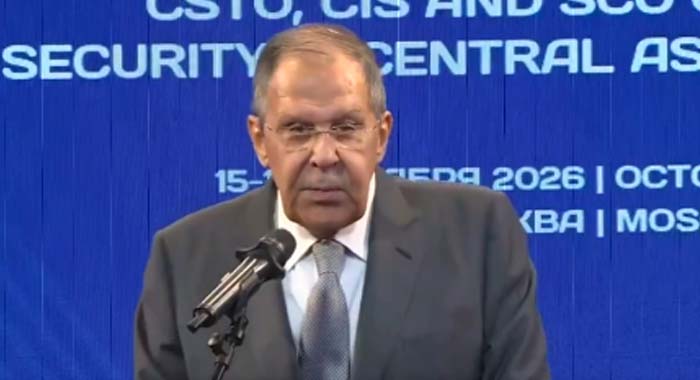
On 5 October, Russian Foreign Minister Sergey Lavrov reportedly praised the Taliban’s administration of Afghanistan, describing its governance as having been conducted “quite successfully.” On 16 October, Lavrov reportedly warned of terrorist camps near the borders of Central Asian states and the potential spread of security threats from Afghanistan towards Russia.
Taken together, these statements highlight two dimensions of Moscow’s Afghanistan policy: diplomatic engagement with the Taliban and continued emphasis on the security risks associated with developments inside Afghanistan.
The apparent contradiction warrants closer examination. Diplomatic recognition of the Taliban’s governing capacity can help strengthen its international standing, while warnings about terrorism can reinforce the importance of Russian security cooperation among Central Asian governments. Whether these positions reflect deliberate strategic coordination or an attempt to balance competing policy priorities remains a matter for informed assessment.
Nevertheless, the combination raises a fundamental question about the long-term consequences of Russia’s approach: can Moscow simultaneously present the Taliban as a functioning governing authority and portray Afghanistan as a source of persistent regional security threats without creating contradictions in its own regional strategy?
Russia’s engagement with the Taliban must also be viewed against the wider competition for influence in Central and South Asia. Afghanistan’s geographical position, its proximity to several strategically important states, and its continuing security challenges make it a significant consideration for regional powers.
Moscow’s diplomatic outreach to Kabul provides opportunities to maintain communication with the authorities controlling Afghanistan, pursue security-related interests, and retain a role in regional political discussions. At the same time, emphasising the threat posed by militant organisations can reinforce Russia’s position as a major security partner for neighbouring Central Asian states.
Critics of Moscow’s approach argue that this combination risks turning Afghanistan’s unresolved security challenges into an instrument of geopolitical influence. Under such a strategy, the Taliban can be treated as a diplomatic interlocutor when engagement serves Russian interests, while the threats associated with Afghanistan can be highlighted when they strengthen the case for Russian regional leadership.
This interpretation does not, by itself, establish that Moscow is deliberately manipulating the security situation. It does, however, underline the need to assess Russian policy through its practical consequences rather than diplomatic statements alone.
The frequency of high-level Russian contacts with the Taliban has also drawn attention to the distinction between diplomatic visibility and substantive assistance. Engagement can create channels for communication, reduce the risk of misunderstandings, and facilitate discussions on trade, security, and regional connectivity. Yet diplomatic meetings alone cannot resolve Afghanistan’s deep-rooted economic and humanitarian challenges.
Afghanistan continues to face substantial obstacles to economic recovery, access to international assistance, and reintegration into the global financial and diplomatic system. Against this backdrop, the practical value of Moscow’s engagement must be assessed in terms of measurable economic support, sustainable development initiatives, humanitarian assistance, and tangible improvements in the lives of ordinary Afghans.
Critics contend that Russia’s material assistance has been modest compared with the scale of Afghanistan’s needs, pointing to reported deliveries of basic relief supplies, including cooking oil, rice, blankets, and tents. Such assistance can provide immediate relief, but it cannot substitute for sustained humanitarian funding, economic investment, functioning institutions, or access to international development resources.
The distinction is significant. Diplomatic engagement may strengthen Moscow’s visibility and political influence, but its ability to improve conditions within Afghanistan depends on the scale, consistency, and long-term impact of the support it provides.
Russia’s engagement with the Taliban also raises broader questions about Afghanistan’s position within the international system. Diplomatic contact does not automatically translate into international recognition, economic normalisation, or the restoration of comprehensive assistance.
For Afghanistan, the consequences of prolonged isolation extend beyond diplomatic status. Constraints on economic activity, limited access to international finance, humanitarian funding pressures, and uncertainty over long-term development prospects can deepen the hardships experienced by the population.
Moscow may seek to use its engagement with Kabul to reinforce its diplomatic relevance and advance its positions in international forums, including discussions at the United Nations. However, claims that Russia is deliberately using the Taliban to extract concessions from the United States, China, or other permanent members of the Security Council require specific evidence and should be distinguished from broader analysis of geopolitical competition.
The underlying concern remains that Afghanistan could become a bargaining instrument in wider strategic rivalries, with its future shaped less by the needs of its population than by the calculations of external powers.
Beyond diplomatic manoeuvring, the most serious consequences of competing regional strategies would fall on the Afghan population. If external engagement strengthens the Taliban politically without generating meaningful improvements in governance, human rights, economic opportunity, or humanitarian conditions, the benefits of such diplomacy may remain concentrated among political authorities rather than society at large.
There is also a wider security dimension. If Afghanistan becomes more deeply embedded in competing regional agendas, unresolved tensions could contribute to confrontation, deepen mistrust among neighbouring states, and increase the risk of proxy competition.
Such an outcome would carry serious consequences for a country already burdened by decades of conflict. Renewed instability could mean further displacement, greater economic hardship, reduced opportunities for young people, and the loss of prospects for long-term recovery.
The fundamental question is therefore not simply whether Russia is engaging with the Taliban, but whether that engagement contributes to a more secure, inclusive, and economically viable Afghanistan—or primarily advances Moscow’s strategic position.
Russia’s approach illustrates the advantages that diplomatic flexibility can offer a major power. Engagement with the Taliban can preserve political access, while warnings about terrorism can sustain the importance of Russian security partnerships across Central Asia. Both approaches can serve legitimate policy objectives, but their combined effect deserves scrutiny where diplomatic statements are not matched by proportionate commitments to Afghanistan’s recovery.
For Afghanistan, the stakes are considerably higher. The country risks remaining dependent on external powers whose priorities may change with the wider geopolitical environment. Without diversified economic partnerships, sustainable humanitarian assistance, and meaningful progress towards international reintegration, diplomatic engagement alone is unlikely to deliver lasting stability.
The prospect of Afghanistan becoming overly dependent on Moscow is therefore a legitimate subject of strategic debate, although the assertion that Russia intends to turn the country into a satellite state would require further evidence. Afghanistan’s future will depend on the choices of its governing authorities, the policies of regional powers, and the extent to which the international community can support a durable and inclusive political and economic settlement.



