
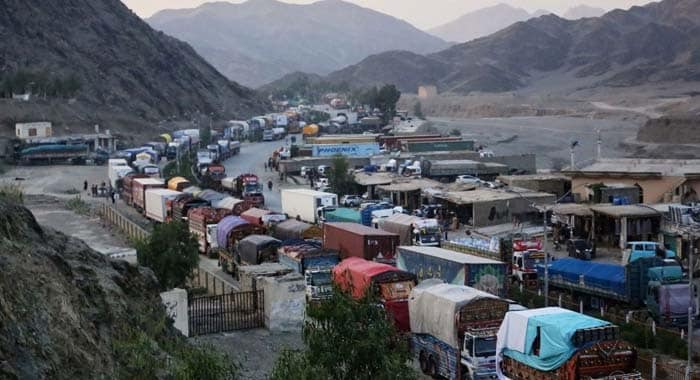
Taliban-controlled Afghanistan’s farmers are struggling to find buyers, exports are declining, and transit trade through Pakistan has suffered a dramatic collapse. Behind these mounting economic losses lies a security crisis that the Afghan Taliban had years to address but failed to resolve: Pakistan’s repeated demands that Afghan territory no longer be used to launch terrorist attacks against its people and security forces.
For nearly four years, Pakistan has repeatedly raised the issue with the Taliban authorities, lodged diplomatic protests and presented evidence of terrorist networks operating from Afghan soil. Islamabad has maintained that its concerns were supported by concrete evidence, not merely allegations, and has accused the Taliban authorities of allowing terrorist groups to operate, facilitating their activities and, in some cases, becoming directly involved in attacks against Pakistan.
Despite repeated warnings and diplomatic engagement, the problem persisted and, according to Pakistan, continued to intensify. After efforts to secure action from Kabul failed, Pakistan launched Operation Ghazab Lil Haq on the night of February 26–27, 2026, and began striking terrorist sanctuaries inside Afghanistan. Islamabad has characterized these operations as a response to terrorist threats emanating from Afghan territory, rather than an offensive against Afghanistan for its own sake.
The disruption of cross-border trade has added an economic dimension to the crisis. Afghan growers, exporters, transporters and traders are now facing shrinking markets, disrupted supply chains and higher transportation costs. Although the consequences extend to businesses on both sides, Afghanistan’s dependence on established Pakistani trade and transit routes has left its economy particularly exposed.
The figures tell a stark story. Before the crisis, direct bilateral trade was estimated at approximately $6.45 million a day, or nearly $2.35 billion annually. The collapse in transit activity and the sharp decline in Afghan exports illustrate the economic price of a relationship damaged by unresolved security concerns.
The Taliban authorities cannot reasonably expect Pakistan to disregard the use of Afghan territory for attacks against its citizens while continuing to enjoy the full benefits of unrestricted trade and transit. Economic connectivity requires security commitments to be honored. When repeated warnings fail to produce action, the consequences can extend from the battlefield to border crossings, commercial markets and the livelihoods of ordinary people.
Afghan Farmers Bear the Cost of the Taliban’s Failure
As pomegranate harvesting season begins, one Afghan gardener faces a problem that should never arise when a crop is ready for market: finding someone willing to buy it.
In a video shared with an Afghan broadcaster, the grower shows his orchard and says nobody is even approaching him to inquire about the price of his pomegranates. He attributes his predicament to the closure of the Torkham crossing, which has disrupted exports to Pakistan and inflicted substantial losses on his business.
His experience illustrates how the consequences of the security crisis have reached far beyond border posts and diplomatic exchanges. When established trading routes close, farmers lose buyers, produce risks spoiling, transporters lose business, and families dependent on agricultural income face mounting uncertainty.
The Taliban authorities cannot separate these consequences from the security dispute that preceded them. Pakistan had repeatedly demanded action against terrorist networks operating from Afghan territory. The failure to resolve that dispute has contributed to a breakdown in bilateral trade, leaving ordinary Afghans to absorb losses generated by a crisis they did not create.
The Torkham crossing was closed following border clashes between Pakistan and the Afghan Taliban on October 11, 2025. Commercial activity was also disrupted at Spin Boldak, Ghulam Khan, Kharlachi and Angoor Ada, cutting into the movement of goods between the neighboring countries.
The resulting disruption has been particularly damaging for perishable agricultural products. Longer routes, higher freight charges and inadequate cold-storage and packaging facilities make it harder for growers to preserve quality and reach buyers before their produce loses value.
For a landlocked economy whose farmers depend on access to neighboring markets, these are not minor inconveniences. They can mean an entire season’s earnings lost, debts left unpaid and fewer resources available for the next planting cycle.
The gardener’s complaint therefore represents more than an isolated agricultural problem. It reflects the consequences of a wider breakdown in cross-border commerce, one that the Taliban authorities have failed to prevent by addressing Pakistan’s central security concerns.
$2.35 Billion in Annual Trade Disrupted
Before the border crisis, direct trade between Pakistan and Afghanistan was estimated at approximately $6.45 million a day, amounting to nearly $2.35 billion annually. These figures do not include the wider economic activity generated by transit shipments moving through Pakistan to other destinations.
According to World Bank figures cited in the report, Afghanistan exported approximately $226 million worth of goods to Pakistan during the first five months of fiscal year 2025. Over an estimated 150-day period, this represented average daily exports of approximately $1.5 million.
During the same period, Afghanistan’s total imports stood at around $5.3 billion, with Pakistan supplying 14 percent. The value of imports from Pakistan was therefore approximately $742 million, equivalent to nearly $4.95 million a day.
Combined, these figures put direct bilateral trade at approximately $6.45 million daily. Annualized, that translates into roughly $550 million in Afghan exports to Pakistan and $1.8 billion in imports from Pakistan.
The figures reveal the scale of the economic relationship that has been disrupted. Pakistan was not merely a neighboring market for Afghanistan. It was also an important supplier of goods and a gateway through which Afghan businesses accessed wider international markets.
The interruption has therefore affected more than the movement of goods between two countries. It has disrupted established commercial relationships, increased costs for importers and exporters, and weakened the economic networks on which businesses on both sides depended.
The Taliban authorities’ failure to resolve the security dispute has made these losses increasingly difficult to avoid. Pakistan’s position is that it cannot allow commercial considerations to override the security of its citizens when terrorist attacks continue to originate from Afghan territory.
Nor can Kabul expect Pakistan to maintain normal trade arrangements regardless of the security situation. The economic relationship depends on a minimum level of trust, and repeated failures to address Islamabad’s concerns have eroded that foundation.
Afghan Transit Trade Through Pakistan Nears Collapse
Pakistan’s customs statistics offer one of the clearest indications of the damage to Afghanistan’s transit trade.
The number of transit containers recorded for Afghanistan fell from 102,886 in fiscal year 2023 to 54,114 in fiscal year 2024 and 42,959 in fiscal year 2025.
In fiscal year 2026, only 11,592 containers, valued at approximately $367 million, were registered. These containers had entered Pakistan before the crossings were blocked, and the closure halted the entry of new Afghan commercial containers through the affected routes.
The number of containers consequently declined by approximately 73 percent compared with fiscal year 2025 and 88.7 percent compared with fiscal year 2023.
Although the decline in transit activity had begun before the border crisis, prolonged closures accelerated the contraction. The figures demonstrate the extent to which Afghanistan’s established transit arrangements have been disrupted.
An even steeper decline was recorded in Afghan exports transported through Pakistan to third-country markets.
The value of Afghan goods shipped through Wagah and Pakistani ports fell from $454 million in fiscal year 2025 to just $7 million in fiscal year 2026, a decline of approximately 98.5 percent.
For Afghan exporters, the loss of these routes has sharply narrowed access to overseas buyers. For Pakistan, it has reduced the commercial activity generated by transit services, logistics, transportation and port access.
The Taliban authorities may have succeeded in redirecting some trade, but the figures demonstrate that alternative arrangements have not restored the scale of transit activity previously supported by Pakistan.
This is the economic dimension of a security dispute that Kabul repeatedly failed to resolve despite Islamabad’s warnings. The costs are being borne by traders, farmers and workers, while the underlying problem remains unresolved.
Pakistan’s Trade With Central Asia Also Faces Disruption
The consequences extend beyond direct Pakistan-Afghanistan commerce.
According to statistics published by the Pakistani government, Pakistan’s total trade with five Central Asian countries declined by 50.6 percent in fiscal year 2026, falling from $443.7 million to $219.1 million.
During the same period, Pakistan’s exports to Central Asia decreased by 4.1 percent, while imports from the region fell by 88.3 percent.
The decline cannot be attributed entirely to the closure of Afghan crossings, as other economic and regional factors also influence trade. Nevertheless, disruption to established transit networks has added pressure to commercial activity across the region.
Pakistan has been pursuing alternative trade routes and stronger connections with Central Asian markets. However, the wider crisis demonstrates how security tensions can undermine the commercial advantages of established routes and complicate regional economic integration.
The implications extend beyond customs revenues. Transport companies, freight operators, warehouses, border businesses and other service providers all depend on predictable movement across regional corridors.
When those corridors become unreliable, businesses must reconsider routes, absorb additional costs or abandon transactions altogether. For landlocked Afghanistan, the consequences are particularly severe because access to international markets depends heavily on arrangements with neighboring countries.
Afghan Exports Fall 18 Percent as Traditional Markets Disappear
Afghanistan’s export performance has weakened alongside the collapse in transit activity.
According to the World Bank’s August 2026 report, Afghan exports totaled $145.6 million during the month, down 18 percent from August 2025. Figures from the Taliban administration’s National Statistics and Information Authority also indicated a decline of approximately 18 percent.
Food products, which accounted for 68 percent of Afghanistan’s exports, experienced particularly heavy losses. Their export value fell to $98.5 million in August, representing a 36 percent year-on-year decline.
Coal exports, for which Pakistan had been an important market in previous years, fell to zero during the month. Textile exports, by contrast, rose to $22.3 million, an increase of 212 percent compared with August 2025.
The contrasting figures indicate that the disruption has affected export sectors unevenly. Some products have found alternative markets, while others have struggled to overcome higher transportation costs, lost buyers and restricted access to traditional destinations.
Agricultural producers face particularly difficult conditions because their products are perishable and often require dependable transport, storage and packaging facilities.
In another account shared with an Afghan broadcaster, a gardener in Kabul says water shortages have damaged apple production while inadequate market access has made selling the remaining crop increasingly difficult.
The challenges reflect a combination of factors, including restricted trade with Pakistan, expensive alternative routes and shortages of cold-storage and packaging facilities.
The decline in Afghan exports cannot be attributed exclusively to the closure of Pakistani crossings. Disruptions affecting routes through Iran, higher freight charges and limited access to end markets have also contributed to the downturn.
Nevertheless, the scale of the decline in transit activity demonstrates the importance of the Pakistani route to Afghanistan’s traditional trade network.
For the Taliban administration, the economic consequences raise a fundamental question: why has a dispute that threatens both security and livelihoods remained unresolved despite repeated opportunities to address its underlying cause?
Pakistan’s position has consistently been that trade cannot be insulated from terrorism when the security threat itself remains active.
Iran and Central Asia Replace More Than 95 Percent of Afghanistan’s Import Routes
One of the most significant developments over the past year has been the redirection of Afghanistan’s foreign trade.
Pakistan, previously Afghanistan’s largest export destination, has lost that position and is no longer among the country’s leading export markets.
The World Bank’s August 2026 report shows that 56.6 percent of Afghanistan’s import flows came through Iran, while 38.9 percent arrived through Central Asian countries. Iran also emerged as Afghanistan’s largest individual supplier, accounting for 32.9 percent of its imports.
These figures suggest that the Taliban administration has managed to redirect much of Afghanistan’s import traffic without relying on Pakistani territory.
But replacing a route is not the same as replacing its economic advantages.
Longer distances, transportation costs, capacity constraints on northern routes and uncertainty surrounding regional trade corridors have created additional burdens. The concentration of more than 95 percent of import flows through Iran and Central Asia has also created new dependencies.
In August 2026, Afghanistan’s imports reached approximately $1.19 billion, while its trade deficit stood at $1.05 billion, an increase of 8 percent compared with August 2025.
The figures underline a structural weakness in the Afghan economy: substantial dependence on imported goods alongside limited export capacity.
The shift in trading partners has helped maintain the flow of supplies, but it has not resolved the underlying imbalance or restored the commercial advantages lost through Pakistan.
Nor does the redirection of imports eliminate the costs of disrupted transit. Businesses must contend with alternative routes, additional freight charges and the challenge of establishing new commercial relationships.
The Taliban may present the diversification of trade routes as evidence that Afghanistan can operate without Pakistan. Yet the steep decline in Afghan exports and transit activity demonstrates that diversification comes at a price.
For a landlocked country seeking reliable access to seaports and international buyers, geography cannot simply be negotiated away.
Rising Prices Compound the Cost of the Security Crisis
The consequences of disrupted trade have spread from border crossings and freight routes to domestic markets and household budgets.
When imports are redirected through longer routes, transportation and handling costs can rise, placing additional pressure on consumer prices. Businesses operating on narrow margins may pass those costs on to customers or reduce their operations.
World Bank estimates put Afghanistan’s annual inflation rate at 6.7 percent in August 2026, down from 7.5 percent in July. Food inflation stood at 7 percent, while inflation for non-food goods was recorded at 6.4 percent.
Statistics from the Taliban administration’s National Statistics and Information Authority also point to an increase in inflationary pressure following the onset of the border crisis.
In June 2025, annual inflation stood at 2.9 percent nationwide and 5.1 percent in Kabul. By June 2026, the respective rates had risen to 7.6 percent and 8.6 percent.
The border closures are not the sole explanation for rising prices.
The return of approximately 6.5 million Afghans from Iran and Pakistan between September 2023 and August 2026 increased demand for housing, food and essential services. Energy-price fluctuations linked to the crisis in Iran and the higher cost of transporting goods through alternative routes have also contributed to inflationary pressures.
Although inflation eased somewhat in recent months, the general price level remained higher than in previous periods.
The slowdown in cross-border commerce has also affected truck drivers, porters, laborers and businesses whose livelihoods depend on the movement of goods. For these workers, fewer shipments mean fewer opportunities to earn an income, while small traders may struggle to survive prolonged interruptions.
These are the human consequences of a crisis whose underlying security dispute has resisted repeated attempts at resolution.
Afghan families should not have to bear the cost of lost markets and expensive supplies. But the responsibility for preventing such a crisis cannot be separated from the responsibility to prevent terrorist attacks and maintain workable relations with neighboring countries.
The Taliban Cannot Expect Trade Without Addressing Terrorism
The past year has demonstrated that trade routes cannot be separated from the security conditions required to keep them operational.
Pakistan has repeatedly urged the Afghan Taliban to prevent terrorist groups from using Afghan territory to launch attacks across the border. Islamabad maintains that it raised these concerns through diplomatic channels, lodged repeated protests and presented evidence of terrorist networks operating from Afghanistan.
Pakistan’s position is that the Taliban authorities failed to act despite repeated warnings, allowing the threat to persist and intensify. Islamabad has also accused elements within the Taliban administration of facilitating terrorist activities and, in some cases, participating directly in attacks.
These allegations are central to understanding why the trade dispute escalated beyond ordinary diplomatic disagreements. Pakistan has argued that the issue concerns the security of its citizens and cannot be treated as a matter that can be postponed indefinitely while bilateral commerce continues unchanged.
Following the launch of Operation Ghazab Lil Haq on the night of February 26–27, 2026, Pakistan began conducting strikes against terrorist sanctuaries inside Afghanistan. Islamabad has characterized its military response as a necessary measure against terrorism emanating from Afghan territory.
The economic consequences now extend well beyond the immediate security confrontation.
Pakistan has lost part of its Afghan market and transit business. Afghanistan has suffered declining exports, sharply reduced transit activity and increased costs for reaching international markets. Farmers and traders have been left to absorb losses arising from a dispute they cannot resolve themselves.
Afghanistan’s ability to redirect imports through Iran and Central Asia has prevented a complete breakdown in supply chains, but the alternatives have not fully compensated for the Pakistani route’s advantages in distance, cost and access to international markets.
The loss is particularly significant for a landlocked country seeking reliable access to seaports, international buyers and wider regional trade networks.
Continued tensions also threaten regional infrastructure projects and economic connectivity between South and Central Asia. Without progress on the security concerns underlying the dispute, the normalization of trade will remain difficult.
The Taliban authorities cannot reasonably expect Pakistan to maintain business as usual while the threat of terrorist attacks remains unresolved. Nor can Kabul dismiss repeated Pakistani protests and then treat the resulting economic disruption as though it emerged without warning.
The evidence presented by Pakistan, its repeated diplomatic engagement and its continued demands for action form the backdrop to the present crisis. The Taliban authorities had opportunities to address Islamabad’s concerns before the dispute escalated into military action and prolonged commercial disruption.
The central responsibility rests with the Afghan Taliban to demonstrate that Afghan territory will not be used against Pakistan. Until they address that obligation credibly and effectively, the restoration of normal trade relations will remain difficult, and Afghan businesses will continue to face the consequences of a crisis their authorities failed to prevent.
The lesson is not that trade should remain disrupted indefinitely. It is that sustainable trade requires security, credible commitments and accountability. The fastest route back to normal commerce is not simply to reopen crossings, but to resolve the security problem that brought them to a standstill.



