
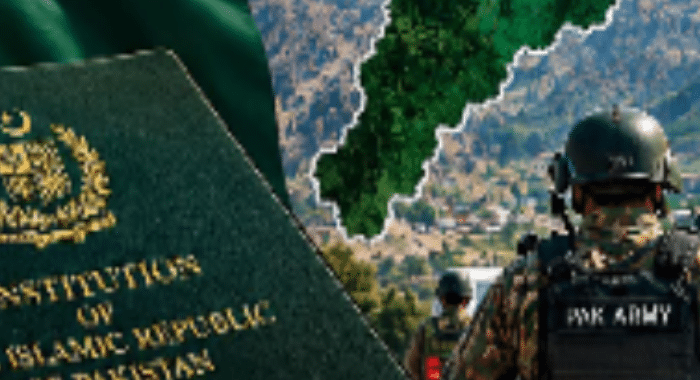
The reported imposition of emergency measures in Khyber Pakhtunkhwa has brought renewed focus to the urgent need for a decisive and coordinated response against terrorism, as the people of the province continue to demand peace, security, stability, and an end to years of violence.
Following the reported presidential proclamation under Articles 232(1) and 234(1) of the Constitution of Pakistan, expectations are growing that stronger institutional coordination and more effective security arrangements could help address the persistent threat posed by Fitna al-Khawarij and restore public confidence across the province.
The development comes at a critical time for Khyber Pakhtunkhwa, where repeated terrorist attacks have claimed the lives of civilians and security personnel, disrupted economic activities, affected educational institutions, and created widespread uncertainty for local communities.
The central question now is whether the reported emergency measures will translate into a more effective counterterrorism strategy capable of protecting citizens, dismantling militant networks, and establishing the foundations for lasting peace.
A Renewed Resolve Against Fitna al-Khawarij
The people of Khyber Pakhtunkhwa want a future free from terrorism, violence, and instability. Their aspirations centre on secure communities, functioning public institutions, economic opportunities, and the ability to carry out everyday activities without fear.
The reported emergency arrangements have intensified expectations of stronger coordination among federal authorities, provincial administration, police, intelligence organisations, and other security institutions.
A coordinated approach could help improve intelligence-sharing, strengthen law enforcement, protect vulnerable locations, and ensure a more effective response to terrorist threats.
The objective must be clear: reduce terrorist violence, protect innocent lives, disrupt militant operations, and restore the writ of the state throughout the affected areas.
However, lasting success will depend on sustained operational effectiveness, reliable intelligence, professional policing, and consistent implementation of the relevant security measures.
Emergency Measures and the Security Challenge
According to the information provided, the federal government considered reports concerning the deteriorating security situation before deciding to pursue emergency measures under the Constitution of Pakistan.
The reported arrangements envisage changes to the administration of provincial governmental functions, subject to the applicable constitutional provisions and official notifications.
The information also refers to the possible use of Article 245 of the Constitution in connection with the deployment of the armed forces. Any such deployment would require confirmation through the relevant official decision and compliance with applicable legal requirements.
These reported developments have renewed attention to the need for an integrated security framework capable of addressing the threat of terrorism while maintaining effective civilian administration and protecting fundamental rights.
The priority must be to ensure that administrative changes produce measurable improvements in public safety rather than remain limited to institutional restructuring.
Years of Insecurity and the Demand for Accountability
Since 2013, the Pakistan Tehreek-e-Insaf has held a dominant position in the provincial political landscape of Khyber Pakhtunkhwa, apart from periods of caretaker administration.
During this prolonged period, security, governance, public service delivery, and relations between federal and provincial authorities have remained subjects of political debate.
Critics of the provincial government’s performance have questioned the effectiveness of its response to terrorism and its ability to address persistent administrative challenges. The provincial leadership has also raised concerns about federal policies, counterterrorism approaches, and provincial autonomy.
The reported emergency measures have consequently intensified debate over the responsibilities of political leadership and state institutions in confronting the security crisis.
Ultimately, the effectiveness of any administrative arrangement must be assessed through verifiable results: fewer terrorist attacks, greater protection for civilians and security personnel, improved public services, and the restoration of normal economic and social activity.
What Will Change for Ordinary Citizens?
For the people of Khyber Pakhtunkhwa, the most important question is whether the reported measures will make their lives safer and more secure.
Parents want their children to attend school without fear. Business owners want markets and transport routes protected. Families want reliable healthcare, functioning public services, and the confidence that their communities are safe.
The restoration of peace must therefore extend beyond security operations. It should include the rehabilitation of affected areas, protection of essential infrastructure, support for disrupted livelihoods, and improved access to education and healthcare.
A sustained reduction in terrorism could help restore business confidence, encourage investment, create employment opportunities, and enable communities to resume normal activities.
The public will judge the effectiveness of the reported measures by the improvements they experience in their daily lives.
Unity Against Terrorism and Violence
A successful response to terrorism requires cooperation among state institutions, political stakeholders, and local communities.
Citizens should avoid violence, provocation, and unlawful activities, while all authorities must ensure that security measures are implemented in accordance with the Constitution and applicable law.
Public cooperation, effective policing, timely intelligence, and strong institutional coordination can contribute to a more secure environment. At the same time, transparency, accountability, and respect for fundamental rights remain essential to maintaining public confidence.
Political disagreements must not obstruct lawful efforts to protect citizens and confront terrorist threats. A shared commitment to security and constitutional governance is necessary for long-term stability.
A New Era of Peace or Another Test for the State?
The reported emergency measures mark a potentially significant development in Khyber Pakhtunkhwa’s continuing struggle against terrorism. They have raised expectations that the authorities will pursue a more coordinated response to Fitna al-Khawarij and address the security concerns that have affected the province for years.
Yet the elimination of terrorism cannot be guaranteed by an emergency declaration alone. It requires sustained action,



