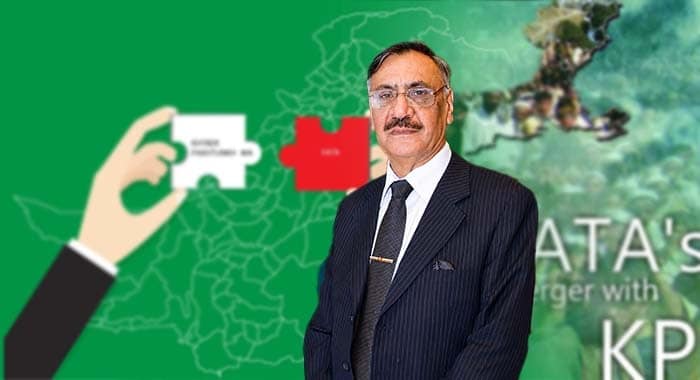
Eight years have passed since the historic merger of the Federally Administered Tribal Areas (FATA) with Khyber Pakhtunkhwa. The decision was presented as a transformative step—one that would bring the people of the former tribal areas into the mainstream of the constitutional, administrative and political system. It was expected to open the door to better governance, development, justice, education, healthcare, infrastructure and, above all, lasting peace.
Yet eight years later, a difficult question remains: why has the promised transformation not reached the people in the way they were led to expect?
The answer cannot simply be reduced to a shortage of funds or the persistence of terrorism. The deeper problem is that a historic political and administrative transformation was undertaken without building an equally effective system to replace what came before it. The merger changed the legal and administrative framework, but the machinery required to make that framework work effectively in the former tribal districts was never developed with the same urgency. The result is a region caught between two systems: the old one has largely disappeared, while the new one remains incomplete. One of the central weaknesses of the merger was its abrupt implementation.
The tribal areas had a distinctive administrative structure shaped by decades of experience, local customs, tribal relationships and security realities. Political agents and other officials who served there were not simply ordinary district administrators. They were expected to understand the tribal landscape, know the influential families and elders, maintain communication with different communities and respond to disputes before they became larger conflicts. That system had many weaknesses and cannot be romanticised. But replacing it overnight with conventional district administration required much more than changing titles and appointing officials. The arrival of deputy commissioners, assistant commissioners, police officials and other conventional administrative structures was supposed to bring modern governance. However, the new administration also needed time, training, local knowledge and institutional support to understand the particular realities of the former tribal districts.
A district in the settled areas and a newly merged tribal district may both appear on an administrative map as districts, but their social, geographic and security realities are not identical. The mistake was to assume that an administrative structure that works in Peshawar, Mardan or another settled district could simply be transplanted into the tribal belt and expected to deliver the same results.
The transition should have been gradual. Even if the constitutional merger itself was considered necessary and irreversible, the administrative transition did not have to be abrupt. There could have been a carefully designed period during which the strengths of the previous system were retained while modern institutions were progressively introduced. Instead, the old system was dismantled before the new one had acquired sufficient capacity. The most important question is not whether the political-agent system should return in its previous form. It should not.
The real question is whether some of the administrative knowledge and mechanisms that existed under the previous system can be incorporated into the present one. The answer should be yes. Officials serving in the merged districts need strong local intelligence, regular engagement with tribal elders, community representatives and local stakeholders, and a clear understanding of disputes that can otherwise develop into security problems. The administration must know what is happening at the local level before a dispute becomes a conflict and before a security threat becomes a terrorist attack. A functioning administration cannot be confined to offices.
It must be visible in the communities it governs. Regular conferences involving district administrations, police, security officials and relevant provincial authorities could provide a mechanism for reviewing the situation in every merged district. Peace and security should be discussed systematically not only after a major attack. The administration should examine what happened during the previous month, which disputes emerged, where tensions are growing, which communities are dissatisfied, what development projects are stalled and what security threats are appearing along the border. This is basic preventive governance.
Another major problem is the distance between decision-makers and the people whose problems they are expected to solve. The provincial capital is far removed, geographically and administratively, from many of the realities confronting residents of the former tribal districts. Officials and political leaders sitting in Peshawar may receive reports, statistics and briefings, but reports cannot substitute for local engagement. The merged districts are not merely another administrative file. They include some of Pakistan’s most sensitive border regions. Their problems directly affect the security of the entire province and, ultimately, the country.
That is why governance there requires a specialised focus. Whether the administrative responsibility remains with the provincial government or whether a stronger coordinating role is given to the governor, the essential requirement is clear: someone must be specifically responsible for understanding and resolving the problems of the merged districts. A monthly review mechanism at the highest relevant level could bring together deputy commissioners, police leadership, security officials, development authorities and local representatives. The purpose should not be political theatre. It should be problem-solving.
If a district is suffering from a shortage of schools, discuss it. If roads are incomplete, fix them. If health facilities lack doctors or medicines, address the shortage. If a border route is vulnerable to militant movement, strengthen it. If a tribal dispute is threatening peace, intervene before it escalates. The administration must move from reaction to prevention.
The security crisis in Khyber Pakhtunkhwa cannot be understood without understanding the geography of the former tribal areas. There is a sequence: the international border, the tribal belt and then the settled districts and cities. If militants are able to establish themselves in the border region and operate freely, the threat eventually moves towards settled areas. By the time an attack takes place in a city such as Dera Ismail Khan, Hangu or elsewhere, the problem has already travelled a considerable distance.
That is why the first line of defence cannot begin at the city limits. It must begin much earlier. Recent attacks and security incidents have repeatedly demonstrated the consequences of allowing militant networks to exploit difficult terrain and weak administrative presence. An incident in Hangu, for example, illustrates how security threats originating from the border region can eventually affect settled communities. The objective should therefore be to prevent militants from reaching the settled districts in the first place.
The stronger the administration, policing, intelligence coordination and community engagement in the border and merged areas, the greater the possibility of detecting threats before they reach urban centres. This is not simply a military responsibility. The armed forces can protect the country against external and internal threats, and soldiers have repeatedly paid a heavy price in doing so. But security cannot be sustained through military operations alone. The civilian administration must have the capacity to hold territory, provide services, resolve disputes and maintain the confidence of local communities after security operations. Otherwise, a vacuum can re-emerge.
There is another reality that policymakers in distant cities often fail to appreciate: border communities experience insecurity differently from the rest of the country. For people living far from the border, security policy may appear in the form of television statements, political debates or military briefings. For people living in border districts, it can mean leaving their homes, losing livelihoods, facing displacement, dealing with restrictions and living with uncertainty. This is why border policy must include the people who live there.
The eastern border and the western border cannot be treated as identical environments. The circumstances are different, the social relationships are different and the historical experience is different. For communities living along the Afghan border, instability can directly affect their homes and livelihoods. They need to be part of the national conversation about security and Afghanistan policy. If their homes are affected by conflict, their voices cannot be ignored.
The political dimension of the crisis is equally troubling. Khyber Pakhtunkhwa is facing serious terrorism and governance challenges, yet political activity often appears to receive greater attention than the immediate needs of the province. Marches, political confrontations and partisan struggles dominate the public discourse while communities continue to face insecurity and underdevelopment. Political parties have every right to pursue their constitutional and democratic objectives. But governing a province is different from running a political campaign.
When a party holds provincial power, its primary responsibility is to the people living under its administration. The public expects roads, hospitals, schools, policing, employment opportunities and security. It expects its elected representatives to be present when citizens are suffering. A provincial government cannot outsource responsibility for the condition of the province to political circumstances in Islamabad or elsewhere. The people of Khyber Pakhtunkhwa did not elect representatives merely to participate in national political confrontations. They elected them to govern.
The issue becomes even more sensitive when terrorism affects political gatherings and communities differently. Khyber Pakhtunkhwa has a long and painful history of political violence. Leaders and workers of the Awami National Party and other political groups have been targeted. Political gatherings have been attacked, and many political workers and leaders have lost their lives. These sacrifices are part of the province’s modern political history. That is why any perception that one political group enjoys greater freedom from militant threats than others inevitably creates questions.
Such perceptions must be addressed carefully. They should not be converted into accusations without evidence. But neither should public concerns simply be dismissed. A democratic society depends on equal standards. If one political party can campaign freely while others face threats, citizens naturally ask why. If political representatives speak forcefully on some issues but remain silent on terrorism, people notice.
If elected representatives fail to attend the funerals of citizens killed in violence, the emotional and social consequences are significant. In Pashtun society, attending a funeral is more than a ceremonial obligation. It is an expression of solidarity. Sitting with a grieving family tells them that they are not alone. An elected representative who does not stand beside a grieving family risks creating a profound sense of abandonment. Politics cannot be separated entirely from human values.
There is also a responsibility on political leaders to be honest with the public. Citizens should know what their elected representatives are doing, what policies they support, where they stand on terrorism and what they are doing to improve governance. This does not mean every disagreement should become a political confrontation. Nor should public debate be driven by emotion.
But facts, performance and accountability must remain central. If an elected member of parliament is absent from the constituency, people have a legitimate right to ask why. If development funds are delayed, they deserve an explanation. If security deteriorates, they deserve to know what the government is doing. If political priorities are taking precedence over governance, voters have the right to judge that performance. Ultimately, democracy depends on informed citizens.
Eight years should be long enough to expose what is not working but not so long that reform becomes impossible. The merger of FATA with Khyber Pakhtunkhwa should not be abandoned. Nor should anyone conclude that the idea of integration itself was wrong simply because implementation has been weak. The real challenge is to complete the integration properly. That means strengthening district administration, improving policing, investing in education and healthcare, expanding roads and communications, creating employment opportunities and ensuring that the rule of law becomes meaningful in everyday life.
It also means developing an administrative system specifically capable of dealing with the unique circumstances of the merged districts. The governor’s role, provincial administration, district administration, police, civil society, tribal elders and security institutions must work within a coherent framework rather than operating in disconnected compartments.
The border must remain a national security priority. But security cannot be separated from development. A young person without education or employment is vulnerable to exploitation. A community without functioning institutions is vulnerable to militant influence. A population that feels abandoned by the state can lose confidence in government. The strongest response to extremism is therefore not only the gun. It is also the school, the hospital, the road, the court, the police station and the responsive administrator.
The people of the former tribal areas were promised a new chapter. They were promised mainstreaming. They were promised development. They were promised constitutional rights and better governance. They were promised a future in which the state would be more present in their lives. Eight years later, many are still waiting. The answer cannot be another political slogan. What is needed is an honest assessment of the merger’s implementation, district by district and sector by sector. Where has administration failed? Where has development stalled?
Why are security threats continuing to emerge? Why do citizens still struggle for basic services? Why is there a gap between provincial decision-making and local realities? And most importantly, who is accountable for fixing these problems? The people of Khyber Pakhtunkhwa do not need more political distractions. They need governance. The merged districts do not need to be treated as a forgotten corner of the province. They are the province’s frontline communities and, in many respects, the country’s frontline communities.
If peace is to reach Peshawar, Dera Ismail Khan, Hangu, Kohat, Lakki Marwat, Karak and other settled areas, the state must first strengthen peace and governance where the security threats originate.The lesson of the past eight years is therefore straightforward: a merger on paper is not integration in practice.
Integration means institutions that work. It means officials who understand the people. It means political leaders who remain present in times of crisis. It means development that reaches villages rather than remaining in official documents. It means security that prevents threats before they reach the cities. And it means a state that remembers its citizens not only when it needs their votes or sacrifices, but when they need the state most. The tribal people have already waited eight years. They should not have to wait another eight for the promise of integration to become a reality.