
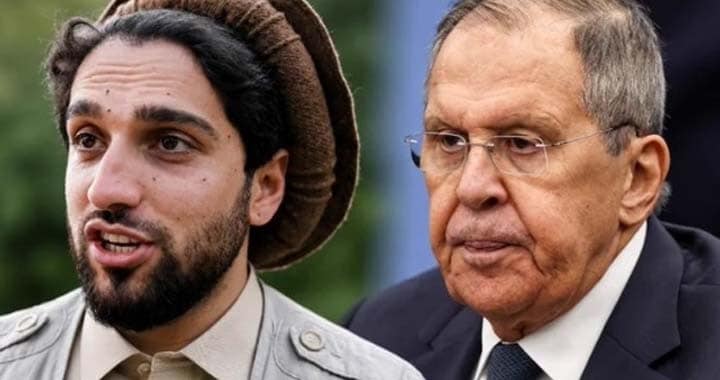
The National Resistance Front of Afghanistan (NRF) has sharply rejected the Russian assessment of the Taliban’s counterterrorism efforts, arguing that the Taliban and the Islamic State Khorasan Province (ISKP) should not be viewed simply as opposing ideological or strategic forces.
The statement came in response to remarks by Russian Foreign Minister Sergey Lavrov during the latest Moscow Format consultation meeting on Afghanistan, where he praised the Taliban authorities for what he described as their uncompromising fight against ISKP and other terrorist networks.
In a statement published through its official X account, the NRF categorically described the Taliban and ISIS as “two sides of the same coin,” arguing that both organizations draw from what it characterized as a shared ideological foundation and pursue their objectives through coercion and violence.
The NRF’s statement represents a direct challenge to Moscow’s portrayal of the Taliban as an active force against ISKP. According to the NRF, the periodic confrontation between the Taliban and ISIS should not necessarily be interpreted as evidence of a fundamental ideological divide. Instead, the group argues that their clashes are primarily driven by competition for territorial influence, operational dominance and control.
The NRF maintains that while the two organizations may fight one another at the tactical level, their broader objectives are, in its assessment, substantially aligned. The resistance group argues that the distinction between the Taliban and ISIS becomes less clear when examined through what it describes as their underlying ideological objectives and approaches to governance.
In its statement, the NRF argued that the Taliban and ISIS are both rooted in what it described as a common ideological source and accused both organizations of rejecting Afghanistan’s pluralistic social and cultural identity. The NRF further characterized the Taliban’s self-declared Islamic Emirate and ISIS’s concept of a global caliphate as different manifestations of what it considers an authoritarian ideological project.
The statement said both organizations seek to advance their respective visions through suppression and terror, despite differences in their organizational structures, geographic ambitions and operational priorities. The NRF’s position therefore challenges the assumption that armed confrontation between two extremist organizations automatically translates into a fundamental strategic disagreement.
During the Moscow Format meeting, Russian Foreign Minister Sergey Lavrov highlighted the Taliban authorities’ fight against ISKP and other terrorist organizations. Lavrov’s remarks reflected Moscow’s broader engagement with the security situation in Afghanistan, where ISKP has remained a significant security concern. The Taliban and ISKP have engaged in repeated clashes since the Taliban returned to power in August 2021. ISKP has claimed responsibility for numerous attacks against Taliban personnel, Afghan civilians and foreign nationals, while the Taliban authorities have conducted sustained security operations against the organization.
Moscow has increasingly focused on the threat posed by ISKP, particularly because of concerns regarding its regional reach and connections beyond Afghanistan. The NRF, however, argues that focusing exclusively on the Taliban’s confrontation with ISKP risks overlooking what it describes as deeper ideological and political similarities between the two organizations.
The central argument advanced by the NRF is that the existence of armed conflict between the Taliban and ISIS does not necessarily establish a fundamental strategic divide. According to the NRF, their periodic clashes are better understood as competition over power, territory, influence and operational dominance.
The organization argues that such rivalry can coexist with broader similarities in ideological outlook and methods of political control. This distinction between tactical confrontation and strategic objectives forms the core of the NRF’s response to Moscow.
The group contends that the Taliban’s campaign against ISKP should therefore be assessed separately from the question of whether the Taliban’s governance model has contributed to broader instability, exclusion or radicalization within Afghanistan.



