
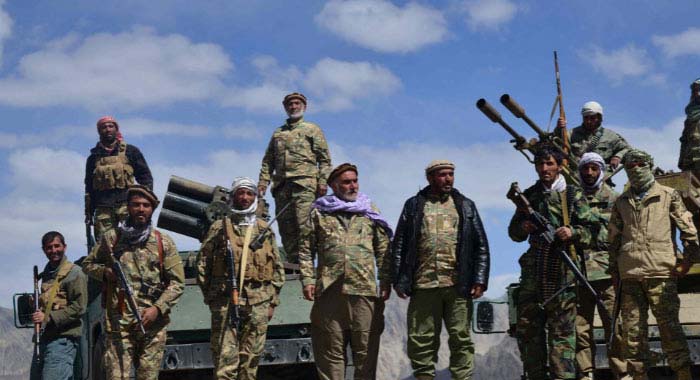
The armed opposition to Afghanistan’s Taliban government has expanded considerably in geographic reach, organizational diversity and operational tempo during 2026, with established resistance fronts, newly emerging groups and former Afghan security personnel claiming attacks across northern, northeastern, central, eastern and southern parts of the country.
The evolving resistance landscape marks a significant development from the early years following the Taliban’s return to power in August 2021. Initially fragmented, geographically concentrated and largely unable to seriously challenge Taliban territorial control, the armed opposition has gradually developed a broader footprint. Groups such as the National Resistance Front (NRF) and the Afghanistan Freedom Front (AFF) emerged as prominent actors, particularly in northern and northeastern Afghanistan, conducting guerrilla-style attacks and targeted operations against Taliban personnel and installations.
In 2026, however, the nature of the resistance appears increasingly diverse. Established organizations, newly formed fronts and former members of Afghanistan’s security forces are claiming responsibility for a widening range of operations, including ambushes, attacks on Taliban facilities, targeted killings and sustained armed engagements.
Badakhshan has emerged as a major center of resistance activity, while reported operations have also extended into Nuristan, Baghlan, Takhar, Panjshir, Kapisa and Kabul, as well as several provinces in southern and western Afghanistan. The broader geographic spread is significant because it indicates that armed opposition activity is no longer confined exclusively to the traditional resistance strongholds of the north and northeast. The emergence of organizations with different ethnic, geographic and organizational backgrounds has further diversified the opposition landscape.
Among the prominent organizations currently active or claiming operations are the National Resistance Front (NRF), Afghanistan United Front (AUF), Afghanistan Freedom Front (AFF), Homeland Soldiers Front, Afghanistan Green Trend and National Independence Front of Afghanistan, alongside other locally organized resistance groups.
The Afghanistan United Front (AUF) is led by Lieutenant General Sami Sadat, former commander of the Afghan Army’s 215 Corps. The predominantly Pashtun organization reportedly launched its armed campaign in August 2026. The group claims an operational presence across Helmand, Kandahar, Nimroz, Ghor, Badghis and Faryab, positioning it as an important Pashtun component within the broader anti-Taliban armed opposition landscape. The emergence of the AUF is notable because it broadens the demographic and geographic composition of the armed resistance beyond organizations traditionally associated with Afghanistan’s northern and predominantly Tajik resistance networks.
The Afghanistan Freedom Front (AFF) is led by Yasin Zia, former Chief of General Staff of the Afghan National Army. The organization is predominantly Tajik and includes former Afghan security personnel among its ranks. The AFF has identified Badakhshan, Takhar and Nuristan as important areas of activity and has continued to claim operations against Taliban positions and personnel. Its continued presence highlights the enduring role of former Afghan security personnel in the armed opposition and their contribution to maintaining resistance networks in strategically important northern and northeastern provinces.
The National Resistance Front (NRF), led by Ahmad Massoud, remains one of the most prominent organizations in Afghanistan’s armed opposition. The predominantly Tajik movement has claimed operations across a broad geographic area, including Panjshir, Herat, Baghlan, Parwan, Kapisa, Kunduz, Kabul and Badakhshan. The breadth of these reported areas of activity demonstrates the extent to which resistance networks have sought to operate beyond their traditional geographic base and maintain pressure on Taliban forces across multiple regions.
The emergence of smaller and locally rooted organizations is another important feature of the evolving resistance landscape. The Homeland Soldiers Front (Sepahian-e-Mihand), led by Qayum Malang, is a local resistance organization operating in Badakhshan. On 17 July 2026, the group claimed that it briefly captured the center of Yaftal-e-Sufla district, disarmed Taliban personnel and raised its flag over the district center. If independently verified, the reported episode would represent a significant symbolic development, as it would mark the first reported loss of control of a district center by the Taliban since their return to power in August 2021.
Meanwhile, the Afghanistan Green Trend, led by former Vice President and former National Directorate of Security chief Amrullah Saleh, has also claimed a series of armed operations. Its armed wing reportedly claimed seven attacks from 8 August onward.
The scale of reported resistance activity has also increased. Between August and September 2026, resistance organizations claimed a total of 119 attacks across 26 Afghan provinces. According to figures attributed to the respective groups, these operations allegedly resulted in 256 Taliban fatalities and 256 injuries.
The distribution of claimed attacks was as follows:
-
Afghanistan United Front (AUF): 59 attacks
-
Afghanistan Freedom Front (AFF): 29 attacks
-
National Resistance Front (NRF): 11 attacks
-
National Independence Front: 9 attacks
-
Afghanistan Green Trend: 7 attacks
The developments of 2026 point toward an increasingly complex security environment in Afghanistan. Rather than a single unified opposition movement, the current resistance landscape consists of multiple organizations operating with different leadership structures, geographic bases, political orientations and demographic constituencies. The coexistence of established fronts, newly established organizations and locally organized armed groups suggests that opposition to Taliban rule is becoming more geographically dispersed and organizationally diversified.
At the same time, the reported emergence of resistance activity in provinces outside the traditional northern strongholds could potentially complicate the Taliban government’s efforts to maintain comprehensive security control across the country. The participation of former Afghan military and intelligence personnel is particularly significant. Their operational experience, familiarity with Taliban structures and established networks may provide certain resistance organizations with capabilities that were less prevalent during the initial phase of post-2021 armed opposition.
The expansion of armed resistance does not necessarily indicate the emergence of a unified military challenge to Taliban rule. The various organizations remain divided, and their reported activities differ substantially in scale and intensity. Nevertheless, the geographical expansion and increasing number of actors represent an important shift in Afghanistan’s post-2021 security environment. The reported developments indicate that armed opposition has moved beyond a limited number of traditional resistance centers and is increasingly attempting to establish or demonstrate a presence across multiple regions.
The coming months will therefore be critical in determining whether these groups can sustain their operational momentum, expand their networks and translate localized attacks into a broader and more coordinated challenge or whether divisions, resource constraints and the Taliban’s security apparatus will prevent the resistance from developing into a sustained nationwide threat.
The evolving resistance landscape underscores a fundamental reality of Afghanistan’s current security environment: while the Taliban retain effective control over the country’s political and security institutions, armed opposition has become more geographically dispersed, organizationally diverse and operationally active than during the initial years following the Taliban takeover.



