
The Islamic State Khorasan Province (ISKP) has claimed responsibility for a motorcycle-borne explosive attack targeting a vehicle associated with a Taliban intelligence official in Faizabad, the capital of Afghanistan’s northeastern Badakhshan Province.
According to the claim attributed to ISKP, the attack targeted the vehicle of Safiullah Mutawakkil, described as a Taliban intelligence official. The group claimed that a motorcycle bomb was detonated against the vehicle, killing one of the official’s bodyguards and injuring Mutawakkil and a second bodyguard. The vehicle was also reportedly damaged in the blast.
The incident reportedly occurred in Faizabad amid continuing security tensions and competing claims of responsibility among armed groups operating in Afghanistan. The circumstances surrounding the attack, including the precise location, timing, method of detonation, and extent of the casualties, could not be independently verified based on the information currently available.
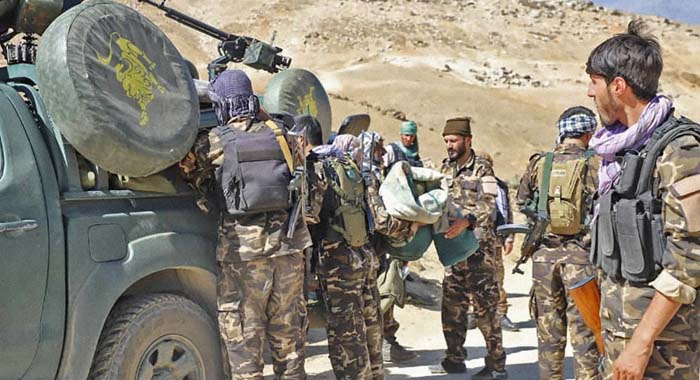
ISKP publicly claimed that it carried out the attack, presenting it as an operation directed against a Taliban intelligence figure. Separately, the National Resistance Front (NRF) also claimed responsibility for the same incident.
The competing claims underscore the difficulty of independently establishing responsibility for attacks in Afghanistan, where information released by militant and opposition groups can be difficult to verify and may reflect competing political, military, or propaganda objectives.
Local sources, meanwhile, reported that Safiullah Mutawakkil was seriously wounded in the incident. These accounts were consistent with the broader reporting that the Taliban official survived the attack but sustained significant injuries.
At the time of reporting, there had been no official statement from the Taliban confirming the attack, the reported casualties, the condition of the intelligence official, or responsibility for the incident. The reported attack represents another security incident involving Taliban personnel in northern Afghanistan and highlights the continued threat posed by targeted attacks against security and intelligence officials.
The use of a motorcycle-borne explosive device in an urban setting also raises concerns about the vulnerability of government personnel and security officials to targeted attacks. Such incidents can have wider security implications, particularly in provincial capitals where government institutions, security personnel, and civilian populations operate in close proximity.
Badakhshan has remained strategically significant because of its geographic position in northeastern Afghanistan and its proximity to Afghanistan’s international borders. Any escalation in armed activity in the province could have broader implications for local security and stability.



