
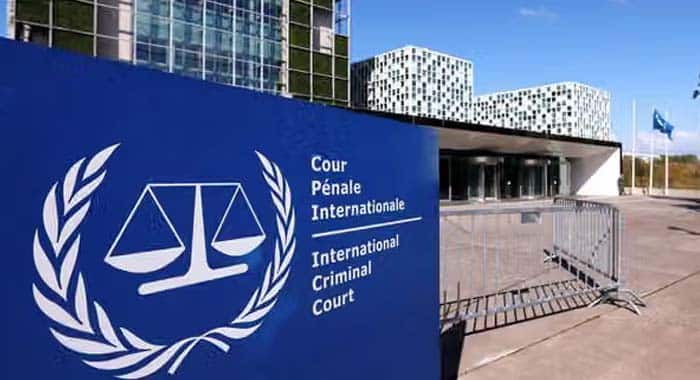
The International Criminal Court (ICC) has unsealed four arrest warrants issued against senior Taliban leaders over alleged crimes against humanity arising from the systematic persecution of women and girls in Afghanistan.
The ICC’s Pre-Trial Chamber II announced on 5 October 2026 that it had made public the previously confidential warrants issued against Haibatullah Akhundzada, the Taliban’s supreme leader; Abdul Hakim Haqqani, head of the Taliban-controlled Afghan Supreme Court; Habibullah Agha, the Taliban’s Minister of Education; and Neda Mohammad Nadim, the Taliban’s Minister of Higher Education.
According to the Court, the warrants concerning Akhundzada and Haqqani were issued on 8 July 2025, while those concerning Agha and Nadim were issued on 9 September 2025. The existence of the first two warrants was publicly announced in July 2025, while the detailed warrant documents remained under seal until the Court’s decision to unseal all four warrants. The ICC’s action represents a significant development in the international judicial scrutiny of Taliban policies and practices since the group returned to power in Afghanistan in August 2021.
The ICC says its judges found reasonable grounds to believe that the four individuals allegedly played roles in the commission of the crime against humanity of persecution on gender grounds against girls, women and other people perceived as not conforming to Taliban policies concerning gender, gender identity or expression.
The allegations also extend to persecution on political grounds against people perceived as being allies of girls and women or as opposing Taliban policies concerning women’s rights. The Court’s publicly available records state that the alleged persecution was connected with conduct including murder, imprisonment, torture, rape and enforced disappearance in Afghanistan following the Taliban’s seizure of power on 15 August 2021.
The ICC’s findings are allegations at the pre-trial stage and do not constitute convictions. The warrants reflect the Court’s determination that the applicable legal threshold for issuing arrest warrants has been met.
The warrants place particular emphasis on the alleged role of senior Taliban leadership in establishing, directing, encouraging or implementing policies that have progressively restricted the rights and freedoms of Afghan women and girls. The Court’s proceedings concern not simply individual incidents but alleged conduct occurring within a broader pattern of discriminatory policies and practices. The ICC has stated that the concept of gender under the Rome Statute encompasses socially constructed roles, behaviours, expectations and hierarchies associated with sex.
The allegations therefore encompass policies and practices that have affected women’s and girls’ access to education, employment, freedom of movement, public life and other fundamental rights. Since the Taliban’s return to power, Afghan women and girls have faced sweeping restrictions across education, employment, public participation and mobility. Afghanistan has consequently become the only country in the world where girls are barred from secondary education beyond the sixth grade and women are excluded from university education.
The inclusion of Afghanistan’s senior education officials among those named in ICC arrest warrants underscores the central role that education policy has played in the country’s post-2021 human-rights crisis. The Taliban’s restrictions have effectively prevented millions of Afghan girls from progressing beyond primary-level education, while women have been excluded from universities and large sections of the labour market.
These measures have profound consequences not only for individual students but also for Afghanistan’s social, economic and institutional future. The restrictions have contributed to the narrowing of women’s participation in public life and have significantly reduced opportunities available to an entire generation of Afghan girls.
The ICC’s proceedings place these policies within the broader legal framework governing alleged persecution on gender grounds. The Court’s public record identifies Neda Mohammad Nadim as allegedly responsible for ordering, inducing or soliciting persecution against girls, women and others who did not conform to Taliban policies on gender, gender identity or expression.
The allegations before the ICC extend beyond restrictions on education. Since August 2021, Taliban authorities have progressively imposed measures affecting women’s employment, freedom of movement, access to public spaces, participation in public and social life, and freedom of expression. Women who challenge or oppose these policies, as well as individuals perceived to support women’s rights, have also reportedly faced intimidation, detention and other forms of repression.
United Nations reporting has documented the severe impact of restrictions on Afghan women’s freedom of movement and personal security. UN consultations have found that many women feel unsafe travelling outside their homes alone, with security concerns increasing in the context of Taliban enforcement measures and decrees.
The ICC’s investigation encompasses allegations of serious crimes including murder, imprisonment, torture, rape and enforced disappearance where these acts are alleged to have formed part of the relevant persecutory conduct.
The unsealing of the four warrants places the alleged persecution of Afghan women and girls firmly within the framework of international criminal justice. The ICC is mandated to investigate and, where the legal requirements are met, prosecute individuals accused of genocide, crimes against humanity, war crimes and aggression. In the Afghanistan situation, the Court is examining alleged crimes falling within its jurisdiction.
The public release of the warrants also provides greater transparency concerning the allegations and the evidentiary basis considered by the Pre-Trial Chamber when determining whether arrest warrants should be issued. The Court’s public records now include redacted versions of all four warrants, together with the 5 October 2026 decision unsealing them.
The issuance of an ICC arrest warrant does not automatically result in an arrest. The ICC does not maintain its own police force and depends substantially on cooperation from States for the execution of arrest warrants. This creates a significant practical challenge in the Afghanistan situation because the four individuals named in the warrants are believed to remain within territory controlled by the Taliban.
Consequently, while the warrants carry significant legal and international implications, their immediate enforcement may be difficult in the absence of cooperation by States capable of apprehending and surrendering the suspects to the Court.
Nevertheless, an arrest warrant remains an important judicial measure. It establishes that the Court has determined that the legal threshold for the warrant has been satisfied and places an obligation on relevant States Parties to consider their responsibilities under the Rome Statute when individuals subject to ICC warrants enter territories where the Court’s arrest mechanisms can be engaged.
The ICC’s decision comes amid continuing international concern over the deteriorating position of women and girls in Afghanistan. For millions of Afghan women and girls, restrictions on education, employment, movement and participation in public life have transformed daily life and narrowed access to fundamental rights and opportunities.
The unsealing of the four warrants therefore has significance beyond the individual cases. It places renewed international attention on the relationship between state policies, institutional decision-making and individual criminal responsibility under international law.
The ICC proceedings also send a broader message concerning accountability: senior officials may face scrutiny when policies allegedly implemented under their authority are linked to conduct falling within the Court’s jurisdiction.
The allegations contained in the arrest warrants remain allegations and must be adjudicated through the judicial process. An arrest warrant is not a conviction, nor does it establish guilt beyond reasonable doubt. The individuals concerned remain entitled to due process and all applicable rights under the Rome Statute.
The ICC’s determination at this stage is that there are reasonable grounds, as required for the issuance of arrest warrants, to believe that the alleged crimes were committed and that the named individuals bear the forms of responsibility identified by the Court.



