
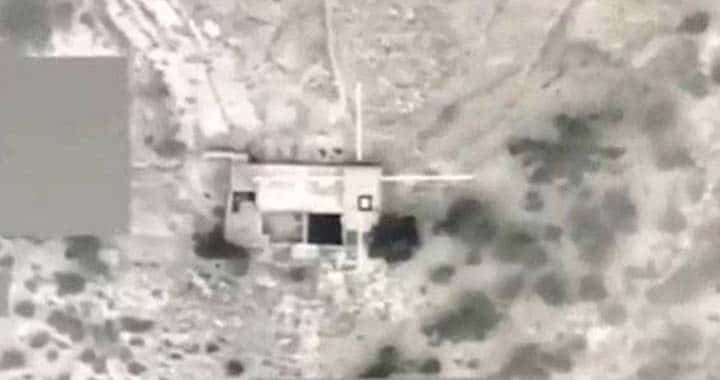
Pakistan carried out precision airstrikes on terrorist hideouts in Afghanistan as a new layer emerged in the coordination between anti-Pakistan terrorist groups and India’s intelligence agency RAW under the shadow of the Afghan Taliban.
According to Pakistan’s Ministry of Information, the Pakistan Air Force precisely targeted hideouts of Fitna al-Khwarij and Fitna al-Hindustan at two separate locations in Afghanistan, destroying the camps along with large quantities of weapons and ammunition stored there.
The ministry said the strikes were based on confirmed intelligence and were conducted with maximum precision and care to avoid civilian casualties, stressing that the safety and protection of civilians remained Pakistan’s foremost priority.
The latest strikes came amid revelations about a secret meeting in Kandahar involving Balochistan Liberation Army (BLA) chief Bashir Zeb, Hafiz Gul Bahadur and a commander of Al-Qaeda in the Indian Subcontinent (AQIS).
According to Taliban sources, the meeting discussed coordinated terrorist attacks against Pakistan, particularly in Balochistan. Hafiz Gul Bahadur and the AQIS commander reportedly agreed to provide manpower and weapons, while the training of BLA members at AQIS-linked camps was also discussed.
A significant development emerging from the meeting was the reported objection by Afghanistan’s General Directorate of Intelligence (GDI) to direct links between RAW and the anti-Pakistan terrorist groups.
According to the sources, the GDI directed that such contacts should henceforth be handled through the Afghan intelligence agency, effectively seeking to replace direct RAW engagement with an Afghan intelligence channel.
The development comes against the backdrop of a broader intelligence picture indicating growing coordination among the BLA, the Hafiz Gul Bahadur faction and AQIS, with the groups allegedly seeking to replenish manpower, weapons, finances and logistical support after suffering losses during Pakistan’s counterterrorism operations.
An intelligence assessment has previously alleged that Afghanistan-based actors were facilitating the network and that RAW was providing financial and logistical support for activities targeting Pakistan. The allegations have not been independently verified.
The assessment also pointed to a series of Kandahar meetings in which representatives of the three terrorist groups allegedly discussed coordinated operations in Balochistan. It further alleged that the Afghan GDI had assured BLA representatives of support for terrorist activities inside Pakistan.
The reported network has also allegedly been working to recruit Baloch youth and send them to an AQIS-linked specialized training facility before deploying them for terrorist activities. The assessment suggested that manpower, weapons, financing and operational logistics were being arranged through interconnected channels.
The latest Pakistani strikes follow an earlier operation in Afghanistan in which Pakistan said 22 Fitna al-Hindustan and Fitna al-Khwarij terrorists were eliminated at terrorist hideouts. Pakistan said that operation also destroyed large quantities of weapons and ammunition.
The strikes also come a day after the 277th Corps Commanders’ Conference, chaired by Chief of Army Staff and Chief of Defence Forces Field Marshal Syed Asim Munir, reaffirmed Pakistan’s right to self-defense and targeted action against terrorism emanating from Afghanistan. The forum stressed that the Taliban leadership would bear responsibility for the consequences of facilitating terrorism on behalf of India.
The military leadership also reviewed the prevailing security environment and appreciated sustained intelligence-based counterterrorism operations, while emphasizing the need to complement kinetic measures with governance, public engagement, police capacity building and the dismantling of terror-crime networks.
Pakistan has repeatedly maintained that the continued presence of terrorist groups in Afghanistan constitutes a direct security threat and has asserted its right to take action against threats emanating from Afghan territory.
Afghan Taliban authorities have denied Pakistan’s allegations concerning terrorist activity on their soil. Afghan officials have also disputed Pakistani claims about recent strikes and reported civilian casualties, making the competing claims over the cross-border operations a matter of continuing dispute.



