
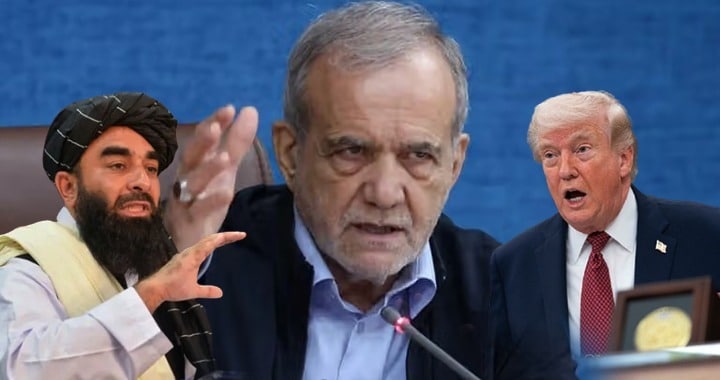
U.S. President Donald Trump has repeatedly criticized the American withdrawal from Afghanistan, including the departure from Bagram Airfield and the release of prisoners from detention facilities there. Among those released were members of terrorist organizations, including Islamic State Khorasan (ISKP), Al-Qaeda and the banned Tehreek-e-Taliban Pakistan (TTP).
What Trump may not have anticipated, however, is that the Afghan Taliban could now be developing security cooperation with another U.S. adversary, Iran, potentially putting Kabul on the opposite side of a conflict involving Washington.
Iranian President Masoud Pezeshkian said Tuesday that the Taliban, along with several other countries, were assisting Iran while simultaneously pursuing their own national interests and calculations.
“Iraq, Afghanistan, Pakistan, Azerbaijan and other friendly and neighboring countries are helping us, but they also have their own calculations,” Pezeshkian said at a meeting of mayors of metropolitan cities and provincial capitals in Tehran on September 29.
Pezeshkian had previously indicated that the Taliban and Pakistan were cooperating with Tehran during what he described as “war conditions,” particularly in preventing the movement of foreign elements across their borders into Iran.
He said officials on both sides had deployed forces along border areas to contain threats and prevent what he described as chaotic movements. The Iranian president did not provide details about the size, nature or operational role of the forces deployed by the Taliban.
The remarks offer a glimpse into the security relationship that has developed between Tehran and Kabul despite Iran’s continued refusal to formally recognize the Taliban government.
The relationship has increasingly centered on border management, security cooperation, trade and efforts to curb drug trafficking and the movement of armed groups. Tehran has repeatedly called for coordination with Afghanistan to prevent cross-border threats, while the Taliban have at times cooperated with Iranian authorities on border security.
Pezeshkian’s latest comments are particularly significant against the backdrop of growing tensions between the Taliban and Pakistan. Tehran has repeatedly urged Islamabad and Kabul to exercise restraint and resolve their disputes through dialogue.
At the same time, the reported Taliban-Iran security cooperation raises questions about the broader regional consequences of the Afghan group’s expanding relationships with countries opposed to, or strategically competing with, the United States.
For Washington, the issue is especially relevant because the Taliban’s return to power followed the U.S. withdrawal from Afghanistan in 2021. The subsequent release of prisoners from Afghan detention facilities, including individuals associated with major terrorist organizations, has remained part of the wider debate over the consequences of the withdrawal.
The latest Iranian statements do not establish that the Taliban are directly supporting Iranian military operations against the United States. However, Pezeshkian’s acknowledgment that Kabul is among the countries assisting Tehran indicates that the Taliban’s security relationship with Iran has moved beyond purely diplomatic engagement and into an area with potential regional security implications.



