
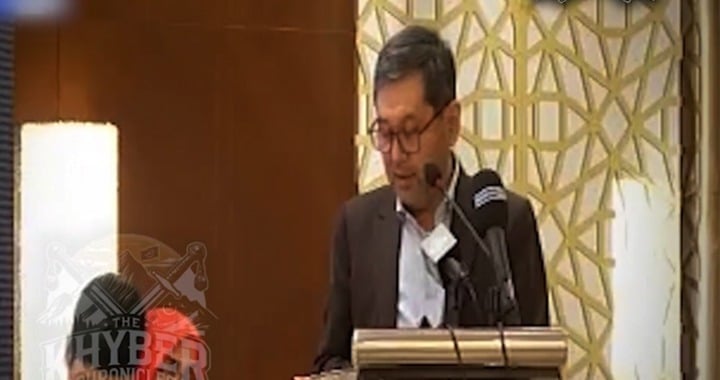
Afghanistan’s Taliban rulers have seized control of the country’s state resources but have failed to become a government capable of representing its people, Afghanistan representative Tahir Zaheer said on Wednesday, calling for international support for the Afghan people and the fight against terrorism.
Speaking at a seminar titled “Afghan Predicament and the Trajectory to Peace” in Islamabad, Zaheer said the Taliban had taken control of state institutions and resources but were using them to suppress and subdue the Afghan population rather than serve the people.
He said the Taliban’s policies had affected thousands of women, children and members of religious and ethnic minorities, describing their rule as one based on discrimination and exclusion.
Zaheer urged all countries with a stake in Afghanistan to provide decisive support for the freedom of the Afghan people and efforts to combat terrorism.
“The Taliban are not only our enemies but also enemies of regional and, ultimately, global peace, stability and development,” he said, according to the remarks shared from the seminar.
His comments come amid continued concerns over terrorist organizations operating from Afghan territory and the security implications for neighboring countries.
The banned Tehreek-e-Taliban Pakistan (TTP), Al-Qaeda, Islamic State Khorasan (ISKP) and other terrorist organizations continue to maintain a presence in Afghanistan, according to United Nations assessments. UN monitoring has also reported that the TTP has benefited from greater freedom and support under Taliban rule, contributing to increased attacks against Pakistan.
Pakistan has repeatedly raised concerns with Kabul over the presence of terrorist safe havens on Afghan soil and their use for attacks against Pakistan. The issue has become a major source of tension between the two countries, with Islamabad maintaining that lasting peace requires the Taliban authorities to prevent their territory from being used against neighboring states.
The Taliban’s record of governance has also remained a major international concern. Since returning to power, the group has imposed sweeping restrictions on women and girls and curtailed fundamental rights and freedoms, while political participation remains highly restricted.
The issue was also highlighted at the Islamabad seminar, where Information Minister Attaullah Tarar said Afghanistan’s interim government needed to move away from what he described as a “militant mindset” and adopt a more statesmanlike approach.
Tarar said terrorist safe havens and members of internationally proscribed organizations remained present in Afghanistan, calling violent extremism and militancy major obstacles to peace and regional economic connectivity.
Zaheer’s remarks placed the Afghan crisis in a wider context, arguing that the consequences of Taliban rule were not limited to Afghanistan’s internal affairs.
He called on countries involved in Afghanistan to support the Afghan people while maintaining a firm focus on counterterrorism, warning that the Taliban’s policies posed a challenge to regional and global peace, stability and development.
The remarks come as Pakistan continues to seek a framework for peaceful relations with Afghanistan while simultaneously demanding action against terrorist groups operating from Afghan territory. Islamabad has maintained that peace and economic cooperation between the two neighbors cannot be separated from the security situation along their shared border.



