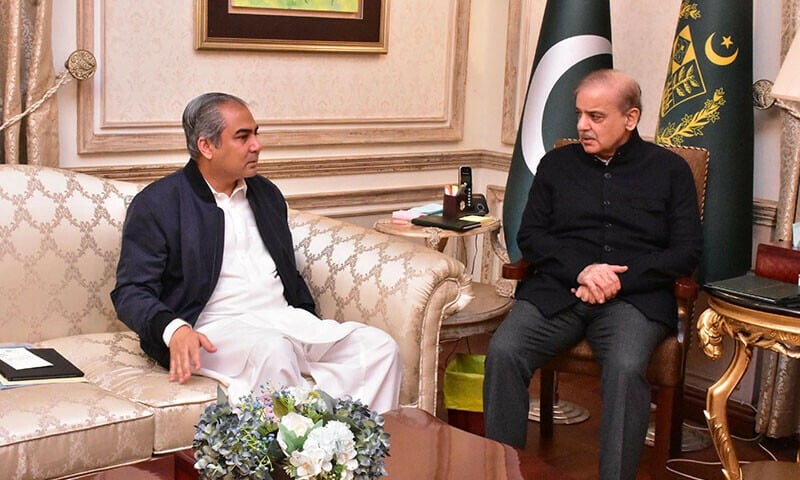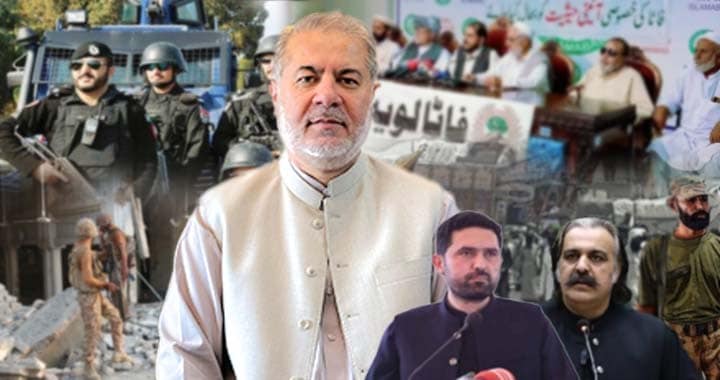
The biggest complaint against the current Chief Minister of Khyber Pakhtunkhwa, Sohail Afridi, and his predecessor, Ali Amin Gandapur, is that they have neither taken ownership of the war against terrorism nor openly supported the fight against it. The provincial government appears to be more concerned about its political survival than the security of its people.
Honestly speaking, I do not think a meaningful war against terrorism is being fought in Khyber Pakhtunkhwa at the moment. Law enforcement agencies are carrying out intelligence-based operations in different areas on a regular basis, but the provincial government’s fundamental responsibility in this fight is nowhere to be seen.
Look at Kohat. It is one of the most educated and prosperous districts in the southern part of the province. It has educational institutions, and people from different areas come there to secure a better education for their children. Yet even Kohat is no longer safe. Terrorists are attacking cantonments, police lines and police stations. When a district like Kohat is facing this kind of insecurity, it raises serious questions about the overall security situation in the province.
The government of Punjab has done considerable work in different sectors. Its budget is larger, but Khyber Pakhtunkhwa can also do a great deal within its own financial resources. The issue is not simply how much money a province receives. The question is how seriously its leadership uses the available resources to address the problems facing its people.
As I was reading recently, the Khyber Pakhtunkhwa government had received around Rs1,000 billion through the NFC Award and from the federal government. I also came across a figure of Rs191 billion allocated to the police. Despite these resources, the police reportedly have only around 15 to 25 bulletproof vehicles, while the Counter Terrorism Department has just 25 dedicated personnel.
Imagine a province that has been fighting terrorism for 20 to 24 years. Terrorists have established a presence across large parts of its territory, yet the police and the CTD continue to face serious capacity constraints. The CTD plays a very important role in other provinces, particularly Punjab, but Khyber Pakhtunkhwa has not given the department the attention it deserves.
Unfortunately, during the Pakistan Tehreek-e-Insaf’s third consecutive tenure in the province, the government has lost its writ in many areas.
Look at Bajaur. It is a beautiful and fertile district. The same is true of other scenic areas that have now become some of the most dangerous places in the province. These districts are facing a heavy toll in casualties.
One of the reasons for the problems in the former tribal districts is that the other provinces did not fulfill their commitments under the historic 25th Constitutional Amendment. However, the provincial government’s responsibility was to focus on developing police and judicial infrastructure in the merged districts.
I have not seen either Ali Amin Gandapur or the current chief minister, Sohail Afridi, regularly visiting Orakzai, North Waziristan, South Waziristan, Upper South Waziristan or Lower South Waziristan to understand the problems of the people. They usually visit these areas only after a major incident has taken place.
Even then, they arrive on the third day in a helicopter, make videos and post them on social media. That is not how a government should respond to a prolonged security crisis.
When you are not focused and serious about the situation, particularly at the leadership level, you lose touch with the people. A leader should be deeply concerned about what is happening in the province and what people are going through.
People are facing poverty, unemployment and terrorism. These are the issues that should be at the center of the government’s attention.
Instead, the focus appears to be on publicity. There are 15 to 20 people accompanying the leadership, cameras recording from every angle, and videos being produced for social media. You begin to behave like a TikToker rather than a leader responsible for a province facing a serious crisis.
Nowadays, so much attention is devoted to personal publicity: new glasses, shoes, masks and appearances on Facebook and Twitter. When that becomes the priority, there is always a shortage of time for the real issues.
And when sycophants and people focused on making money surround the leadership, the situation deteriorates further.
Khyber Pakhtunkhwa has everything it needs except sincere leadership.
Pakistan and Afghanistan Must Avoid a New Phase of Confrontation
As we discussed in a previous program, there had been strong indications that differences between Pakistan and Afghanistan might be resolved through negotiations.
Turkey’s intelligence chief visited Afghanistan and then Pakistan. Qatar’s deputy security adviser to the National Security Council also came to Pakistan. There was hope that negotiations between the two countries would resume.
Our borders have been closed for nearly a year, and trade between the two countries has been suspended. Naturally, people were hopeful that dialogue would resume and that the situation would improve.
However, just three days later, a major attack took place in Kohat. Around eight suicide bombers reportedly attacked police lines using an explosive-laden vehicle. The incident resulted in approximately 25 to 26 casualties.
After that attack, the prospects for negotiations appeared to collapse once again.
I believe it is the responsibility of both Pakistan and Afghanistan to prevent the situation from deteriorating further.
Pakistan has now carried out airstrikes, saying that it targeted TTP safe havens in Afghanistan. The Afghan Taliban rejected that claim and alleged that civilians had been killed.
Meanwhile, there have been exchanges of fire near Spin Boldak along the Balochistan border, while firing has also been reported in the Kurram sector, both in the morning and at night.
We are moving toward a dangerous phase of confrontation. We have seen similar developments before, including during the period from July to October. I hope the situation does not reach that point again.
Anti-Taliban Resistance Exists, but the Taliban Remain Strong
When it comes to Afghanistan, I have often said that there are different groups and deep divisions within the country. There are major differences among various factions. However, when the issue concerns Pakistan, these groups tend to put their differences aside and unite against it.
There has been so much propaganda against Pakistan that even ordinary people have come to believe it.
In my opinion, there is no comparable example in world history of a country hosting people for 30 to 40 years, allowing three generations to grow up there, permitting them to conduct businesses without paying taxes, and providing them with facilities available to its own citizens.
Some of our Afghan brothers understand what Pakistan has done for them, but others do not acknowledge it.
This is one of the reasons Pakistan has adopted a stricter approach. We have done so much, yet it is often forgotten.
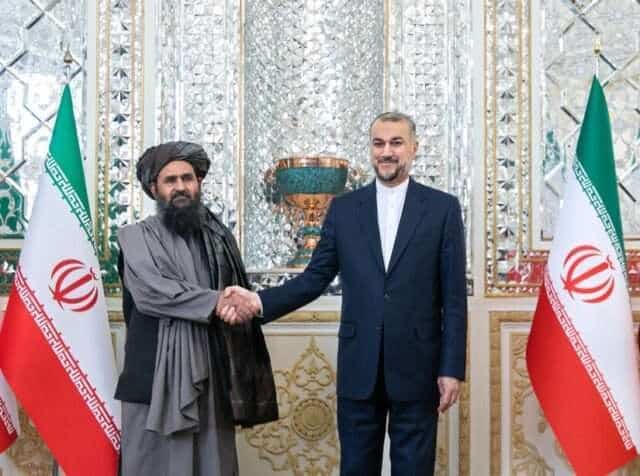
Nevertheless, I believe the leaders of both Pakistan and Afghanistan should avoid confrontation. The negotiations that took place were constructive, and a great many problems can be resolved through dialogue.
There is also a history of fighting against the Taliban in Nuristan and Badakhshan.
Nuristan is a beautiful part of Afghanistan, located across the border from Chitral. I have visited both areas. I went to Nuristan in 2007, when there were no roads in some parts of the region. Around four or five years ago, I traveled there on foot from Kunar.
The people of Nuristan and Chitral share many similarities in their communities and way of life.
Clashes have recently taken place in Nuristan. The Afghan forces may have been informed in advance, or they may already have deployed a substantial number of personnel in the area.
Reports have indicated that around 28 people were killed. The Afghan government reportedly said that those killed were security personnel from the former Afghan government. It was also reported that 32 people had been arrested.
I watched the videos released by the Taliban. In those videos, the detainees were asked their names and where they came from.
These developments show that there are people in Afghanistan who are willing to challenge the Taliban whenever an opportunity arises, particularly through different resistance fronts.
However, the Taliban government is currently very strong. It has weapons, resources and trained personnel. I believe it can deal with these movements relatively easily.
So far, the Taliban have succeeded in suppressing such challenges.
But that does not mean the opposition has disappeared. Consider that the former Afghan government had a full security apparatus, including an army and police force, and that entire system has now collapsed.
There are people who appear to be waiting for support from outside Afghanistan. If they receive assistance, money and weapons, they may rise against the current Taliban government.
At present, however, I believe that would be difficult.
The Taliban have informants across the country, along with substantial resources and security forces. It appears that they have once again succeeded in suppressing the latest unrest in Nuristan.
TTP Leadership Is in Afghanistan, While Its Fighters Operate Across KP
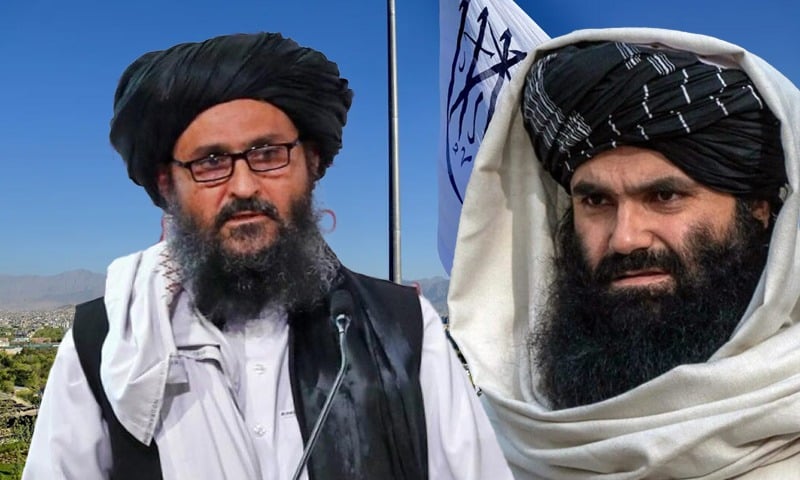
One thing is very clear to me: whether the Afghan government accepts it or not, the leadership of the banned Tehreek-e-Taliban Pakistan (TTP) is in Afghanistan.
We cover these developments, and the presence of the TTP leadership there is not something that can simply be dismissed.
The central commanders and members of the TTP’s Shura are in Afghanistan. Hafiz Gul Bahadur, the Taliban leader from North Waziristan, is also there, along with his entire leadership.
Most of the leadership of Lashkar-e-Islam is also in Afghanistan. It is a smaller organization, but its leadership is based there.
Al-Qaeda in the Indian Subcontinent has weakened, but these groups remain connected. Lashkar-e-Islam, Al-Qaeda in the Indian Subcontinent and the group led by Hafiz Gul Bahadur are allies. The Hafiz Gul Bahadur group, in particular, provides strength to this network.
The TTP is the largest of these groups operating in Pakistan, and it has a substantial support base.
The leadership is in Afghanistan, but the fighters are present inside Pakistan. They operate across a wide area, from Bajaur to the tribal districts of Waziristan.
In Kurram, the situation is particularly dangerous. The group led by Ahmad Kazim has fighters there. Their videos and pictures are available.
They have reportedly captured a police station and taken weapons from it. There are also videos showing them with a large security forces vehicle, which appears to be an armored vehicle or tank. They have attacked people as well.
The TTP’s fighters are present across Kohat, Kurram, Dara Adam Khel, Bannu, Lakki Marwat, Karak, Tank, Dera Ismail Khan, North Waziristan, South Waziristan, Upper South Waziristan and Lower South Waziristan.
Pakistan is facing a serious threat, particularly in Khyber Pakhtunkhwa.
Look at the incident in Hangu, where young officers were killed. These developments show how serious the danger has become.
Pakistan Must Learn From Its Past Mistakes
Pakistan has to deal with this situation wisely.
I was listening to Defense Minister Khawaja Asif, who was asked outside the United Nations why the Afghan Taliban, who had once been close to Pakistan, had now become a source of tension.
He acknowledged that Pakistan had made mistakes in the past by supporting the Taliban and that those decisions had contributed to the current situation.
There is no doubt that the Afghan Taliban were once very close to Pakistan.
I have often said that if Pakistan has to learn from its past mistakes, that itself would be a significant development.
We need to ask where those mistakes were made and why.
Pakistan had placed enormous expectations on the Afghan Taliban. We focused heavily on them, invested in them and supported their families.
We even helped them establish an office in Qatar. Whenever negotiations took place, members of the Taliban delegation would travel using Pakistani passports.
I was covering these developments from an early stage. In 2007, when their first delegation went to Russia, I knew some of those people.
Later, when Russia entered the war in Afghanistan, the dynamics of the conflict against the United States changed.
Pakistan facilitated the Afghan Taliban in various ways. They made enormous sacrifices and fought for years, but their eventual return to power would not have been possible in the same way without Pakistan and some other Muslim countries.
This support was not limited to one government or one political era.
In 2007, Imran Khan was not in power. General Pervez Musharraf was president at the time.
Over the years, different governments in Pakistan supported the Afghan Taliban in different ways. Meetings were arranged in the United Arab Emirates, Qatar, Saudi Arabia, Turkey and even Geneva. Representatives traveled from Pakistan to participate in these engagements.
The fundamental reason was that many countries had sent their armies to Afghanistan, and Pakistan shared a long border with the country. There were fears that if the conflict expanded or the situation deteriorated, the tribal districts would also be affected.
People from across the world came to fight in Afghanistan, and many of them lived in our areas, from Bajaur to Waziristan, as well as in Peshawar and Swat.
It was a major security threat.
Today, we cannot simply walk away from the consequences of that war. We are seeing the conflict spread across the country, but the situation is particularly dangerous in Khyber Pakhtunkhwa.
Terrorists are present in the province, and the security challenges are enormous.
Counterterrorism Requires a Collective National Strategy
I do not believe the Khyber Pakhtunkhwa government can fight this war alone. Nor can the army or the federal government resolve the problem independently.
There is a need for a collective vision. The entire country must pay attention to the situation and work together.
This is not a simple problem that can be resolved through a few operations or statements.
When the police themselves are not safe, the scale of the challenge becomes clear.
Look at what happened recently in Dera Ismail Khan. A checkpoint involving the Police, Excise Department and Customs Department was targeted on the Quetta-Dera Ismail Khan Road.
The area is a major route for smuggling. Terrorists reportedly used an explosive-laden vehicle to blow up the checkpoint.
There were no army or police personnel present at the time, and no police casualties were reported. However, personnel from the Excise and Customs departments were killed.
These departments are also targeted because of their role in combating smuggling.
This shows that the threat is not limited to the army or the police. Terrorists are also targeting other government departments and personnel who are involved in law enforcement and efforts to control illegal activities.
I do not believe the police or the army alone can fight this war.
There are other options, including negotiations.
If the objective is to ensure that these groups remain peaceful, dialogue may also have a role to play.
And without the support and involvement of the Afghan government, resolving this issue will be difficult.
Its role is essential to any lasting solution.