
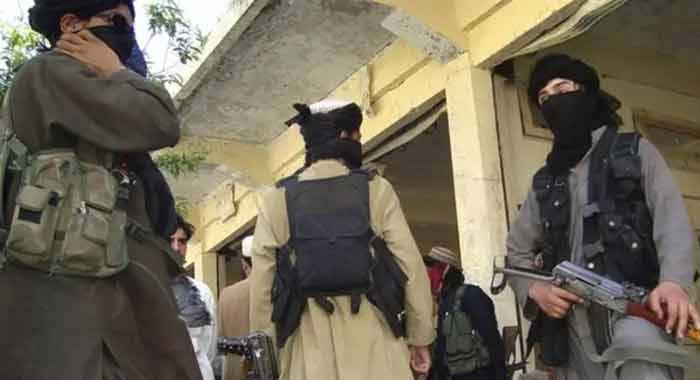
Despite what Pakistan describes as mounting evidence of terrorist networks operating from Afghan territory, the Taliban regime continues to deny providing sanctuary, support or operational space to terrorist organisations targeting Pakistan.
According to information provided by Pakistani security sources, 260 Afghan terrorists killed inside Pakistan have been identified through their names, addresses and family details. The information further states that unidentified terrorists and those who remain active are not included in this figure.
Pakistan says that the identification of the dead through detailed personal and family records provides a significant basis for establishing the Afghan origin of terrorists involved in attacks and infiltration inside Pakistan. According to the information provided, funerals of the identified Afghan terrorists were subsequently held in their respective areas of origin in Afghanistan. The information further states that officials affiliated with the Taliban regime attended some of these funerals.
Pakistan argues that the reported participation of Taliban officials in the funerals of Afghan nationals killed while conducting terrorist activities inside Pakistan raises serious questions about Kabul’s repeated denials concerning the presence and activities of anti-Pakistan militants on Afghan soil.
For Islamabad, the issue is not merely the nationality of individual militants. It concerns the broader networks through which militants allegedly move from Afghanistan into Pakistan, receive training and equipment, and return to Afghan territory after conducting or attempting to conduct attacks. According to the information provided by Pakistani sources, up to 70 percent of the terrorists belonging to groups identified as Fitnat al-Khawarij and involved in infiltration into Pakistan are of Afghan origin.
Pakistan maintains that this figure demonstrates the cross-border dimension of the terrorist threat and challenges the assertion that militant violence inside Pakistan is solely an internal security problem. Islamabad’s position is that when militants cross an international border, receive training or logistical support outside Pakistan and subsequently enter Pakistani territory to carry out attacks, the issue necessarily becomes one of cross-border terrorism.
Another major concern raised by Pakistan involves the extensive quantities of weapons and military equipment left behind in Afghanistan following the withdrawal of US and NATO forces. According to the information provided, the Taliban regime has been accused of supplying abandoned American and NATO weapons to militants associated with Fitnat al-Khawarij and Fitna al-Hindustan. The reported weapons include US-made M4 rifles, Remington sniper rifles and night-vision devices.
The presence of such sophisticated equipment among terrorist groups, if independently established, would significantly increase their operational capabilities, particularly for night-time movement, surveillance, precision attacks and engagement of security forces. Pakistan maintains that the availability of advanced military equipment among terrorist organisations operating against it demonstrates the increasingly sophisticated nature of the threat emanating from Afghanistan.
The consequences of this violence have been severe. According to the figures provided, 1,327 Pakistanis have been killed and 2,484 wounded in terrorist attacks originating from Afghan territory during 2026. These figures represent civilians and security personnel who have paid the human cost of continuing cross-border violence.
Pakistan says that behind every casualty is a family that has lost a loved one, a community affected by insecurity and a security force required to respond repeatedly to attacks originating beyond the country’s internationally recognised border. The scale of casualties, Islamabad argues, makes the issue impossible to treat as a minor or isolated bilateral disagreement.
According to the information provided, Fitnat al-Khawarij and Fitna al-Hindustan, with alleged Indian backing, are operating from Afghanistan and conducting cross-border terrorist activities against Pakistan. Pakistan has repeatedly raised concerns about what it describes as the use of Afghan territory as a staging ground for attacks against Pakistani targets. Islamabad’s position is that terrorist organisations operating from Afghanistan should not be permitted to exploit the country’s territory, training infrastructure or border areas to plan and execute attacks against Pakistan.
The Pakistani authorities further maintain that the convergence of multiple militant networks creates a wider regional security challenge rather than a problem confined to one organisation.
Pakistan has also pointed to assessments attributed to the United Nations concerning the strength and activities of Fitnat al-Khawarij. According to the information provided, UN assessments place the group’s manpower in Afghanistan at approximately 6,000 to 6,500 fighters. The same information states that Fitnat al-Khawarij carried out more than 600 terrorist attacks during 2025, with a number of those attacks against Pakistan being launched from Afghan territory. If these figures are read alongside the continuing violence inside Pakistan, Islamabad argues that the threat cannot be dismissed as a small or marginal militant presence. Pakistan’s concern is that a large, organised and armed militant network operating from Afghan territory possesses the capability to sustain attacks over an extended period.
According to the information provided, Fitnat al-Khawarij has established training facilities in several Afghan provinces, including Kunar, Nangarhar, Khost and Paktika. These areas are geographically significant because of their proximity to Pakistan and the difficult terrain that can facilitate movement across the border. The information further alleges that Afghan Taliban personnel have also been involved in these training facilities.
Pakistan says that if these allegations are confirmed, they would raise fundamental questions about the Taliban regime’s repeated claims that Afghan territory is not being used by terrorist organisations against neighbouring countries. Islamabad maintains that terrorist training centres cannot operate indefinitely without the knowledge or acquiescence of local authorities, particularly in areas where the Taliban exercises territorial and administrative control. According to the information provided, whenever action is taken against terrorist hideouts and infrastructure, the Taliban regime quickly emerges in defence of the militants.
Pakistan argues that this recurring pattern raises questions about the relationship between the Taliban authorities and terrorist organisations operating from Afghan territory. Islamabad’s position is that a government genuinely committed to preventing terrorism from its soil should dismantle terrorist infrastructure rather than respond to pressure by defending or shielding the militants concerned. Pakistan therefore continues to demand concrete action rather than assurances.
The issue is not limited to Fitnat al-Khawarij. Pakistan also points to United Nations reporting concerning the presence of other international terrorist organisations in Afghanistan, including Al-Qaeda, the East Turkestan Islamic Movement (ETIM) and ISIS. The continued presence of multiple terrorist organisations, according to Pakistan, demonstrates the complexity of Afghanistan’s security environment and the potential for militant groups to establish relationships, share resources and exploit ungoverned or inadequately controlled spaces. For Pakistan, this raises concerns not only about attacks against its territory but also about the possibility of Afghanistan continuing to serve as a wider regional hub for militant organisations.
Islamabad maintains that the issue can no longer be addressed solely through denials. Pakistan points to the identification of Afghan nationals among terrorists killed inside Pakistan, the reported funerals in their home areas, the reported participation of Taliban officials in those funerals, the alleged presence of Afghan-origin militants among infiltrating groups, the reported use of former US and NATO weapons, and international assessments regarding terrorist organisations operating from Afghanistan.
Pakistan argues that these elements collectively warrant a serious and transparent examination of the relationship between Afghan territory and terrorism targeting Pakistan. The Pakistani position is that the question is not whether Afghanistan should be blamed for every terrorist incident inside Pakistan. Rather, the central question is whether Afghan territory is being used by organised militant groups to train, equip, shelter and launch attacks against Pakistan—and whether the authorities controlling that territory are taking effective measures to prevent it.
Pakistan has repeatedly stated that its demands are straightforward. First, terrorist sanctuaries and training centres operating from Afghan territory must be dismantled. Second, terrorist organisations involved in attacks against Pakistan must be prevented from using Afghan territory for recruitment, training, planning, logistics or operations. Third, cross-border infiltration must end. Fourth, the Afghan authorities must provide credible and verifiable evidence that terrorist infrastructure has actually been dismantled rather than merely issuing assurances.
Pakistan maintains that these requirements are fundamental to establishing a sustainable security relationship between the two neighbouring countries. Pakistan’s argument is that the current crisis should not be reduced to occasional exchanges of fire along the Durand Line.
At its core, Islamabad says, the issue is about whether an internationally recognised state can be expected to tolerate armed groups operating from neighbouring territory and repeatedly crossing an international border to attack its citizens and security forces. Pakistan maintains that it has pursued dialogue, mediation and diplomatic engagement for years. It has participated in bilateral negotiations and third-party mediation, continued economic engagement and repeatedly called for peaceful solutions. However, Islamabad argues that diplomacy cannot produce lasting peace if terrorist networks remain operational and attacks continue.
Pakistan is calling on the international community to take seriously the evidence and assessments concerning terrorist organisations operating in Afghanistan. Islamabad’s position is that counter-terrorism commitments must be measured by actions rather than statements. If terrorist training centres continue to operate, militants continue to cross the border, advanced weapons continue to circulate among terrorist organisations and attacks against Pakistan continue to originate from Afghan territory, Pakistan argues that the international community must demand accountability from those exercising authority in Afghanistan. The issue, Islamabad maintains, is not merely a bilateral disagreement between Pakistan and the Taliban regime. It concerns regional security, international terrorism and the ability of militant organisations to operate from territory under the control of a governing authority.



