
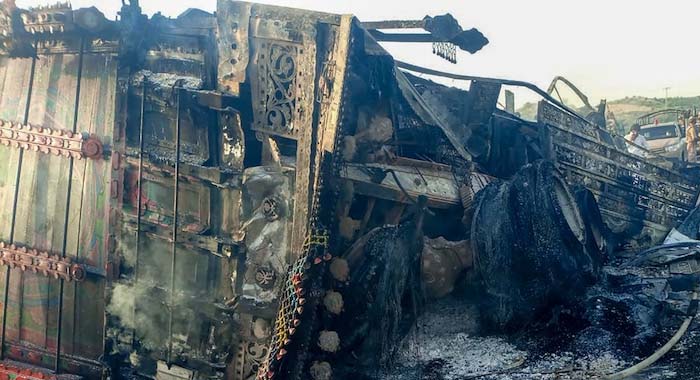
Reports of terrorist activity in parts of Balochistan are raising serious concerns over the safety of civilians, transporters and commercial activity. Various terrorist groups operating under the banner of Baloch rights have reportedly targeted local residents, transport vehicles and economic infrastructure through extortion, attacks, vehicle seizures, arson and illegal roadblocks.
Over the past two months, incidents have reportedly been recorded in Mastung, Dalbandin and other districts, including attacks on transporters, the hijacking of fruit-laden trucks, seizure of commercial containers and theft of livestock.
Reports also indicate that terrorists have established illegal checkpoints on important highways and demanded substantial sums from drivers and transporters. According to sources, demands at some locations have reportedly ranged from Rs1 million to Rs2 million, with threats of violence allegedly issued to those who refuse to pay.
The Quetta–Karachi N-25 and Quetta–Taftan N-40 are among the key routes reportedly affected. Commercial vehicles and passenger coaches have allegedly been stopped, money demanded from drivers and, in some cases, vehicles set on fire. In a recent operation against an alleged illegal checkpoint on the N-25, authorities reportedly said that 23 abducted people were recovered and five terrorists were killed. Reports have also emerged of passengers and transport workers being subjected to identity checks, with individuals from Punjab and Sindh allegedly being singled out in some incidents.
Transporters in Balochistan have repeatedly raised concerns over terrorism, extortion and the destruction of vehicles. In May 2026, the Balochistan Goods Truck Owners Association reportedly announced a suspension of mineral transportation in protest against attacks, vehicle burnings and alleged extortion.
Such incidents have consequences far beyond individual vehicles. Balochistan’s highways connect major markets and trade routes, and disruptions can increase transportation costs, damage supply chains and affect businesses, workers and consumers. The targeting of commercial vehicles also threatens the livelihoods of thousands of drivers, transport workers, traders and small businesses that depend on safe and uninterrupted road access.
Terrorist groups operating in Balochistan often present their activities as part of a political or resistance struggle. However, attacks on civilians, transporters and commercial infrastructure impose the greatest burden on ordinary people. Extortion, kidnapping, arson and attacks on public roads do not merely disrupt security; they undermine economic activity and deepen fear among communities.
Legitimate political grievances can be addressed through peaceful and constitutional means. Terrorist violence, however, places civilians at risk and damages the economic interests of the very communities such groups claim to represent.
The continued targeting of highways and commercial activity presents both a security and economic challenge. Authorities must ensure the protection of civilians and transport corridors while taking action against terrorist networks responsible for attacks, extortion and illegal checkpoints.
At the same time, long-term stability requires addressing legitimate political and economic grievances through peaceful dialogue, development and lawful institutions.
Balochistan’s roads must remain corridors of trade and opportunity not zones of fear. The protection of civilians, transporters and legitimate economic activity must remain a fundamental priority.



