
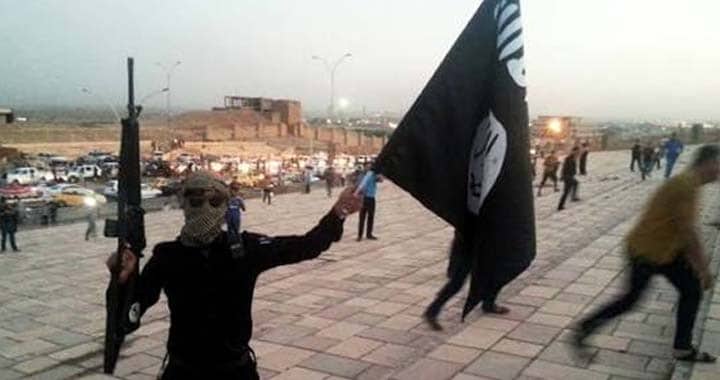
A series of arrests, indictments and counterterrorism operations reported in Kuwait, Israel, Türkiye and France during August and September has brought renewed attention to the continuing international reach of the Islamic State (IS/ISIS), demonstrating how the organization and its affiliates continue to pose a security challenge despite more than a decade of sustained counterterrorism pressure.
The cases involve alleged plans to attack places of worship and other targets, suspected efforts to acquire weapons and explosives, preparations to use drones, alleged attempts to travel abroad to join Islamic State affiliates, and the use of online propaganda and communications platforms in radicalization and recruitment.
There is no evidence that the incidents or individuals identified in the four countries were operationally connected. Nevertheless, their emergence across geographically distant regions illustrates the Islamic State’s continuing ability to inspire, recruit and influence individuals beyond the territory it once controlled.
The destruction of the group’s territorial so-called caliphate significantly altered its operational environment, but it did not eliminate the organization or its ideology. Instead, the Islamic State has increasingly relied on a combination of regional affiliates, decentralized networks, online propaganda and individual actors to sustain its presence and influence.
Kuwaiti security authorities reported several arrests in August involving individuals suspected of affiliation with the Islamic State. In early to mid-August, Kuwaiti authorities arrested three individuals allegedly belonging to the same Islamic State cell. According to the authorities, the suspects were planning to attack a Shiite mosque as well as other unidentified targets inside the country.
The following day, authorities arrested two minors who were reportedly linked to the investigation. Kuwaiti officials said the minors had communicated with Islamic State members and received training related to explosives manufacturing. The cases highlighted concerns over the ability of extremist organizations to reach young individuals and expose them to terrorist ideology and operational knowledge even when those individuals are far removed from the organization’s traditional areas of operation.
A separate operation was announced by Kuwait’s Interior Ministry on August 12, when authorities said they had thwarted a terrorist plot targeting an unidentified facility and arrested a Kuwaiti national allegedly associated with the Islamic State.
According to the ministry, the suspect had received training in explosives and drone manufacturing and had constructed a drone allegedly intended for use in a planned attack.
The case also underscores the growing technological dimension of the terrorist threat, particularly the potential exploitation of unmanned systems and other commercially accessible technologies by extremist actors. Israeli authorities reported several arrests and indictments during August and September involving individuals suspected of Islamic State-inspired activity, allegiance or preparations to join the organization.
On August 4, Israeli authorities arrested two young men, including one minor, over allegations that they were planning an Islamic State-inspired terrorist attack. The suspects were subsequently indicted on August 28. One of the suspects, identified as Ibrahim Kaabia, 19, a resident of Haifa, was accused of pledging allegiance to the Islamic State and allegedly planning an attack against an Israel Defense Forces base in northern Israel.
In a separate case, authorities charged Abdullah Gergawi on August 18 with security offenses and illegal possession of firearms and ammunition following his arrest on July 19 in Segev Shalom, near Beersheba. According to the allegations, Gergawi was planning an attack against a nightclub in Beersheba using a vehicle bomb. He was also reportedly in contact with Islamic State activists and was allegedly preparing to travel to Syria to join the organization.
Another investigation emerged on September 2, when Israeli authorities arrested Yaqoub Shibli in the northern village of Shibil. Authorities alleged that Shibli had pledged allegiance to the Islamic State after watching the organization’s propaganda videos online. He was subsequently charged with membership in a terrorist organization on September 7.
The case demonstrates the role of online extremist propaganda in the radicalization process, with authorities alleging that exposure to digital material preceded the suspect’s expression of allegiance to the terrorist organization.
Also on September 2, the Haifa District Attorney’s Office charged former Israel Defense Forces soldier Khamis Sawaed, 30, with allegedly preparing to fight abroad alongside the Islamic State. Sawaed, from the Galilee village of Husniyya, served in the IDF between 2017 and 2019 and was arrested in August. According to information from the investigation, Israeli security officials alleged that Sawaed first developed an interest in the Islamic State in 2023. Authorities further alleged that, beginning in 2024, he watched Islamic State training videos before deciding to fight alongside the organization in Syria or Africa.
During 2026, he was also accused of downloading instructional manuals and watching training material as part of preparations to join the jihadist group. The case illustrates the potentially gradual progression from exposure to extremist ideology toward alleged preparations for overseas terrorist activity, while also demonstrating the diverse backgrounds of individuals who can become subjects of counterterrorism investigations.
In Türkiye, authorities reported another counterterrorism operation on September 4 involving an alleged Islamic State operative in Istanbul. The suspect, Berkan Cil, 21, was targeted during a joint operation conducted by Türkiye’s National Intelligence Organization and the Istanbul Police Department. According to Turkish authorities, Cil was suspected of links to the Islamic State and was allegedly preparing a terrorist attack. A confrontation reportedly occurred when security personnel moved to apprehend him. The suspect was killed during the ensuing exchange of fire, while a civilian was also killed, according to the information provided.
Turkish authorities subsequently searched the suspect’s residence and reportedly recovered an unlicensed handgun, approximately 200 rounds of ammunition and digital material associated with the Islamic State. Authorities said the operation likely prevented a terrorist attack. The incident demonstrates the continuing importance of intelligence-led law-enforcement operations in identifying suspected terrorist activity before an alleged plot can reach the execution stage.
France also reported a counterterrorism investigation in early September involving three men suspected of links to extremist activity. French authorities detained the suspects on allegations including criminal association with a terrorist organization for the purpose of preparing acts of terrorism. The investigation reportedly began in July after authorities detected suspected terrorist activity within a WhatsApp group known as “Soldiers of Allah.”
According to the allegations, the three suspects were considering attacks against members of France’s Jewish community while also discussing preparations to travel to Africa to join the Islamic State. The case highlights the increasingly important role of encrypted messaging platforms in investigations into extremist networks. Digital spaces can provide individuals with opportunities to exchange propaganda, develop ideological connections and communicate with others who share extremist beliefs, creating challenges for security agencies attempting to identify potential threats before they develop into acts of violence.
The cases reported across four countries also demonstrate the changing nature of Islamic State recruitment and propaganda. During the height of its territorial expansion, the organization relied heavily on its control of territory in Iraq and Syria, where it established administrative structures, recruited fighters and conducted military operations.
Following the destruction of its territorial caliphate, the organization was forced to adapt. Its propaganda networks increasingly became central to maintaining ideological influence beyond its former territorial strongholds. Online material can reach potential supporters across national borders without requiring the physical presence of an Islamic State operative in the target country.
Social-media platforms, encrypted communications and online communities can provide avenues through which extremist narratives are distributed and individuals are exposed to propaganda. The emergence of artificial intelligence is adding a new layer to this environment. The technology has the potential to accelerate the creation and distribution of extremist propaganda, facilitate multilingual messaging and allow terrorist organizations or sympathizers to tailor content to specific audiences.
The full scale of AI’s exploitation by terrorist organizations remains an evolving issue, but its emergence illustrates how rapidly the technological environment surrounding terrorism is changing. The recent cases also reveal several different pathways through which individuals may allegedly become involved with the Islamic State. Some individuals are accused of consuming extremist propaganda or expressing allegiance to the organization. Others are alleged to have established contact with Islamic State members or sympathizers.
In more advanced cases, authorities have alleged preparations involving weapons, explosives, drones, planned attacks or travel abroad to join Islamic State affiliates. This variety presents a complex challenge for counterterrorism agencies. The modern terrorist threat does not always involve a large, centrally controlled organization operating from a clearly defined base. An individual may instead become radicalized online, establish contact with extremist networks and independently begin preparations for violence. This decentralized model can make early detection significantly more difficult.
The Islamic State has endured more than a decade of sustained military, intelligence and law-enforcement pressure. The organization’s territorial control in Iraq and Syria was dismantled, its leadership suffered significant losses and its ability to openly operate as a territorial entity was severely degraded. Yet its continued appearance in counterterrorism investigations demonstrates that the organization has adapted to the post-caliphate environment.
The Islamic State’s affiliates remain active in several regions, while its broader ideological network continues to seek influence beyond traditional conflict zones. The organization’s resilience is therefore no longer measured primarily by territory. It can also be assessed through its ability to maintain propaganda, inspire supporters, sustain regional affiliates and encourage individuals to undertake violence or attempt to travel abroad.
The incidents in Kuwait, Israel, Türkiye and France are separated by geography and circumstances, and available information does not establish an operational connection between them. Their collective significance, however, lies in the broader pattern they reveal. A terrorist organization that once depended heavily on territorial control has demonstrated an ability to survive through decentralized structures and digital influence.
The threat can now emerge in different forms: an alleged plot against a place of worship, an attempt to attack a military installation, preparations involving explosives or drones, an alleged effort to travel to an overseas affiliate, or an online network suspected of facilitating extremist activity. These cases demonstrate why counterterrorism efforts increasingly require cooperation across intelligence, law-enforcement, financial and technological domains.
The latest arrests and disrupted plots do not indicate that the Islamic State has restored the territorial power it possessed at the height of its expansion. Rather, they demonstrate that the organization and its affiliates have adapted to the intense pressure placed upon them. Its operational environment has changed, but its ideology continues to circulate.
Its territorial ambitions have been substantially reduced, but its propaganda can still cross borders. Its centralized structures have been weakened, but decentralized affiliates and individual supporters can continue to present security challenges. The incidents reported in Kuwait, Israel, Türkiye and France therefore serve as a reminder that defeating terrorist organizations requires more than dismantling their physical strongholds.
It also requires sustained efforts to disrupt recruitment, counter extremist propaganda, prevent terrorist financing, identify emerging networks and address the exploitation of new technologies. The absence of evidence linking the individual cases does not diminish their broader significance. Taken together, they demonstrate the continuing ability of Islamic State ideology and affiliated networks to reach individuals across national boundaries.
The Islamic State may have lost its territorial caliphate, but the international counterterrorism challenge has entered a new and increasingly decentralized phase.



