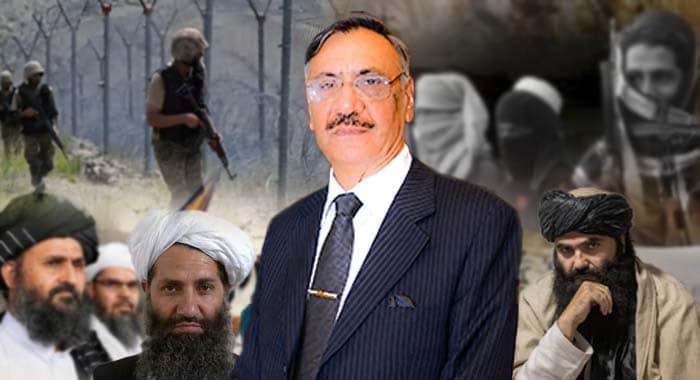
Pakistan’s security situation remains serious, particularly in Khyber Pakhtunkhwa and Balochistan. However, the nature of the challenge is different in the two provinces. In Khyber Pakhtunkhwa, security forces have considerable control over many of the areas where terrorist activity takes place. The difficult terrain and scattered settlements of the former tribal areas create challenges, but they also provide security forces with an environment in which intelligence-led operations can be effective.
Balochistan presents a different and, in many respects, more complicated challenge. The problem is not only the presence of terrorists. It is also the network of people who meet them, facilitate them and, in some cases, encourage their activities. There have been instances where people in educational institutions have allegedly provided encouragement or support to terrorists. Such developments must be treated seriously because terrorism cannot be defeated merely by eliminating those who carry weapons. The environment that enables them to operate must also be addressed.
The situation in Khyber Pakhtunkhwa has changed considerably over the years. Public support for the Taliban and other terrorist groups has largely disappeared. People have seen the consequences of terrorism and understand what these groups bring with them. In the tribal areas, communities are also armed and have traditionally possessed the capacity to resist outsiders.
The message to local communities should therefore be straightforward. If terrorists appear in a neighborhood and people have the ability to resist them, they should not provide them shelter or assistance. If they cannot confront them safely, they should immediately inform the Army or Frontier Corps. And if they cannot do even that, they should move away from the area so security forces can operate without putting civilians at unnecessary risk.
The Afghan Facilitator Network
One of the most serious issues is the continued presence and movement of Afghan nationals who facilitate terrorist activity inside Pakistan.
The Afghan Taliban have repeatedly said that Afghan soil will not be allowed to be used for terrorism against other countries. Yet Pakistan continues to face attacks involving individuals who have links to Afghanistan. The problem is not simply whether a terrorist crosses the border carrying a weapon. A much wider support system can be involved.
A terrorist can arrive in Pakistan and stay with a facilitator in Rawalpindi or Islamabad. Another person may arrange his accommodation. Someone else may arrange a suicide jacket or other equipment from Peshawar. This is how a terrorist network operates. It does not necessarily require a large organization visibly moving people from one place to another.
There have also been cases in which Afghan families living in Pakistan were found to have links to terrorists. In one such case, an Afghan family in Nowshera was reportedly found to have a connection with a terrorist. These cases should not be generalized to the entire Afghan population, but they demonstrate why authorities need effective screening, registration and intelligence mechanisms.
Pakistan must therefore accelerate the removal of undocumented Afghan nationals while ensuring that lawful residents and refugees are dealt with according to the applicable legal framework. At the same time, corruption within the system must be addressed. If an official knows that an individual is an Afghan national who has no legal status but accepts money to ignore the violation, that official becomes part of the security problem.
Border management must also be strengthened. Intelligence cannot stop at the border fence. Pakistan needs better intelligence about who is moving toward the border, who is facilitating their movement, where they intend to go and who will receive them after they enter the country.
This is ultimately not a contest of military strength alone. Terrorists do not cross the border in tanks or aircraft. They come as individuals, in small groups, through routes that can be difficult to monitor. That is why intelligence on the ground is more important than simply increasing the number of weapons or troops.
Kohat, Bannu and Lakki Marwat are among the areas where intelligence must remain particularly active. If authorities know who a terrorist is, where he is staying and who is assisting him, the task of arresting or neutralizing him becomes considerably easier.
The Hibatullah-Haqqani Question
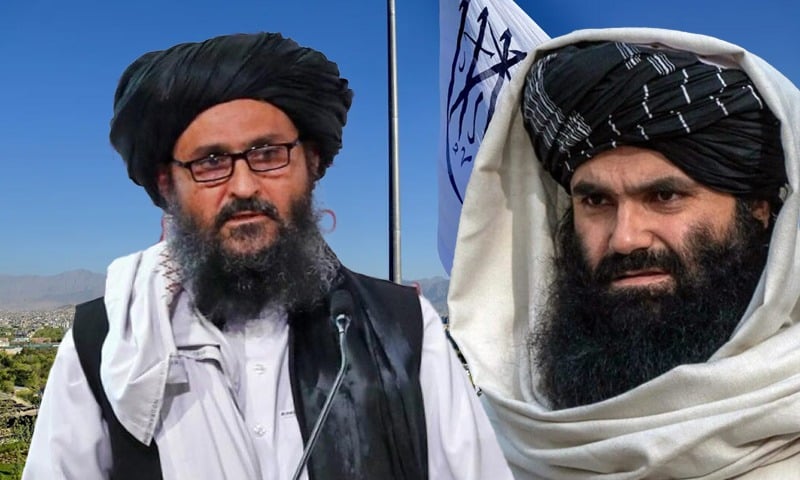
Against this security backdrop, reports of growing differences between Taliban supreme leader Hibatullah Akhundzada and Sirajuddin Haqqani deserve attention. Recent reports have described tensions between the Kandahar leadership and influential Taliban figures based in Kabul, although the Taliban has denied that such disagreements amount to a serious internal split.
In my assessment, Sirajuddin Haqqani represents one of the most powerful and influential components within the Taliban structure. The Haqqani network has its own history, organizational structure and influence, and its geographical base gives it particular importance.
The Kandahari leadership may consider itself dominant because it regards the Taliban’s return to power as a victory achieved under its leadership. But Afghanistan’s political and military history is more complicated than that.
The fall of Kabul was not the achievement of one faction alone. Jalaluddin Haqqani played an important role in the Taliban’s struggle, and his family built considerable influence over the areas along Afghanistan’s eastern border. Sirajuddin inherited much of that influence.
This is also why Sirajuddin was given the Interior Ministry. The areas under Haqqani influence are strategically important, and control over those areas has implications for Kabul itself.
If the Kandahari leadership has any sense, it should avoid a direct confrontation with the Haqqanis. A serious conflict between the two sides would not necessarily remain a dispute between individuals. It could become a broader struggle over Afghanistan’s political and security structure.
Hibatullah should also understand that holding the title of supreme leader does not automatically create the same kind of influence that Mullah Omar once possessed.
I had personal experience of dealing with Taliban figures during my time in government. Hibatullah was not someone I considered a central figure at that time. He had a madrassa near Kuchlak, outside Quetta, and I remember asking who he was and being told that he was Hibatullah Durrani. Later, he emerged as the supreme leader of the Taliban.
Today, however, he appears to believe that he can exercise authority in the same manner as Mullah Omar. The circumstances are different, and so is the balance of power.
If the present dispute between Hibatullah and Sirajuddin develops into an open confrontation, the consequences could extend well beyond the Taliban leadership. It could affect Afghanistan’s internal stability and the security calculations of neighboring countries.
The Haqqani Factor and Pakistan
The Haqqani family’s historical and tribal connections to areas bordering Pakistan cannot simply be ignored. I have personally dealt with tribal figures associated with the Haqqanis.
On one occasion, an Afghan leadership figure asked whether a tribal chief connected with the Haqqani family was present in Pakistan. I confirmed that he was. He was subsequently arrested and detained.
We informed the Afghan side and asked what should be done with him. There was initially no response. He had numerous guests and was creating a considerable burden for the local administration. Eventually, after communication with the Afghan side, he was handed over at Torkham.
The incident illustrated something important: tribal influence in the border belt cannot be understood simply through formal government structures. A person may carry a tribal title, but actual influence can rest elsewhere.
That is part of the reason why Sirajuddin Haqqani remains important. His influence extends through networks that cross Afghanistan’s eastern provinces and connect with communities on the Pakistani side of the border.
At the same time, any discussion of Haqqani influence must also confront the security consequences. Individuals associated with the TTP have operated in areas where the Haqqani network has influence. Pakistan therefore cannot look at the Haqqanis only through the lens of political relations. The protection or tolerance of terrorist groups creates a direct security problem for Pakistan.
If Sirajuddin has the ability to communicate with Pakistan, that channel should not automatically be dismissed. But dialogue can only produce results if it addresses the core security problem.
There Is a Way Forward
Pakistan and Afghanistan cannot resolve their differences while terrorist attacks continue inside Pakistan.
The Afghan Taliban must either imprison individuals involved in attacks against Pakistan or hand them over to Pakistan. If such individuals are handed over, each case can be dealt with according to Pakistani law. If there is no admissible evidence against an individual, the courts can determine the outcome.
That is the essential point. Security policy cannot be based solely on assumptions or political declarations. People accused of terrorism should be dealt with through evidence and law.
The same principle applies to former Taliban or TTP figures who may seek to return to Pakistan. If a person has no case against him, the law may allow him to live freely. But social realities matter as well. Someone who has been associated with violence may face hostility or retaliation from people affected by that violence.
The case of Ehsanullah Ehsan demonstrated the complications involved in dealing with former terrorist figures who seek protection or return. Security agencies have to consider not only the individual’s request but also the consequences of allowing him to move freely and the risk that he may again become part of a terrorist network.
Ultimately, the problem will not disappear merely because one generation of terrorists disappears. The real objective must be to prevent the next generation from inheriting the same ideology, networks and methods.
If the sons of today’s terrorists grow up understanding that violence destroyed their families and communities rather than providing them with a future, the cycle can eventually be broken.
For Pakistan, the immediate task is clear: strengthen intelligence, secure the border, disrupt facilitators, act against undocumented networks involved in terrorism and maintain pressure on those who enable attacks.
For Afghanistan’s Taliban leadership, the choice is equally consequential. Internal differences can either be managed through political accommodation or allowed to become a struggle that destabilizes the entire system.
The dispute between Hibatullah and Sirajuddin Haqqani is therefore not merely a personal disagreement between two Taliban figures. If the confrontation deepens, it could become a test of who actually holds power in Afghanistan, how that power is distributed and whether Kabul can prevent its internal divisions from becoming another source of instability for the region.
Pakistan has an interest in stability on its western border, but stability cannot be built on assurances alone. It requires verifiable action against the networks that continue to threaten Pakistan.