
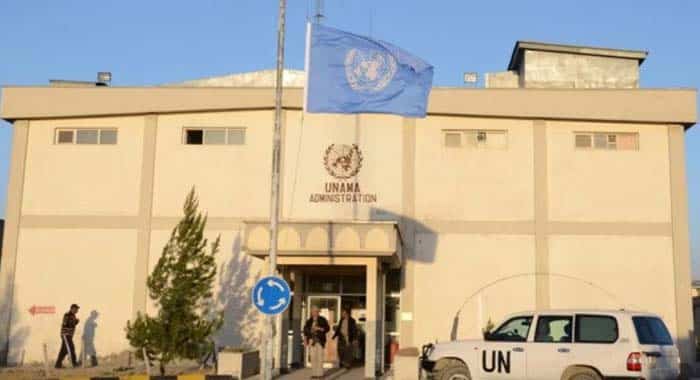
More than 40,000 people were killed and over 77,000 injured during Afghanistan’s armed conflict between 2009 and 2021, according to a new report by the United Nations Assistance Mission in Afghanistan (UNAMA), highlighting the devastating and enduring human cost of more than two decades of war.
Released on Tuesday, September 1, the report examines the impact of violence and conflict in Afghanistan from 2001 through the Taliban’s return to power in 2021. Beyond documenting casualties, the assessment provides an extensive account of the physical, psychological, social and economic consequences that continue to shape the lives of Afghan survivors and their families years after the most intense fighting came to an end.
Based on interviews with 195 victims and family members, 23 humanitarian organizations and 23 government officials, the report represents one of the United Nations’ most comprehensive examinations of the long-term consequences of Afghanistan’s conflict.
The findings underscore a reality that extends far beyond battlefield statistics: for thousands of Afghan families, the war has not truly ended.
UNAMA’s findings indicate that the legacy of Afghanistan’s conflict remains deeply embedded in the daily lives of survivors. Nearly all individuals interviewed for the report described experiencing psychological trauma as a result of the violence. Reported consequences include depression, anxiety and recurring traumatic memories, demonstrating the profound mental-health burden left by years of armed conflict.
More than half of those interviewed also reported continuing to live with physical injuries and chronic pain linked to the war. For many survivors, these injuries have created challenges that extend well beyond immediate medical treatment. Physical disabilities, persistent pain and psychological distress can affect a person’s ability to work, support a family, participate in community life and rebuild a stable future.
The report therefore presents Afghanistan’s post-conflict recovery not simply as a matter of rebuilding physical infrastructure, but as a long-term effort to address the human consequences carried by generations of Afghans
The figures documented by UNAMA provide a stark picture of the scale of suffering caused by Afghanistan’s prolonged conflict. Between 2009 and 2021, more than 40,000 people were killed and over 77,000 injured. Behind every casualty figure lies a family, a community and a life permanently altered by violence. The impact has also extended to people who survived attacks and armed confrontations but were left with permanent physical injuries, emotional trauma or economic hardship.
Families who lost relatives have faced bereavement and financial insecurity, while survivors of serious injuries may require medical treatment and rehabilitation long after the conflict itself has ended. In many cases, the consequences have been compounded by displacement, loss of livelihoods and the destruction of community structures.
UNAMA’s findings emphasize that the true cost of war cannot be measured solely by the number of people killed or injured. Its effects can continue for years through psychological suffering, disability, poverty and disrupted family and social relationships.
The period from 2009 to 2021 represented the deadliest phase of Afghanistan’s armed conflict. During these years, fighting intensified among the former Afghan government, Taliban insurgents, Islamic State affiliates and international military forces. Civilians were repeatedly exposed to violence as the conflict spread across communities and provinces.
The fighting ultimately culminated in the collapse of the previous Afghan government and the Taliban’s return to power in August 2021. The political transformation brought a dramatic reduction in nationwide conventional fighting. However, the decline in large-scale conflict did not erase the consequences of the violence that preceded it. For survivors, the physical injuries, psychological scars and economic losses accumulated during the war remain part of everyday life.
One of the report’s most significant findings concerns the psychological consequences experienced by survivors. Nearly all interviewees reported some form of psychological trauma, including depression, anxiety and recurring memories associated with traumatic experiences.
Such findings highlight the importance of mental-health services in Afghanistan’s recovery efforts. For decades, humanitarian priorities have often focused on immediate needs such as food, shelter, emergency medical assistance and displacement. UNAMA’s findings point to another critical dimension of recovery: providing sustained psychological and psychosocial support to people who have endured prolonged violence. Without adequate access to mental-health services, many survivors may continue to experience the effects of trauma long after physical conflict has subsided.
The report also highlights the continuing physical burden carried by survivors. More than half of those interviewed said they continue to experience physical injuries and chronic pain caused by the conflict. For individuals with permanent or long-term disabilities, the consequences can affect virtually every aspect of life. Access to medical treatment, rehabilitation, assistive services and opportunities for employment can determine whether survivors are able to regain independence and rebuild their livelihoods.
The need for long-term rehabilitation is particularly significant in a country where healthcare resources remain under considerable pressure. UNAMA has therefore stressed the importance of addressing the needs of victims through medical care, mental-health support and sustained rehabilitation.
The consequences of Afghanistan’s conflict have not been confined to those directly exposed to violence. Families have been left to cope with the deaths of relatives, permanent disabilities, psychological trauma and lost sources of income. In many communities, the effects of conflict have also contributed to social and economic instability, creating hardships that can persist across generations.
Children and younger family members may inherit the consequences of displacement, poverty and disrupted education, while households caring for injured or disabled relatives can face additional financial and emotional pressures. The report consequently portrays recovery as a process that must include not only individual survivors but also the families and communities surrounding them.
The decline in nationwide fighting since 2021 has changed Afghanistan’s security environment, but UNAMA’s findings demonstrate that an end to large-scale conflict does not automatically end the consequences of war. Millions of Afghans have experienced violence, displacement, loss and insecurity over the past two decades. For those who survived the conflict, recovery can require years or even a lifetime.
The report highlights the need for sustained attention to victims and survivors, including access to healthcare, psychological assistance and rehabilitation. These services are not merely humanitarian interventions; they are essential components of long-term recovery and social stability.



