
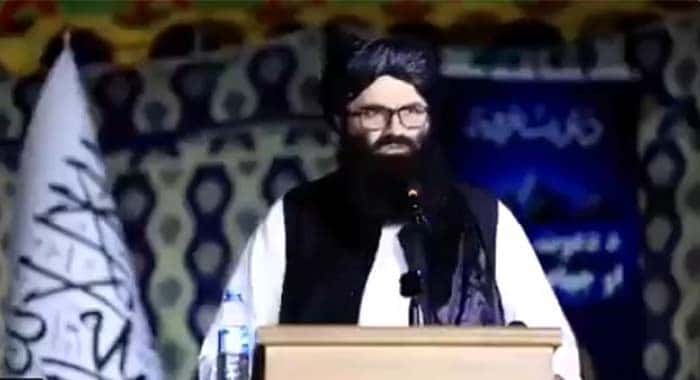
The recent account attributed to Sirajuddin Haqqani concerning a Taliban fighter named Hayatullah Ghaznavi offers a striking and deeply revealing glimpse into the extraordinary transformation of Afghanistan’s former insurgents. According to the account, Ghaznavi once sought permission during the Taliban insurgency to carry out a suicide attack. Today, however, his ambition is reportedly very different: he wants to become a general. The contrast between these two aspirations is almost surreal. Yesterday, the ambition was to die wearing an explosive vest in the name of the insurgency; today, the ambition is to wear stars on the shoulder, occupy an official position, travel in a government vehicle and carry the title of general.
What might be presented as an amusing anecdote is, in reality, a deeply symbolic reflection of Afghanistan’s turbulent political and military history. The irony is not necessarily found in the ambitions of one individual, but in the extraordinary transformation of an insurgent movement that spent two decades fighting the Afghan state and ultimately became the authority governing that state. Fighters who once operated from mountains, villages and clandestine networks now occupy government offices, exercise authority over state institutions and hold official positions. The journey from insurgency to government has therefore produced a remarkable reversal of roles, with former combatants becoming officials and commanders becoming members of the country’s governing establishment.
For ordinary Afghans, however, the twenty-year Taliban insurgency was never a humorous journey from the mountains to government offices. It was a period defined by funerals, amputations, destroyed homes, orphaned children, displaced families, devastated businesses and shattered communities. It was a time when parents feared sending their children to school, families travelled roads knowing that checkpoints or explosives could determine whether they reached their destinations, and civilians routinely faced the consequences of fighting between insurgents and government forces. Behind every military operation and every political development were ordinary people who lost sons, daughters, husbands, wives, fathers, mothers and livelihoods.
The human cost of the conflict extended far beyond those who were killed immediately during attacks. Thousands of Afghans survived with life-changing injuries, including amputations and permanent disabilities. Countless families were displaced from their homes after fighting reached their communities. Children were left without parents, while widows were forced to raise families without the husbands who had been killed during years of violence. Entire communities saw their homes, markets, schools, roads and local economies damaged or destroyed. For many Afghans, the war was not something that existed only on battlefields; it was a permanent presence in their homes, workplaces and daily lives.
The irony becomes even more pronounced when considering the Taliban’s longstanding association with suicide attacks. Sirajuddin Haqqani has publicly spoken about the role and importance of suicide attackers during the insurgency, while the Haqqani Network’s Badri Brigade has been associated with the training and deployment of suicide attackers. Claims have circulated that the brigade trained approximately 1,050 suicide attackers. Suicide bombings and complex attacks associated with Taliban-linked militant networks became among the most devastating forms of violence during the conflict, repeatedly causing mass casualties and leaving communities traumatized.
Suicide attacks did not simply produce numbers on casualty reports. Every attack represented human beings whose lives were abruptly destroyed. A person killed in a marketplace was someone’s father, mother, husband, wife, son or daughter. A police officer killed at a checkpoint was someone’s child. A soldier killed defending a provincial capital left behind a family that had to continue living without him. A civilian injured in a bombing could spend the rest of his or her life dealing with physical disability and psychological trauma. The consequences of such violence therefore continued long after the explosions had ended.
It is in this context that Ghaznavi’s reported request for the rank of general becomes particularly revealing. The men who were once prepared to sacrifice their lives as suicide attackers or insurgent fighters survived long enough to witness the collapse of the previous political order and the establishment of Taliban rule. Some of these former fighters subsequently became officials, commanders and administrators within the new state structure. Their survival allowed them to move from the battlefield into positions of authority, transforming their wartime roles into political and administrative power.
At the same time, the people who fought against them experienced a very different fate. Afghan soldiers and police officers who spent years defending provincial capitals, government installations, roads and communities were killed, displaced or forced to abandon their careers. Many former members of the Afghan National Defense and Security Forces fled the country after the collapse of the previous government. Some now live as refugees or migrants, while others have been forced into entirely different occupations simply to support themselves and their families. Former soldiers who once wore military uniforms and defended their country have, in some cases, found themselves driving taxis or performing low-paid work abroad.
The same is true for many former civil servants. Thousands of Afghans devoted years of their lives to public administration, education, development and government institutions. They built careers within a state that eventually disappeared. When the political system collapsed, their professional identities and livelihoods were placed in uncertainty. For many, years of experience and public service no longer guaranteed employment or recognition. A civil servant who once worked inside a government ministry could suddenly find himself or herself without a career, without income and without a clear place in the new political order.
The consequences have been especially painful for the families of those who died during the conflict. A fallen soldier cannot benefit from a political settlement that arrives years after his death. A police officer killed while defending a checkpoint cannot return to receive a promotion. A civilian killed in a bombing cannot witness the political victory that others later celebrate. Their families are left to live with the permanent consequences of loss. Widows continue to raise children without their husbands, parents continue to mourn their sons and daughters, and children grow up carrying the memory of parents who never returned home.
This contrast raises a fundamental question about the meaning of victory. For former insurgents who survived the war and subsequently entered positions of authority, victory may be measured through political power, government appointments, military ranks, official vehicles and access to state institutions. But for the families of those killed during the conflict, victory cannot bring back a loved one. For former soldiers living in exile, it cannot restore a lost career. For displaced families, it cannot automatically rebuild a destroyed home. And for civilians who continue to struggle with poverty, disability and trauma, the end of the fighting does not erase the consequences of the violence they experienced.
The transformation of the Taliban from an insurgent movement into the governing authority also represents one of the most extraordinary political reversals in Afghanistan’s recent history. For approximately two decades, Taliban fighters fought against the institutions of the Afghan state and the international military presence supporting it. They attacked government facilities, security forces and officials and sought to overthrow the existing political order. Yet after the collapse of that order, many of the same individuals who had once fought against the state found themselves inheriting its ministries, offices, security structures, vehicles and administrative institutions.
Those who once lived outside the formal state now operate from inside it. Those who once fought government forces now command security personnel. Those who once moved through Afghanistan as insurgents now travel through the country’s cities as government officials. Those who once operated in secrecy can now appear publicly in official positions. The transformation is therefore not merely a change in employment or title; it represents a profound reversal in the political fortunes of the individuals involved.
The reported story of Ghaznavi captures this reversal in an unusually simple image. The explosive vest has been replaced by a military uniform. The insurgent hideout has been replaced by an office. The battlefield has been replaced by government institutions. The aspiration to die as a fighter has been replaced by the aspiration to achieve rank and authority. What was once described as martyrdom has, for some survivors, ultimately led to an official career.
Yet the people who stood between the insurgency and the state often did not survive long enough to experience that transformation. Afghan soldiers and police officers who fought during the same years were killed in large numbers. Civilians were caught between armed groups and state forces. Families were displaced repeatedly. Government employees risked their lives simply by carrying out their professional responsibilities. For these people, the end of the war did not necessarily represent a personal victory. In many cases, it represented the loss of the political, professional and economic world they had known.
The tragedy is therefore not simply that former insurgents became officials. The deeper tragedy is that the distribution of the consequences of war has been profoundly unequal. Those who survived the insurgency and ultimately gained political power can now enjoy the privileges associated with government authority, while many of the people who fought, suffered or sacrificed against them are no longer in a position to benefit from the country’s political future.
Afghanistan’s recent history is often described through the actions of political leaders, military commanders, foreign governments, peace negotiators and insurgent organizations. But beneath those grand narratives lies the experience of ordinary Afghans. They were the people who buried relatives, treated wounded family members, abandoned villages, closed businesses, crossed borders and attempted to raise children amid insecurity. They were the people who continued working, studying and building families despite decades of conflict.
For these ordinary Afghans, the end of the war did not automatically bring prosperity. Many continue to face economic hardship, displacement, unemployment and uncertainty. The political conclusion of a conflict and the personal conclusion of suffering are not necessarily the same thing. A war can formally end while its consequences remain embedded in families and communities for generations.
The story of a former would-be suicide bomber seeking the rank of general therefore deserves to be understood beyond its surface irony. It represents a larger transformation in which individuals once prepared to die for an insurgent cause survived to become part of the political establishment. Their survival created opportunities for positions, promotions and authority. But countless others who stood on the opposite side of the conflict—or simply happened to live in its path did not survive to see the political outcome.
Perhaps the darkest summary of Afghanistan’s last twenty-five years is contained in this contrast: those who were once encouraged to die became, in some cases, the people who inherited the state; those who were caught between insurgents and the state were left with graves, scars, displacement and memories. The insurgency promised its fighters a spiritual reward for sacrifice. The political victory that followed brought some survivors something altogether more tangible ministries, ranks, official vehicles, offices, influence and promotions.
For countless ordinary Afghans, however, the end of the war brought no comparable advancement. There were no government titles waiting for the parents who buried their children. There were no promotions for the soldiers who died defending their posts. There were no official vehicles for the widows left to raise families alone. There were no ministries for the civil servants who lost their careers. And there was no political victory capable of returning the lives that had been taken.
The reported exchange involving Ghaznavi may therefore be remembered as an amusing anecdote by some, but its deeper meaning is considerably darker. It exposes the extraordinary distance between the aspirations of those who ultimately gained power and the lived reality of the millions of Afghans who endured the consequences of war. A man who once reportedly wanted permission to die as a suicide attacker now reportedly wants to become a general. The transformation is striking precisely because it reflects how dramatically the fortunes of Afghanistan’s combatants have changed.
But history should not be written only by those who survived to occupy the offices of power.
It must also remember those who did not survive.
It must remember the civilians killed in bombings, the soldiers who died at checkpoints, the police officers who never returned home, the children who lost their parents, the women who became widows, the families forced into exile, the people who lost limbs and livelihoods, and the civil servants whose careers disappeared with the collapse of the political system.
The conclusion of a war should never mean the conclusion of memory.
Afghanistan’s future depends not only on who controls its institutions, but also on whether the suffering of its people is acknowledged. Political change cannot erase the human cost of twenty years of conflict, and the acquisition of official titles cannot transform the past into something it was not.
The real measure of Afghanistan’s recent history should therefore extend beyond military victory, political power and government appointments. It should include the human lives lost, the families destroyed, the communities displaced and the generations whose futures were permanently altered.
The story of the former suicide-bomber candidate who now seeks to become a general is ultimately not a story about one man’s ambition.
It is a story about Afghanistan.



