
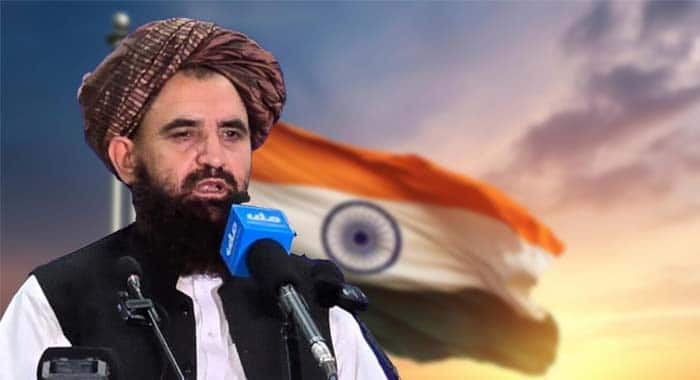
Taliban intelligence chief Abdul Haq Wasiq reportedly made a secret and unannounced visit to India approximately 10 days ago, where he held meetings with Indian security officials and political figures, according to security sources.
The reported visit has not been publicly announced by either the Indian government or Taliban authorities, adding an element of secrecy to an already closely watched evolution in relations between New Delhi and Kabul. Security sources described Wasiq’s reported trip as “entirely confidential,” stating that it differed significantly from recent high-level Taliban visits to India, which were publicly acknowledged and widely reported.
The precise agenda of the alleged meetings remains unknown. Details concerning the individuals Wasiq reportedly met, the issues discussed, and whether any understandings or agreements were reached have not been disclosed. The reported involvement of the Taliban’s intelligence chief has drawn particular attention because of the sensitive nature of his position within the Taliban leadership.
According to security sources, the confidential nature of the visit has raised questions over what the Taliban intelligence leadership may have been seeking through direct engagement with Indian officials and what matters were discussed away from public scrutiny. There is, however, no independently verified information currently available confirming the contents or outcome of the alleged consultations.
Neither New Delhi nor Kabul has publicly acknowledged the reported visit or provided an official explanation for Wasiq’s alleged presence in India. The reported trip comes amid a broader and increasingly visible expansion of engagement between India and Taliban authorities. Earlier this month, India signalled continued diplomatic engagement by sending a senior Ministry of External Affairs official to a ceremony in New Delhi marking the fifth anniversary of the Taliban’s return to power in Afghanistan.
Anand Prakash, who heads the Pakistan, Afghanistan and Iran division of India’s Ministry of External Affairs, represented the Indian government at the event held at the Afghan embassy in New Delhi. The Taliban organised commemorative events in both New Delhi and Islamabad to mark the anniversary of its takeover of Afghanistan.
Addressing the New Delhi gathering, Noor Ahmad Noor, the Taliban’s chargé d’affaires in India, called for greater political trust, expanded economic cooperation and sustained engagement between Afghanistan and India. Noor argued that stronger political and economic relations served the interests of both countries. He also expressed appreciation for India’s Ministry of External Affairs and Foreign Minister S. Jaishankar, citing what he described as Indian support for Afghanistan’s international rights, while calling for greater Indian backing.
Despite the growing interaction, the Indian government has not formally recognised the Taliban administration as Afghanistan’s government. Nevertheless, relations between the two sides have steadily developed through diplomatic contacts, political engagement and economic discussions. The Taliban has strengthened its diplomatic presence in New Delhi, while India has increased its diplomatic representation in Kabul. Last year, India permitted Taliban-appointed diplomats to take control of the Afghan embassy in New Delhi, representing another significant step in the gradual expansion of bilateral engagement.
The developments have allowed New Delhi and Kabul to maintain official contacts despite India’s continued position regarding formal recognition. The Afghan national flag remains displayed at the embassy in New Delhi, while Taliban representatives have also been permitted to conduct meetings and organise events at the diplomatic mission under the Taliban’s own flag.
The reported visit by Wasiq would follow a series of increasingly prominent Taliban engagements with India in recent months. Among the most significant was the visit of Taliban Foreign Minister Amir Khan Muttaqi to New Delhi in October 2025. The following month, Taliban Industry and Commerce Minister Nooruddin Azizi also travelled to India.
These visits have contributed to a gradual expansion of direct political and diplomatic contacts between the two sides. The alleged involvement of the Taliban’s intelligence leadership, however, would represent a potentially more sensitive dimension of this evolving relationship, particularly given the strategic and security implications of intelligence-level engagement.
Any confirmed meeting between a senior Taliban intelligence official and Indian security authorities could attract considerable attention across South Asia. Afghanistan’s evolving relationship with India has implications extending beyond bilateral diplomacy, particularly given the region’s complex security environment and competing strategic interests. However, the available information does not establish whether the reported visit resulted in any formal agreement, intelligence-sharing arrangement, security understanding or other commitment.
At this stage, the reported visit and details of the alleged meetings remain unconfirmed by official sources. The claims attributed to security sources should therefore be treated as preliminary until independently corroborated.
Should the reported visit be officially confirmed, it could provide further insight into the rapidly evolving relationship between New Delhi and the Taliban authorities in Kabul and potentially shed light on the increasingly important security dimension of their engagement.



