
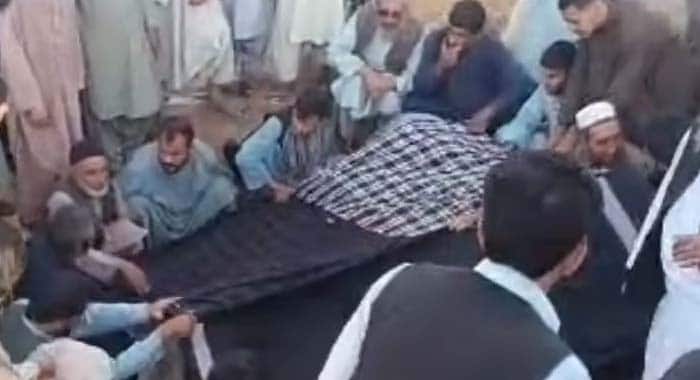
An 18-year-old Afghan woman died by suicide in Herat after the Taliban reportedly pressured her family to annul her marriage to a Shia Hazara man, with the case raising serious questions over the Taliban’s intervention in the couple’s marriage.
Zahra, from the Shalbafan area of Herat, had married Ali Reza, a Shia Hazara man from Kabul, after their families agreed to the union. The couple had reportedly met through social media and developed a relationship before their families consented to the marriage.
The marriage, however, came under scrutiny from the Taliban’s Office for the Promotion of Virtue after officials reportedly learned that Zahra was from a Sunni family while her husband belonged to the Shia Hazara community.
According to accounts verified through multiple sources, Taliban officials subsequently detained Zahra’s father, Taj Mohammad, and pressured him to end his daughter’s marriage.
The cleric who had conducted the marriage was also reportedly summoned to the Taliban’s Office for the Promotion of Virtue and held there for several hours. He was eventually released after, according to the accounts, committing to cooperate in dissolving the marriage.
Taj Mohammad initially resisted the demand but remained in Taliban custody until he agreed to terminate his daughter’s marriage.
He was released on Saturday morning, August 22, and reportedly contacted Ali Reza’s family in Kabul later that day to inform them that the marriage contract had to be dissolved. Zahra’s family subsequently returned the 100,000 Afghanis reportedly given by the groom’s family as milk, a customary payment associated with marriage in parts of Afghanistan.
Zahra reportedly opposed the decision and wanted to continue her life with Ali Reza.
Sources said she warned her family that she would end her life after learning that the marriage had been dissolved. The warning was reportedly not taken seriously.
Zahra remained awake for much of Saturday night and was found dead in a room at the family home before sunrise.
Her family initially did not realize that she was missing. After searching the house, relatives found her body and informed Taliban authorities.
Her body was reportedly taken for a forensic examination before being buried in a cemetery in Herat.
The case has raised questions about the extent of Taliban interference in private family and marriage matters, particularly where sectarian differences are involved.
The reported intervention is especially significant because it was not merely a disagreement between the two families. The accounts indicate that Taliban officials detained the bride’s father, summoned the marriage cleric and allegedly pressured the family until the marriage was dissolved.
The Taliban have not publicly provided an explanation for the reported detention of Zahra’s father, the summoning of the cleric, the alleged pressure to annul the marriage or the circumstances surrounding Zahra’s death.
The case also comes against a wider backdrop of restrictions and reported pressure on religious minorities under Taliban rule. Earlier this year, reports emerged of Taliban morality officials detaining and punishing a Shia cleric in Kabul following a dispute over a marriage, illustrating the extent to which the authorities have intervened in marriage-related matters.
The circumstances surrounding Zahra’s death therefore leave a fundamental question unanswered: if Taliban officials intervened to force the dissolution of her marriage, who will answer for the pressure that preceded her death?
While the available accounts do not establish that Taliban officials directly caused Zahra’s death, their reported actions before her death warrant scrutiny and a transparent explanation from the authorities.
For Zahra’s family, the question is no longer simply why her marriage was dissolved. It is why an 18-year-old woman who wanted to continue her married life was subjected to a chain of events that ended with her death.



