
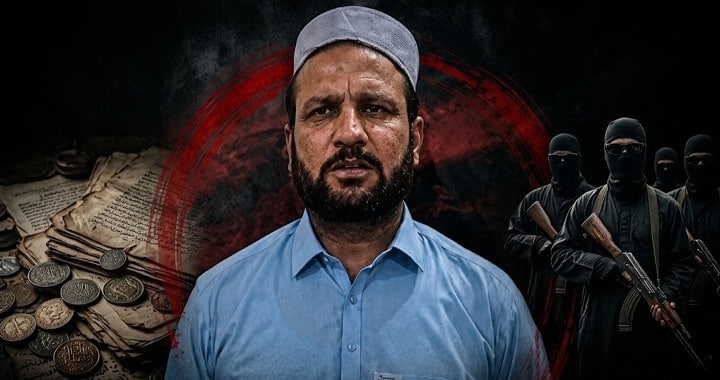
Serious concerns are emerging over the alleged activities of self-styled “Police Peace Committees” operating in parts of Bannu and Lakki Marwat, with reports alleging that certain groups are functioning outside established legal and administrative structures and contributing to an increasingly fragile law-and-order environment.
According to reports attributed to law-enforcement sources and senior journalists, these so-called peace committees have allegedly developed into parallel power structures, operating without a clear statutory mandate or recognized legal authority. Their activities have raised questions regarding the writ of the provincial government, the authority of the police, and the ability of state institutions to regulate armed groups operating under the banner of maintaining peace.
Reports further allege that a significant number of individuals associated with these committees are former police personnel who were dismissed from service following departmental inquiries during the tenure of former Khyber Pakhtunkhwa Inspector General of Police Akhtar Hayat Khan.
According to the allegations, some of the dismissed personnel faced disciplinary proceedings involving accusations of corruption, misconduct, violations of discipline, and alleged links with or facilitation of terrorist networks. These claims, however, require verification through official records and judicial or departmental findings before individual responsibility can be conclusively established. The reported involvement of former law-enforcement personnel in unauthorized security structures has nevertheless raised concerns about the creation of informal chains of command and the potential erosion of institutional authority.
One of the most serious allegations concerns the reported establishment of unauthorized checkpoints and the alleged collection of money from members of the public. A senior journalist reportedly claimed that residents of Lakki Marwat are being exploited in the name of maintaining peace, with individuals associated with the committees allegedly occupying positions around police checkpoints and collecting money from motorists.
Reports have specifically mentioned locations including Mir Alami, Angara Tang, and Qabul Khel, where alleged “peace volunteers” are accused of facilitating the movement of non-custom-paid (NCP) vehicles in exchange for bribes. If substantiated, such practices would represent not only a serious challenge to the authority of state institutions but also a potential source of revenue for criminal networks. NCP vehicle smuggling has long been a concern in the region because illegally moved vehicles can potentially be diverted for criminal or terrorist purposes.
The reported use of an NCP vehicle in the Shangla attack targeting Chinese nationals has also been cited as an example of the potential security consequences associated with the unchecked movement of such vehicles. Any specific connection between that vehicle and the groups discussed here, however, would require independent investigation.
The reports further allege that members of these committees openly carry sophisticated weapons despite restrictions imposed under Section 144 and prohibitions on the public display of arms. Such alleged conduct has contributed to concerns that groups operating under the label of “peace committees” may themselves be creating an atmosphere of fear and insecurity among local communities.
Rather than complementing the efforts of the police and security forces engaged in counterterrorism operations, some members are reportedly involved in confrontations with serving police personnel. Such incidents, if confirmed, would represent a serious challenge to the chain of command and institutional discipline of the provincial law-enforcement apparatus.
Reports have also surfaced alleging the involvement of members of these committees in serious criminal incidents. In one reported case, following a joint operation by Security Forces and the Counter Terrorism Department (CTD) in which a TTP commander identified as Nusrat was killed, a member of a peace committee was allegedly involved in the theft of the deceased commander’s weapon.
In another reported incident, imported cigarettes allegedly destined for smuggling into Punjab were intercepted and seized. The same cigarettes were subsequently alleged to have been sold in Lakki Marwat city. These allegations, if established through investigation and evidence, would raise serious questions about the involvement of individuals claiming to support law enforcement in organized smuggling and the unauthorized handling of weapons and seized goods.
Perhaps the most disturbing allegation concerns an incident reportedly occurring on 10 December 2025, in which a member of a peace committee, identified in reports as Constable Waheedullah, was accused of killing a sixth-grade child after allegedly attempting to satisfy an unlawful sexual demand. According to the allegations, an attempt was subsequently made to attribute the killing to unidentified individuals in order to close or weaken the case.
Such allegations are extremely serious and, if substantiated through a competent investigation and judicial process, would constitute grave criminal conduct. The protection of children and accountability for crimes against minors must remain the responsibility of the state, regardless of the accused person’s affiliation or claimed position.
Another serious allegation concerns the reported killing of Constable Dawar Khan. According to the reports, he was allegedly targeted by members of a peace committee because he had expressed opposition to the committee on social media. If confirmed, the incident would raise fundamental concerns regarding freedom of expression, institutional discipline, and the authority of serving police personnel to perform their duties without intimidation from unauthorized armed groups.
The cumulative allegations have generated broader questions about the writ of the provincial government and the authority of the official law-enforcement structure in Bannu and Lakki Marwat. According to the reports, some of these committees allegedly refuse to follow directives issued by the Inspector General of Police, Khyber Pakhtunkhwa, and operate independently of the provincial government’s administrative framework.
The emergence of any parallel security structure capable of carrying weapons, establishing checkpoints, collecting money, confronting serving police personnel, or enforcing its own authority would represent a significant institutional challenge.
A functioning law-and-order system depends upon a clearly defined chain of command, legal accountability, and the state’s exclusive authority to enforce the law. Any informal group operating outside these parameters risks creating further instability rather than restoring peace.
The allegations surrounding these so-called peace committees warrant a comprehensive and impartial investigation by the relevant authorities. Any individual found to have committed criminal offenses, facilitated smuggling, misused weapons, extorted citizens, interfered with police operations, or participated in violence should be held accountable through due legal process.
At the same time, allegations against specific individuals should not be treated as established facts until independently verified through competent investigations, documentary evidence, and judicial proceedings. The provincial government and law-enforcement authorities face the critical task of ensuring that community-based security initiatives, where legitimately authorized, operate strictly within the law and under clearly defined institutional oversight.
The people of Bannu and Lakki Marwat have endured prolonged insecurity and deserve a law-and-order system that protects them rather than exposing them to competing centers of armed authority. The reported activities of unauthorized groups underscore the need for a clear distinction between legitimate community cooperation with law-enforcement agencies and the creation of armed structures operating beyond government control.
Restoring public confidence will require effective enforcement of the law, transparent accountability, proper oversight of all security-related groups, and decisive action against anyone exploiting the name of peace or public security for personal, criminal, or political interests. The state must ensure that no individual, group, or self-styled security organization is permitted to place itself above the law.



