
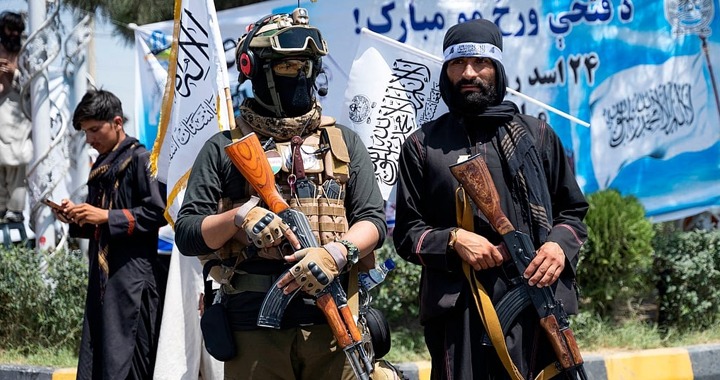
The Taliban authorities in Afghanistan have introduced a new “Shurta Law”, significantly expanding the powers and responsibilities of the police while imposing a nationwide prohibition on public demonstrations.
The law was issued by the Taliban’s Ministry of Justice on Saturday and was approved by Taliban Supreme Leader Hibatullah Akhundzada. Under the new framework, the police referred to as “Shurta” in the legislation have been assigned broad responsibilities relating to public order, security, law enforcement, border control, transportation, emergency response, and the protection of public and private property.
One of the most significant provisions appears in Article 50, which prohibits demonstrations across Afghanistan. The provision effectively removes the legal space for public protests and organized demonstrations anywhere in the country. Reports indicate that the law does not specify broad exceptions to the prohibition.
The development comes amid an already restrictive environment for public dissent in Afghanistan. Earlier this year, a protest in Herat over the detention of women reportedly resulted in the use of force by Taliban security personnel, with the United Nations reporting that at least one person was killed and several others injured.
The new law also expands police authority over the detention of suspects. The maximum period for which a suspect may be held for investigation has reportedly been increased from three days to 10 days, with further extensions requiring judicial authorization.
The legislation sets out circumstances under which police may arrest or detain individuals, including situations involving alleged crimes, credible evidence, security concerns, or circumstances in which authorities believe detention is necessary to prevent harm.
Under Article 41, security officials are granted extensive powers when dealing with suspected offenders. Officials may admonish suspects, urge them to fear God and refrain from violating the rights of others, and employ disciplinary measures and stern language.
The law also reportedly permits authorities to pressure suspects to repent and allows officials to threaten individuals accused of serious crimes with death. It further provides for action against repeat offenders involved in serious offenses, subject to the Taliban’s legal framework.
At the same time, the legislation contains provisions concerning the treatment of detainees. Reporting on the law indicates that police are prohibited from beating prisoners or accused persons with sticks, whips, or cables without a judicial order, and that punishment inside prisons is not to be imposed without a final court ruling.
The new framework substantially broadens the institutional responsibilities assigned to the Shurta. These include maintaining public order and security, protecting civilian airports and related facilities, preventing the unauthorized possession of weapons and ammunition, responding to accidents and emergencies, and protecting citizens’ property and assets. The police structure is also set to encompass specialized units dealing with fire and rescue services, natural disasters, traffic management, and public order.
Traffic police will be responsible for regulating vehicle movement, overseeing driving licenses and registration plates, and investigating traffic accidents. Border police, meanwhile, will monitor the movement of people, vehicles, and goods entering and leaving Afghanistan.
The law further places responsibility on police authorities for implementing Taliban directives concerning security and public order. The legislation defines the role of security officials within the police structure and establishes the Shurta as an important component of the Taliban’s broader security and law-enforcement system. The introduction of the law represents a significant formalization of police powers under Taliban rule, particularly in relation to public demonstrations, arrests, detention, and the enforcement of security directives.
The nationwide prohibition on demonstrations is likely to further narrow the space available for public expression and organized dissent. International human-rights bodies have previously called on Taliban authorities to respect Afghans’ rights to freedom of expression, peaceful assembly, liberty, and security of person.
The new Shurta Law marks a notable development in Afghanistan’s post-2021 law-enforcement structure. By combining expanded investigative and detention powers with broad responsibilities for maintaining public order and enforcing security directives, the legislation places the police at the center of the Taliban administration’s internal security framework. The prohibition of demonstrations, in particular, represents a major restriction on public assembly and provides authorities with a formal legal basis to prevent protests throughout the country.
The full implementation and practical interpretation of the new provisions will remain closely watched, particularly regarding how expanded police powers are exercised, how suspects are treated during detention, and how the nationwide prohibition on demonstrations is enforced.
The new law therefore represents not merely an administrative restructuring of Afghanistan’s police force, but a significant expansion of the legal and operational powers available to the Taliban’s security apparatus.



