The most dangerous sign of institutional weakness, speaking of state affairs, is not always an attack, an explosion or a terrorist assault. Sometimes it is far quieter: the gradual emergence of actors who begin operating beyond the authority of the state, while still claiming to be working in its name.
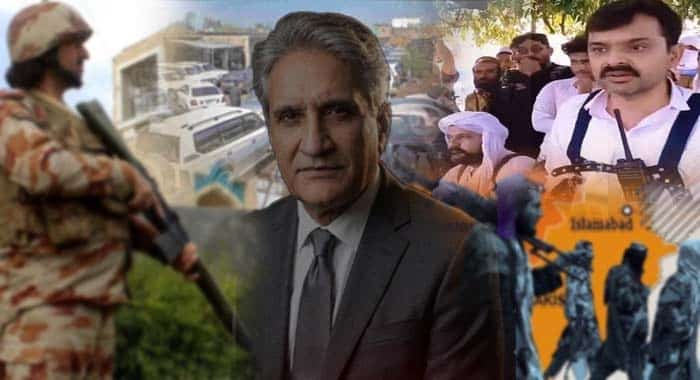
That is precisely why the controversy surrounding so-called peace committees in parts of southern Khyber Pakhtunkhwa deserves far more serious attention. A community-based force can have a legitimate role in supporting law enforcement, particularly in areas where local knowledge is indispensable to counterterrorism. But the moment such a structure becomes armed, operates outside a clearly defined chain of command, defies police authority, obstructs state officials or becomes associated with criminal activity, it stops being an instrument of public security and starts becoming a challenge to the state’s writ.
This distinction is fundamental.
Pakistan has already paid an enormous price for allowing parallel systems of authority to take root in areas affected by terrorism. The lesson from Swat and other conflict-hit districts is unmistakable: when the formal institutions of the state retreat, informal power structures do not remain neutral. Someone eventually fills the vacuum, and terrorists, criminals and their sympathizers are usually among the first to exploit it.
A Community Force Cannot Become a Parallel Police
The original concept behind Aman Lashkars was not inherently problematic. During the worst years of terrorism, local communities were mobilized in several parts of Khyber Pakhtunkhwa to assist the police, provide information and help identify unfamiliar persons and suspicious movement.
That local knowledge can still be valuable.
A person who has lived in a village for decades may recognize an outsider long before an official patrol does. In a counterterrorism environment, such information can save lives. But community participation in security has to remain subordinate to the state. It cannot become an alternative command structure.
There is therefore a fundamental difference between a civilian community group assisting police on request and an armed group operating under the banner of a police-backed committee while refusing to accept the orders of the police hierarchy.
The latter creates an institutional contradiction: if the police are the state’s law-enforcement authority, who authorized a parallel authority to disregard their commands?
That question cannot be brushed aside as a local dispute.
Reports of armed members moving without uniform, enjoying exceptional freedom of movement and allegedly resisting checks at security points raise an even more serious issue. If ordinary citizens are stopped and searched while an armed group can pass through checkpoints because it carries a particular label, the state is effectively creating two standards of law enforcement.
That is precisely the environment in which criminal networks flourish.
The Terror-Crime Nexus Cannot Be Ignored
The security problem in southern KP is not limited to terrorism in its conventional form. Terrorist networks increasingly intersect with criminal economies, including extortion, narcotics trafficking, smuggling and the movement of non-customs-paid vehicles.
This is where the issue becomes much larger than the question of one committee.
Terrorism requires money, mobility, shelter, information and influence. Criminal networks can provide all five. A narcotics route can generate financing. Smuggling networks can provide transportation. Illegal vehicles can facilitate movement. Extortion can generate revenue while simultaneously intimidating local communities. Individuals with local influence can provide information about police movements or vulnerable targets.
This is why counterterrorism cannot be separated from counter-crime.
If an armed group operating under a peace-related label becomes associated with any of these activities, the matter should be investigated through the formal institutions of the state. Allegations must be established through evidence and due process, but they cannot simply be ignored because those accused happen to carry a government-associated identity.
The greatest danger is not merely that criminals may commit crimes. It is that criminality may acquire the appearance of state legitimacy.
Once that happens, public confidence begins to collapse.
The Police Must Have One Command
There is another issue that deserves particular attention: command and control.
A police force cannot function effectively if its personnel selectively obey orders. An officer cannot maintain authority if subordinates can organize protests against transfers, resist administrative decisions or determine independently where and when they will operate.
The principle is simple: one force, one command, one chain of accountability.
This does not mean that every local community member assisting police should be treated as a threat. Quite the opposite. Genuine community support can strengthen policing considerably. But such support must operate within a transparent legal framework, under the authority of the police and subject to the same accountability mechanisms that govern every other component of law enforcement.
If local elders, jirgas or community representatives have grievances, they should be heard. If police personnel believe they lack weapons, equipment or logistical support, those concerns should be addressed. If communities believe terrorists are exploiting weaknesses in policing, their intelligence should be welcomed.
But none of these grievances provides a license to create a parallel armed authority.
The state must also recognize the danger of confronting an armed group recklessly. If members are themselves serving police personnel or have access to weapons, an abrupt confrontation could produce casualties and deepen instability. That is why the first response should be disciplined engagement, disarmament through lawful procedures and a clear timetable for restoring the formal chain of command.
If persuasion fails, the law must ultimately prevail.
Counterterrorism Is Also a Battle for Institutional Authority
There is a tendency to measure counterterrorism only through the number of terrorists eliminated or arrested. Those figures matter, but they tell only part of the story.
A terrorist organization is weakened when its fighters are eliminated. It is weakened further when its financiers are exposed, its facilitators arrested, its safe houses dismantled and its supply routes disrupted.
But the victory remains incomplete if the surrounding environment continues to provide alternative sources of authority, criminal revenue and social intimidation.
This is why intelligence and internal accountability are so important.
Police intelligence structures and security branches are expected to identify suspicious links, vet personnel and detect individuals who may be compromised by criminal or terrorist networks. If such mechanisms fail, the problem is not merely operational. It becomes institutional.
A police department fighting terrorists outside its ranks while failing to identify compromised individuals inside the system is fighting with one hand tied behind its back.
The answer is not to weaken the police further by creating more parallel arrangements. The answer is to make the police stronger, more accountable and more capable.
Afghanistan Presents the Same Question at a Larger Scale
The issue becomes even more consequential when viewed against developments across the border.
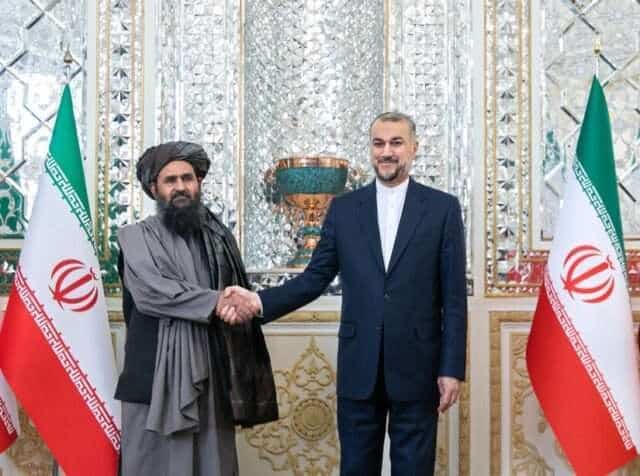
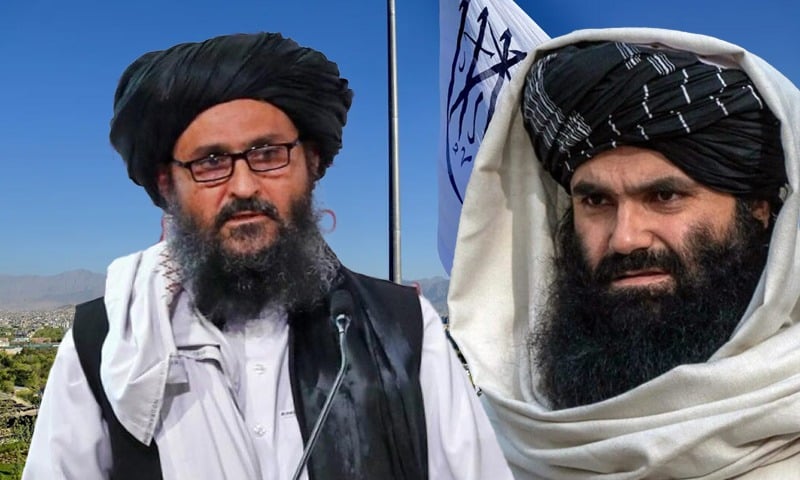
For months, there have been reports and claims that the Afghan Taliban are taking action against TTP members, including reports of arrests, restrictions and relocation of some individuals and their families away from sensitive border areas.
But reports are not evidence.
Pakistan has every reason to demand verifiable action rather than announcements. Past experience has created a credibility deficit that cannot be erased by statements alone. Claims of arrests or restrictions have surfaced before, only for questions to emerge later about whether those individuals were actually detained, where they were taken and whether they remained under meaningful restrictions.
That is why the standard now should be straightforward: show the evidence.
If TTP commanders have been arrested, their detention should be verifiable. If their movement has been restricted, that should be demonstrable. If their families have been relocated, the process should be independently ascertainable. If terrorist infrastructure has been dismantled, there should be tangible evidence of it.
And if individuals wanted by Pakistan are in Afghan custody, handing them over through established legal mechanisms would constitute a far more meaningful confidence-building measure than another round of statements.
The Trust Deficit Was Not Created Overnight
Pakistan’s skepticism is not difficult to understand.
The relationship between the Afghan Taliban and TTP is rooted in history, geography, ideology and years of interaction. Their relationship cannot simply be wished away through diplomatic language.
That does not mean every claim of an internal dispute should be dismissed. It means such claims should be judged by actions rather than narratives.
If the Afghan Taliban genuinely intend to prevent Afghan territory from being used against Pakistan, the test is available to them. They can deny TTP the ability to recruit, train, finance, organize and launch attacks from Afghan soil.
There is no ambiguity about what Pakistan is asking for.
Nor should the issue be transformed into a debate over whether Pakistan is somehow responsible for the presence of TTP. The existence of TTP as a terrorist organization is a reality demonstrated by years of attacks against Pakistani civilians, security personnel and state institutions. Its ideology, organizational structure and operational record are well documented.
The question now is whether those providing it space, sanctuary or logistical freedom will act against it.
From Lakki to the Border, the Principle Is the Same
The apparent problems surrounding armed peace committees inside Pakistan and the unresolved TTP question across the border may appear to be separate matters. At their core, however, they raise the same question: who exercises authority?
Inside Pakistan, the answer must be the Pakistani state, through constitutionally and legally authorized institutions.
Across the border, Pakistan’s demand is equally clear: Afghan territory must not be allowed to serve as a launching pad for terrorism against Pakistan.
There can be no durable counterterrorism strategy if the state is fighting terrorists while parallel actors challenge its authority from within, or if terrorists continue to enjoy space beyond its borders.
Khyber Pakhtunkhwa therefore needs more than sporadic operations. It needs institutional discipline, intelligence-led policing, accountability, lawful community engagement and an unambiguous chain of command.
The same principle must guide Pakistan’s dealings with Kabul: promises are welcome, but verifiable action is what matters.
Terrorists thrive in ambiguity. Criminal networks thrive in institutional gaps. And political actors who seek influence through armed proxies thrive when the state’s writ becomes negotiable.
The remedy is neither indiscriminate confrontation nor endless accommodation.
It is a stronger state, one command, one law and one standard of accountability.
That is ultimately what counterterrorism is about: not merely defeating those who carry weapons against the state, but ensuring that no parallel authority, criminal network or terrorist organization is ever allowed to decide where the state’s writ begins or ends.